
 English
 Español
Customer expresses intent; Communicate between the two parties; Provide analysis reports to customers; Reach a cooperation intention.
Content
- 1 What the 10 x 10 Label Really Measures
- 2 Choosing Between 140 g, 250 g, and 300 g Cover Fabrics
- 3 Fit and Attachment: Where Most 10 x 10 Cover Orders Go Wrong
- 4 Rain, Wind, and Heat: How a 10 x 10 Cover Behaves Outdoors
- 5 Replace the Cover or Replace the Whole Canopy?
- 6 A Five-Minute Measuring Checklist Before You Order
- 7 Cleaning and Off-Season Storage
- 8 Buying 10 x 10 Canopy Covers in Volume
- 9 Frequently Asked Questions About 10 x 10 Canopy Covers
- 9.1 Will a 10 x 10 canopy cover fit any 10 x 10 pop-up frame?
- 9.2 Which fabric weight should I choose for a 10 x 10 cover?
- 9.3 Can a 10 x 10 canopy cover be used in the rain?
- 9.4 How long does a 10 x 10 canopy cover last?
- 9.5 What is the difference between a single-tier and a double-tier cover?
- 9.6 Can a 10 x 10 canopy cover be printed with a logo?
- 9.7 How do I clean a 10 x 10 canopy cover without damaging the coating?
- 9.8 Does a 10 x 10 canopy cover come with a storage bag?
- 10 The Bottom Line on 10 x 10 Canopy Covers
A 10 x 10 canopy cover is the replacement top cloth for a 10 ft x 10 ft pop-up frame, and the fastest way to buy the wrong one is to order by that label alone. Two frames sold under the same 10 x 10 description can have different leg spacing, different corner pocket positions, and different peak heights. The cover has to fit the metal underneath it, not the number in the product title.
The short version: measure the frame instead of the worn-out top, choose the fabric by how often the cover will sit outdoors, and confirm the attachment style before paying. Get those three right and a 10 x 10 cover quietly does its job for years. Get one wrong and you end up wrestling a loose, flapping sheet over a frame it was never cut for.
Below we go through what the 10 x 10 label actually measures, how 140 g, 250 g and 300 g fabrics behave in real weather, why attachment hardware decides whether a cover stays put in a gust, and what changes when you buy replacement covers by the pallet instead of by the piece.
What the 10 x 10 Label Really Measures
The label comes from the North American market, where a pop-up canopy is sized by its frame footprint in feet. 10 ft x 10 ft converts to 3.05 m x 3.05 m, which is why the same frame is described as 3 x 3 m in metric markets. So far, so simple. The complication is that the label describes the frame, and you are buying the cloth.
A top cloth for a 10 x 10 frame is usually cut to land between 2.95 m and 3.05 m edge to edge. It has to be a touch generous so it can wrap the corners, but a touch tight so it does not drum in the wind. Because the roof slopes upward toward the peak, the shaded footprint on the ground is always smaller than the frame. Add a valance that hangs 20 to 30 cm down each side and you get a soft, moving edge that shades well but does not measure like a rigid box.
Heights vary more than most buyers expect. Straight-leg frames typically sit at 1.85 m to 2.05 m at the eave, with a peak between 2.6 m and 2.9 m. Slant-leg frames are wider at the eave and narrower at the base, so the cover is cut differently even though the label still says 10 x 10.
| Frame style | Leg spacing | Top cloth size | Eave and peak | Useful shade |
|---|---|---|---|---|
| Straight leg 10 x 10 | 3.05 m top and bottom | 2.95 m to 3.05 m | 1.85 m to 2.05 m eave, 2.6 m to 2.9 m peak | about 7.5 to 8 sq m |
| Slant leg 10 x 10 | 3.05 m at the eave, 2.4 m to 2.6 m at the base | 2.9 m to 3.0 m | 1.75 m to 1.9 m eave, 2.5 m to 2.8 m peak | about 6.5 to 7.5 sq m |
| High peak 10 x 10 | 3.05 m top and bottom | 3.0 m to 3.1 m | 2.0 m to 2.2 m eave, 3.0 m to 3.2 m peak | about 8 to 8.5 sq m |
The frame footprint covers 9.3 sq m, but the shade you actually stand in is closer to 7.5 to 8 sq m on a standard straight-leg model. That gap matters when you are planning a market stall, a catering counter or a registration desk. Plan for the shade, not the footprint.
Choosing Between 140 g, 250 g, and 300 g Cover Fabrics
Fabric weight is quoted in grams per square metre and refers to the base cloth plus whatever coating is applied to it. It is a useful shorthand, but it is not the same thing as waterproofing. A tightly woven 140 g polyester with a sound polyurethane coating will shed a shower better than a loosely woven heavy cloth with no coating at all. Weight tells you how the cover feels, how it folds, and how long it resists abrasion. Coating and seam construction decide whether you stay dry.
| Fabric | Approximate top weight | Rain behavior | Heat and light | Where it fits |
|---|---|---|---|---|
| 140 g polyester | about 1.4 to 1.6 kg | Light showers only, seams can seep in prolonged rain | Cool and bright, needs a PU or silver coating to block glare | One-day events, indoor booths, tight budgets |
| 250 g PVC-coated polyester | about 2.4 to 2.7 kg | Handles steady rain when seams are welded or taped | Silver underside reflects heat, shade stays noticeably cooler | Market stalls, car ports, weekly outdoor use |
| 300 g PVC-coated polyester | about 2.9 to 3.2 kg | Stands up to long, heavy rain and repeated folding | Lowest heat transfer, strongest shade, slightly darker underside | Daily commercial use, rental fleets, multi-day events |
Two details separate a cover that lasts three seasons from one that lasts ten. The first is seam treatment. Stitched seams with no tape are the weak point on any weight of fabric, because water wicks through the needle holes. Welded or taped seams close that path. The second is the coating on the underside. Silver and reflective coatings do more than look technical; they push radiant heat back up before it reaches the people underneath.
If you want the longer explanation of how base weave, coating chemistry and colour choice interact, this breakdown of canopy fabric selection goes into the detail that a product page usually skips.
Fit and Attachment: Where Most 10 x 10 Cover Orders Go Wrong
A replacement top is held on by one of four systems, and they are not interchangeable. Knowing which one your frame uses takes about thirty seconds and prevents most returns.
- Corner pockets, where the cover slips over the top of each leg. The pocket depth has to match the frame diameter.
- Hook-and-loop straps that wrap around the leg and tighten. Quick to fit, and easy to over-tighten on thin frames.
- Hook-and-ring or push-button fittings, common on aluminium frames with sliding rails.
- Elastic or bungee loops that pull the corners inward and keep tension without tools.
Measure pocket to pocket, not corner to corner
Stretch a tape from the inside of one corner pocket to the inside of the opposite pocket, in both directions. Expect a tolerance of roughly 2 to 4 cm between a frame and a good-fitting cover, which is enough to let the cloth seat without stretching the stitching. If your numbers differ by more than about 5 cm from a listed size, order a custom cut rather than forcing the nearest standard size. A cover that is 8 cm too small will split along the peak seam within a season.
Single-tier and double-tier covers are not swappable
A vented, double-tier cover has a raised centre panel that lifts hot air out and reduces wind lift. It needs a frame with the vent support bar or the extra rail set. Push a single-tier cover onto a vented frame and it will pucker; put a vented cover on a plain frame and the top panel will sag into a pocket that collects rainwater.
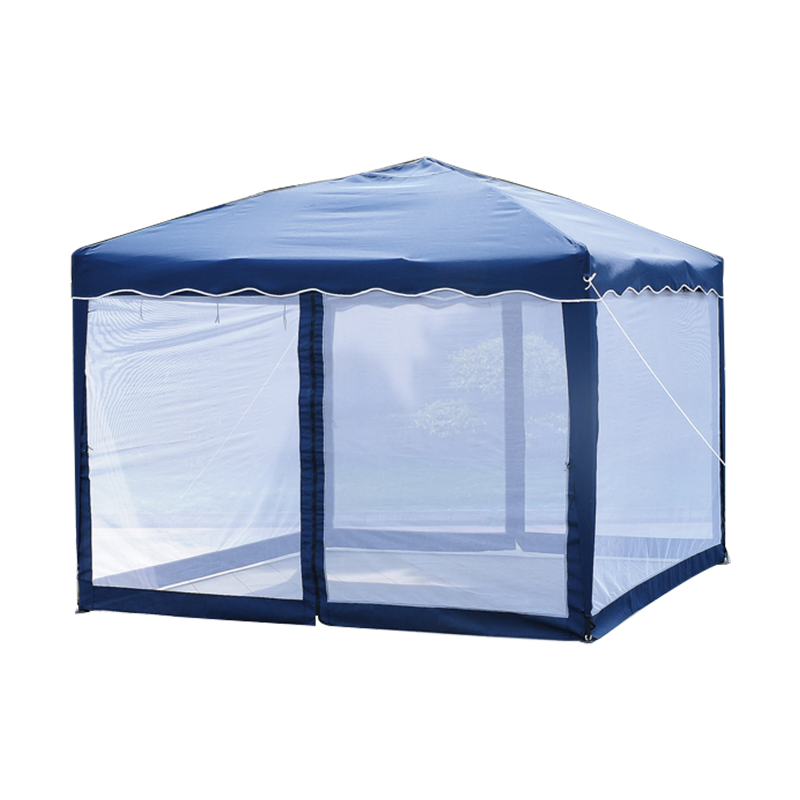
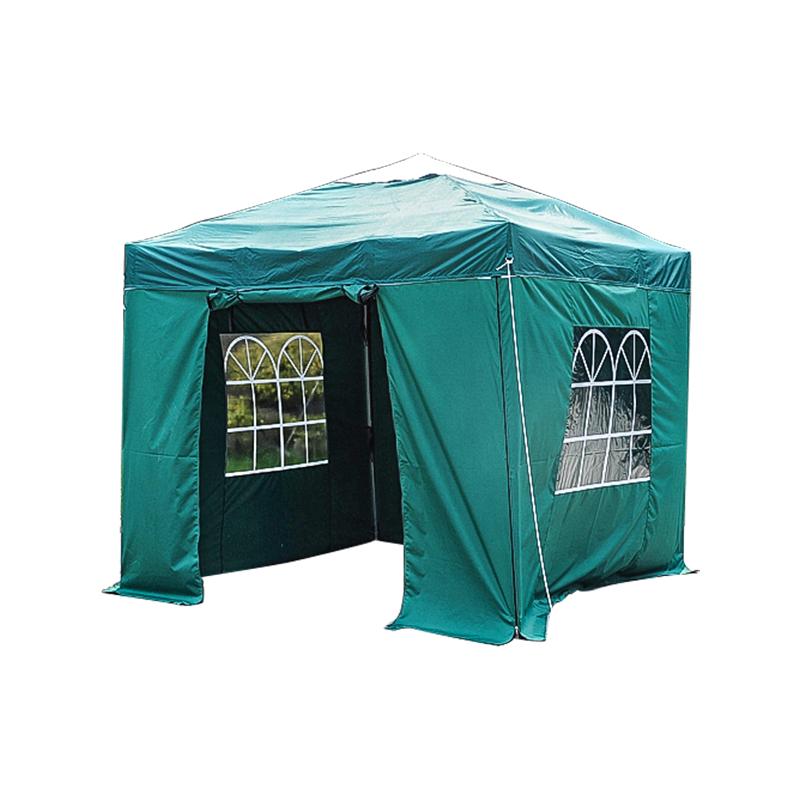
 A02-Outdoor Folding Canopy Gazebo Replaceable top clothProduct features and materials: * Easy set-up; * This Gazebo requires very little effort to erect or collapse, has no loose parts and can be erected in less than one m...View Product →
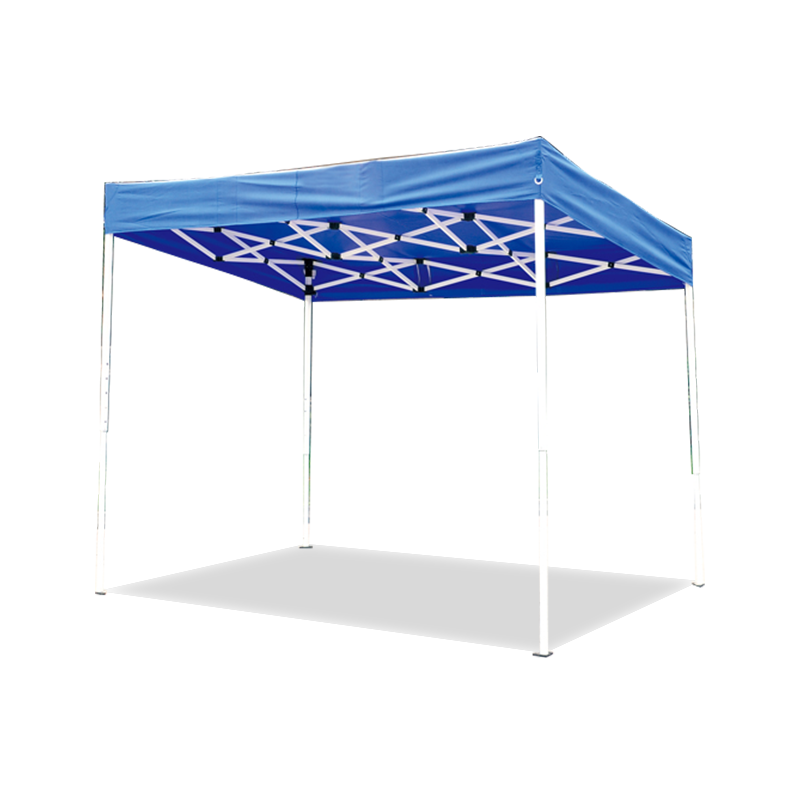
Models built around a swappable top cloth remove most of this risk. The frame stays, the cloth is ordered by measured size, and a worn or faded top can be replaced in a few minutes without touching the metal. For buyers maintaining a fleet of 10 x 10 canopies, that single design choice cuts long-term cost more than any discount on the original unit.
Rain, Wind, and Heat: How a 10 x 10 Cover Behaves Outdoors
Water pooling and roof pitch
Flat-topped 10 x 10 canopies collect water in the middle of the roof. The cloth stretches under the weight, the sag deepens, and within an hour you have a shallow tank pressing down on the frame. The fix is pitch. A top that rises 25 to 40 cm from eave to peak sheds water steadily, and a taut cover sheds better than a loose one. If you notice water sitting for more than a minute or two, tighten the corner tension first, and check whether the fabric has relaxed permanently.
Wind uplift and anchoring
A 10 x 10 canopy is a sail with legs. Common industry guidance suggests four stakes as a bare minimum and eight stakes plus four guy lines as the working standard for anything above a light breeze. Once sustained wind reaches roughly 20 to 25 mph (32 to 40 km/h), most frame manufacturers advise taking the top down rather than trusting the anchors. A vented double-tier roof reduces lift noticeably because air passes through instead of gathering under the panel.
Heat under the canopy
Dark cloth absorbs, light cloth reflects, and coated cloth does both jobs. A silver or reflective underside on a 250 g or 300 g cover keeps the space underneath a few degrees cooler than a plain dyed top of the same weight, which is why catering and produce stalls tend to specify coated fabric even when rain protection is not the priority.
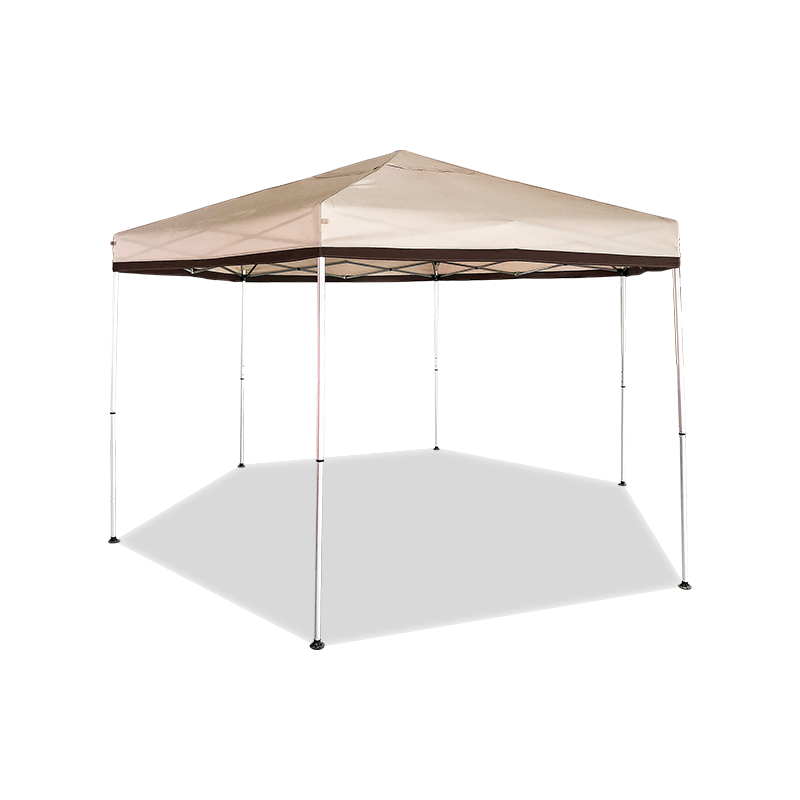
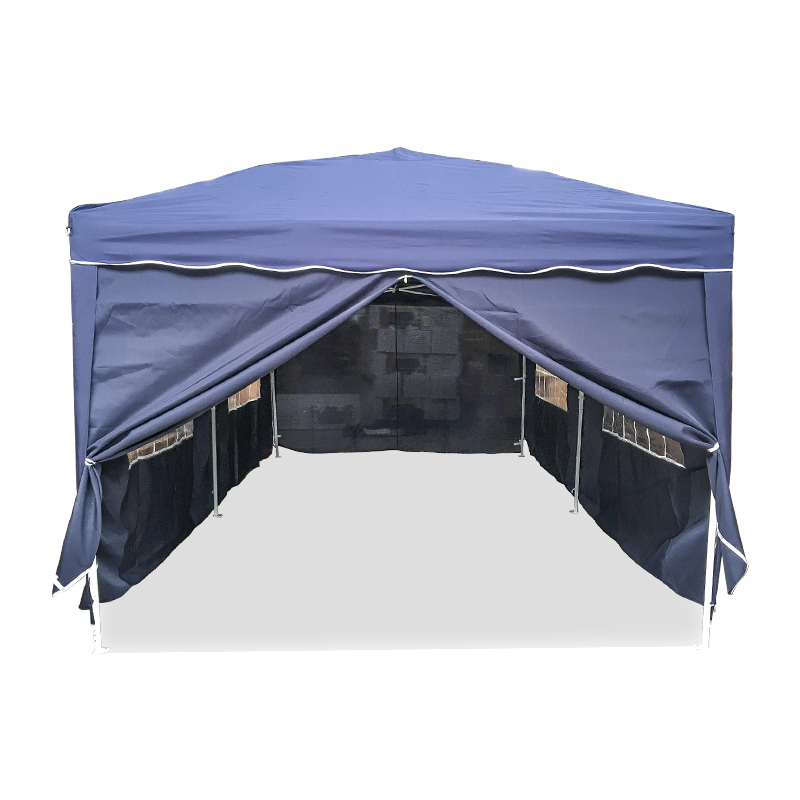
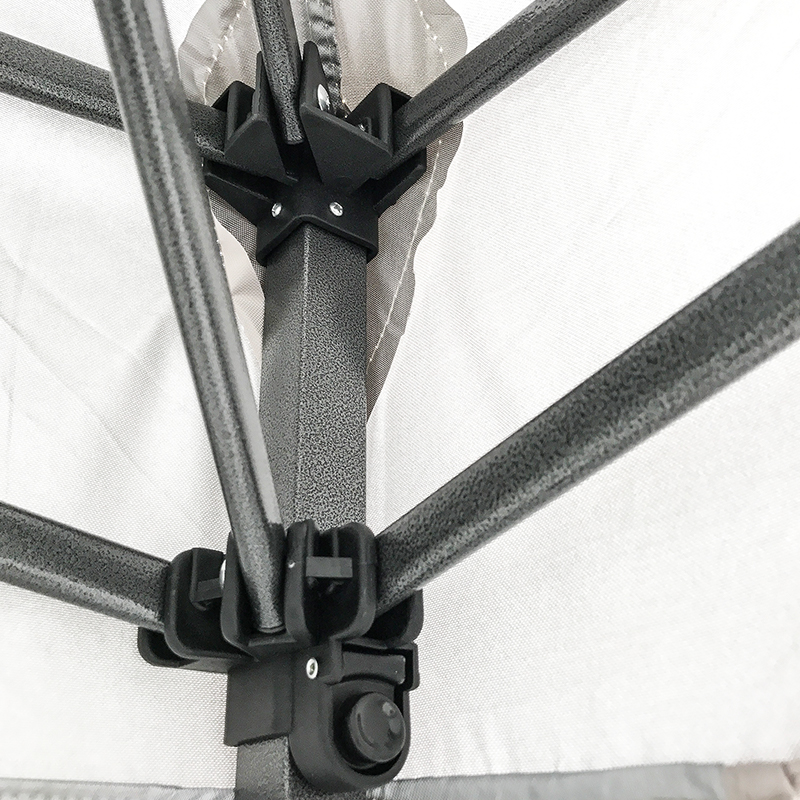 250g PVC Coated polyester canopy40*40/35*35MM, 12*25MM,plastic connector,pull ring or buttonView Product →
The 250 g PVC-coated option sits in the middle of the range and covers most commercial situations: steady rain, daily setup and pack-down, and enough heat reflection that staff stay comfortable through a long afternoon.
Replace the Cover or Replace the Whole Canopy?
Start with the frame rather than the fabric. Open the canopy fully, leave it standing for a day, and look at three things: whether the legs still sit flat on the ground, whether the joints lock without slack, and whether the roof bars bow under their own weight. A frame that passes all three has years left in it, and a replacement cover is by far the cheaper route.
- Replace the cover only when the frame squares up cleanly, the joints lock firmly, and the damage is limited to fading, small tears, mould staining or coating wear.
- Replace the cover and inspect hardware when straps, rings or pockets have failed. A cover that will not stay attached will flap itself apart within weeks.
- Replace the whole unit when the frame twists, when a leg has been bent and straightened twice, or when two or more locking joints have lost their grip.
Buyers running rental fleets usually keep a 1 to 4 ratio of spare covers to frames. That covers the common failure modes, which are faded or torn cloth, without tying up cash in complete units that spend most of the year in a container.
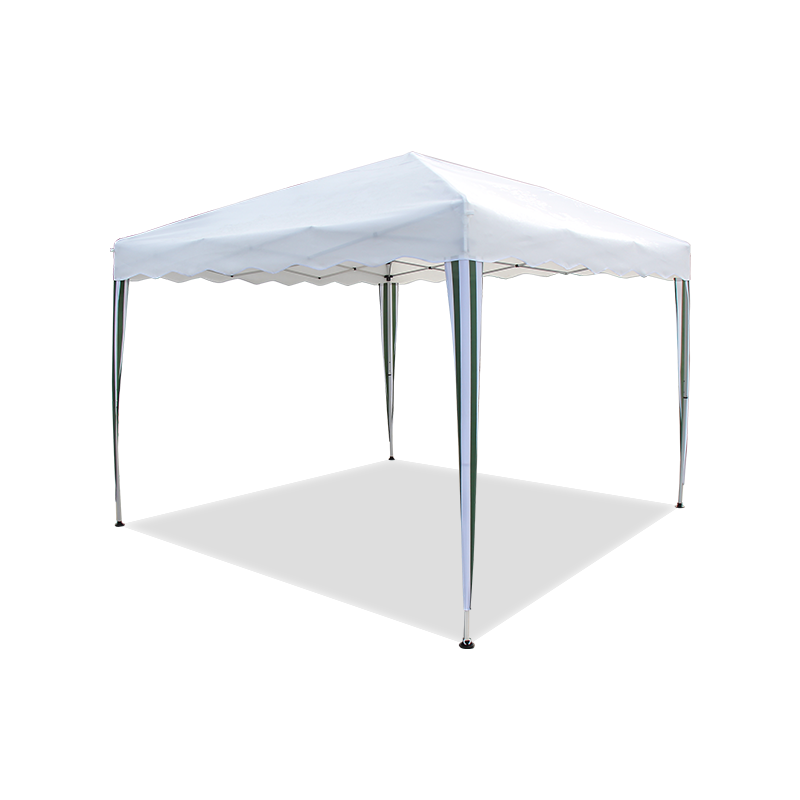
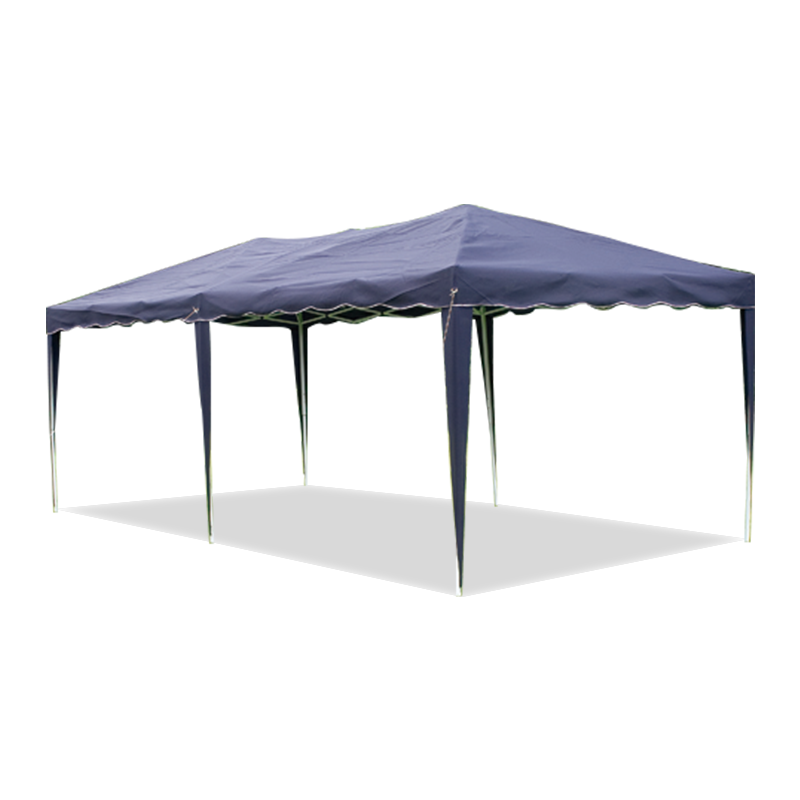
 300G polyester PVC coated Aluminum Frame Folding GazeboProduct features and materials: * Easy set-up; * This Gazebo requires very little effort to erect or collapse, has no loose parts and can be erected in less than one m...View Product →
Aluminium frames paired with 300 g PVC-coated cloth are the usual choice when the canopy is part of daily operations rather than occasional use, because the lighter metal is easier for one person to handle and the heavier cloth holds tension through repeated folding.
A Five-Minute Measuring Checklist Before You Order
- Set the frame up fully and lock every joint. Measurements taken on a half-open frame are meaningless.
- Measure inside pocket to inside pocket on both diagonals and write both numbers down. They should match within about 1 cm on a square frame.
- Measure the eave height and the peak height, then note the difference. That rise is what keeps rain moving off the roof.
- Note the leg profile and diameter, so pocket depth and strap length can be matched.
- Photograph the attachment points and the underside of the old cover, including any taped seams or vent panels.
- Check the valance depth you want. Deeper valances shade better in low sun but catch more wind.
Send those six items with an enquiry and almost any supplier can quote the right cover on the first attempt. Skip them, and the conversation becomes a guessing game played with photographs and a tape measure at the other end of an email thread.
Cleaning and Off-Season Storage
Most 10 x 10 covers die young for boring reasons: packed away damp, scrubbed with the wrong cleaner, or left stretched on the frame through an off-season. None of that is difficult to avoid.
- Brush off dust and pollen with a soft brush before washing. Dry dust becomes a paste that works into the weave.
- Wash with lukewarm water and a mild soap. Solvent cleaners and household bleach strip coatings, and once the coating is gone the fabric is a screen door in the rain.
- Never fold or store a damp cover. Damp fabric grows mould within days, and mould staining on a coated surface is close to permanent.
- Dry the cover completely, ideally on the frame in light breeze, then fold loosely along the original creases.
- Store off the frame for long periods. A cover left under tension for six months relaxes and never sits taut again.
- Keep the storage bag out of direct sun. UV degrades folded fabric faster than it degrades fabric in service, because the same crease line takes the hit every day.
A cover that is cleaned twice a season and stored dry will typically outlast one that is never washed and always packed away in a hurry. The difference is not the fabric weight you bought; it is the routine after the event.
Buying 10 x 10 Canopy Covers in Volume
Replacement covers are a different purchasing problem from complete canopies. You already know the frame, so the specification conversation is shorter and the variables narrow to fabric weight, coating, colour, attachment layout and branding. That makes them a good candidate for consolidated orders, provided the specification is written down before the first sample is cut.
A vertically integrated factory handles the whole chain in house, which matters more than it sounds. Metal cutting and tube forming, powder coating for the frame, moulding for the plastic connectors, and sewing for the top cloth can all sit under one roof, so a change to pocket depth or valance height does not turn into a three-supplier negotiation. Our own plant in Yuyao covers 12,000 sq m with around 200 staff and four production workshops, and sits about 60 km from Ningbo port, which keeps sea freight straightforward for European, North American and Australian buyers.
Customisation on top cloths usually covers printed logos across the valance or peak, woven labels, hang tags, barcodes and printed cartons. Annual capacity runs above 50,000 tents and hammocks, so volumes from a small trial run up to container-scale orders can be scheduled on the same line.
If you need covers cut to your own frame dimensions, colours or branding, the custom canopy service explains what to send with an enquiry, including the sample or drawing route used for new developments.
Frequently Asked Questions About 10 x 10 Canopy Covers
Will a 10 x 10 canopy cover fit any 10 x 10 pop-up frame?
No. The 10 x 10 label describes the frame footprint, and frames with the same footprint can differ in leg diameter, pocket depth, peak height and attachment hardware. Measure pocket to pocket on both diagonals and compare the attachment system before ordering. A tolerance of 2 to 4 cm is normal; anything beyond about 5 cm should be treated as a custom size.
Which fabric weight should I choose for a 10 x 10 cover?
Match the weight to the duty cycle rather than the weather forecast. Around 140 g polyester suits one-day events and indoor use. A 250 g PVC-coated cloth covers weekly outdoor use in rain and sun. A 300 g PVC-coated cloth is the choice for daily commercial use, rental fleets and multi-day events where the cover is folded and rebuilt constantly.
Can a 10 x 10 canopy cover be used in the rain?
Yes, within reason. A coated cover with welded or taped seams will keep a stall dry through steady rain, provided the roof is pitched and taut so water runs off. The practical limit is not the fabric but the frame: most manufacturers advise taking the top down once sustained wind reaches roughly 20 to 25 mph (32 to 40 km/h), regardless of how well the cover performs in rain.
How long does a 10 x 10 canopy cover last?
Use pattern matters more than fabric weight. A 140 g cover used a handful of times a year may run three to five seasons. A 250 g or 300 g coated cover used weekly, cleaned twice a year and stored dry commonly runs longer, with the failure point usually being a seam, a corner pocket or coating wear rather than the weave itself.
What is the difference between a single-tier and a double-tier cover?
A double-tier cover has a raised centre panel that lets hot air rise out and reduces the lift that wind creates under the roof. It requires a frame with the matching vent support. Single-tier and double-tier covers are not interchangeable, even on frames with identical footprints.
Can a 10 x 10 canopy cover be printed with a logo?
Yes. Printing is normally applied to the valance, the peak panel or both, and most volume orders also combine printed cloth with woven labels, hang tags and branded cartons. Send artwork and the target panel dimensions early, because print layout affects how the cloth is cut and sewn.
How do I clean a 10 x 10 canopy cover without damaging the coating?
Brush off dry dust first, then wash with lukewarm water and mild soap. Avoid solvents, bleach and abrasive pads, all of which strip the coating that makes the cloth water resistant. Dry the cover completely before folding, and never store it damp.
Does a 10 x 10 canopy cover come with a storage bag?
Many do, and it is worth confirming because it affects packing and shipping counts. A carry bag also solves the storage problem: a folded cover kept in its bag, off the frame and out of direct sun, holds its shape far better than one left stretched out for months.
The Bottom Line on 10 x 10 Canopy Covers
The number on the box tells you very little about whether a cover will fit. What matters is the distance between the corner pockets, the attachment hardware on the frame, the rise from eave to peak, and the fabric weight that matches how hard the cover will be worked. Those four measurements take five minutes and eliminate nearly every return, split seam and flapping corner.
Buy the light cloth for occasional use and the heavy coated cloth for daily commercial duty. Tape or weld the seams. Pitch the roof so water leaves it. Store the cover dry and off the frame between seasons. Do those things and a 10 x 10 canopy cover becomes one of the least troublesome pieces of equipment you own.

