
 English
 Español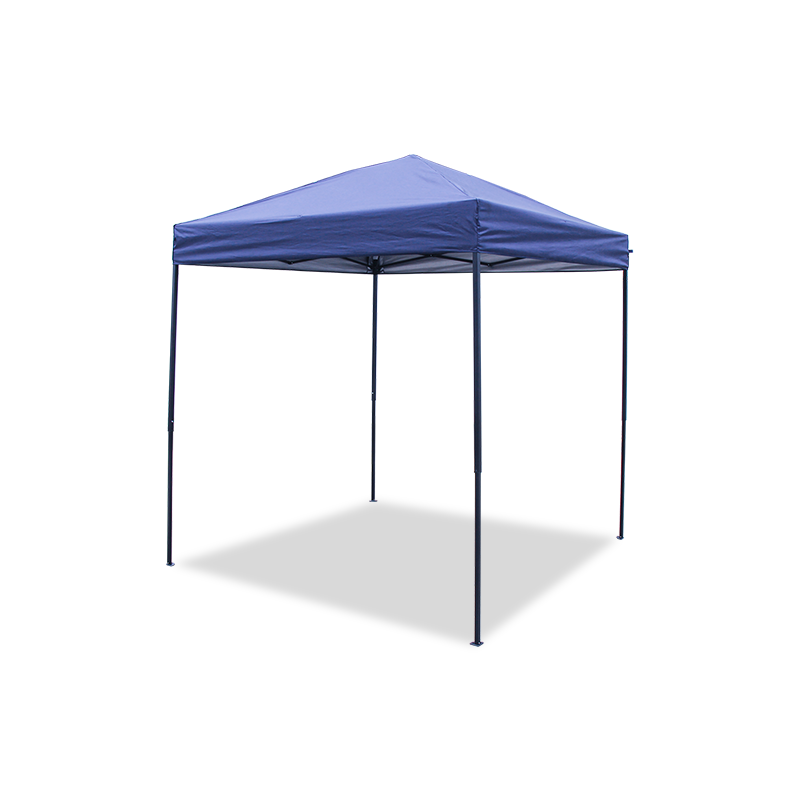
Customer expresses intent; Communicate between the two parties; Provide analysis reports to customers; Reach a cooperation intention.
Content
- 1 Canopies and Tarps: What They Are and How They Differ
- 2 Material Breakdown: What Canopies and Tarps Are Actually Made Of
- 3 Canopy Types and Their Best Use Cases
- 4 Tarp Applications: Beyond Basic Coverage
- 5 Sizing Canopies and Tarps: Getting It Right the First Time
- 6 Wind, Water, and UV: Understanding the Real Performance Specs
- 7 Installation and Safety: What Most Buyers Overlook
- 8 Maintenance and Storage: Extending the Life of Your Canopy or Tarp
- 9 How to Choose Between a Canopy and a Tarp for Your Specific Need
Canopies and Tarps: What They Are and How They Differ
Canopies and tarps are both protective coverings, but they serve different purposes and are built to different standards. A canopy is a structured overhead shelter — typically supported by a frame — designed for consistent, semi-permanent use in outdoor settings like trade shows, markets, patios, and worksites. A tarp, on the other hand, is a flexible, frameless sheet of material used to cover, wrap, or shield surfaces from moisture, debris, and UV exposure. Both are essential tools in outdoor protection, but understanding when to use each one determines how effective your shelter or coverage will actually be.
The global canopy and tarp market was valued at over $3.8 billion in 2023 and is projected to exceed $5.2 billion by 2030, driven by growth in outdoor events, construction, agriculture, and emergency preparedness sectors. The demand is not just about volume — buyers are increasingly asking for specific combinations of UV protection, waterproofing, tear resistance, and weight efficiency. Choosing the wrong product for the wrong application leads to premature failure, safety risks, and unnecessary cost.
This article breaks down the key differences, material options, use cases, sizing considerations, and maintenance requirements for both canopies and tarps, so you can make a more informed purchasing or specification decision.
.jpg)
Material Breakdown: What Canopies and Tarps Are Actually Made Of
The material of a canopy or tarp determines nearly every performance characteristic — how much weight it can handle, how long it lasts outdoors, how well it resists water and UV radiation, and whether it's safe to use near heat sources or open flames. Here's a detailed look at the most common materials used across both product categories.
Polyethylene (PE) Tarps
Polyethylene tarps are the most widely sold and most affordable option in the tarp category. They are woven from PE strands, then laminated on both sides with a PE coating. Weights typically range from 2 oz to 6 oz per square yard, with heavier tarps offering better tear and puncture resistance. Light-duty PE tarps (around 2–3 oz) are suitable for short-term coverage of firewood, garden furniture, and vehicles. Heavy-duty PE tarps (5–6 oz and above) are used in construction, roofing, and freight coverage.
One important limitation: standard PE tarps degrade quickly under prolonged UV exposure. Without UV stabilization additives, a blue or silver PE tarp exposed to direct sunlight year-round may begin to crack or become brittle within 12–18 months. UV-treated PE tarps — usually silver, green, or tan in color — can last 3–5 years under similar conditions.
Canvas and Cotton Duck
Canvas tarps and canopy covers have been used for over a century in military, agricultural, and industrial contexts. Tightly woven cotton duck canvas has natural breathability, which prevents mold and condensation buildup under the cover — something polyethylene cannot do. A 16 oz canvas tarp is remarkably tough, able to withstand abrasion, repeated folding, and heavy loads without tearing at the grommets.
Canvas is also the preferred material for canopy covers used in truck beds, flatbed loads, and equipment hauling because it doesn't fray the way plastic tarps do and it can be repaired with simple patching kits. The trade-off is weight: a 20' x 20' canvas tarp can weigh over 50 lbs, making it impractical for solo setup in windy conditions.
Polyester with PVC Coating
Polyester-PVC tarps and canopy covers combine a polyester scrim (the internal mesh reinforcement) with a PVC coating on both sides. This construction is significantly stronger than PE and far more resistant to abrasion and puncture. PVC-coated canopy fabric is standard in commercial-grade event tents, industrial curtain walls, truck side curtains, and large-format shade structures.
PVC-coated polyester typically has a weight range of 8 oz to 20 oz per square yard and can carry tensile strengths exceeding 500 lbs per linear inch in the warp direction. These canopy fabrics are also available in flame-retardant grades that comply with NFPA 701 and CPAI-84 standards, which are legally required for tents and canopies used at public events in most US states.
Mesh and Shade Fabric
Not all canopy tops need to be waterproof. Shade canopies use high-density polyethylene (HDPE) mesh fabric that is UV-stabilized and designed to block a specific percentage of solar radiation while allowing air to pass through. Shade percentages typically range from 30% to 95%, with agricultural shade netting usually running 30–50% and patio or playground canopies often using 70–90% shade fabric. Mesh canopies handle wind far better than solid covers because they don't create the same sail effect, which reduces stress on the frame and anchor points.
| Material | Waterproof | UV Resistance | Tear Strength | Weight | Flame Retardant Option | Typical Lifespan |
|---|---|---|---|---|---|---|
| Standard PE Tarp | Yes | Low–Medium | Low–Medium | Light | Limited | 1–3 years |
| Canvas / Cotton Duck | Yes (treated) | Medium | High | Heavy | Yes | 5–10 years |
| Polyester + PVC | Yes | High | Very High | Medium–Heavy | Yes (NFPA 701) | 7–15 years |
| HDPE Mesh / Shade Fabric | No | Very High | Medium | Light | No | 3–7 years |
Canopy Types and Their Best Use Cases
The word "canopy" covers a wide range of products, from a 10×10 pop-up shelter sold at a hardware store to a 40-meter tensile structure installed as a permanent outdoor venue. Matching the canopy type to the actual use case is the most important step in any purchasing decision.
Pop-Up Canopy Tents
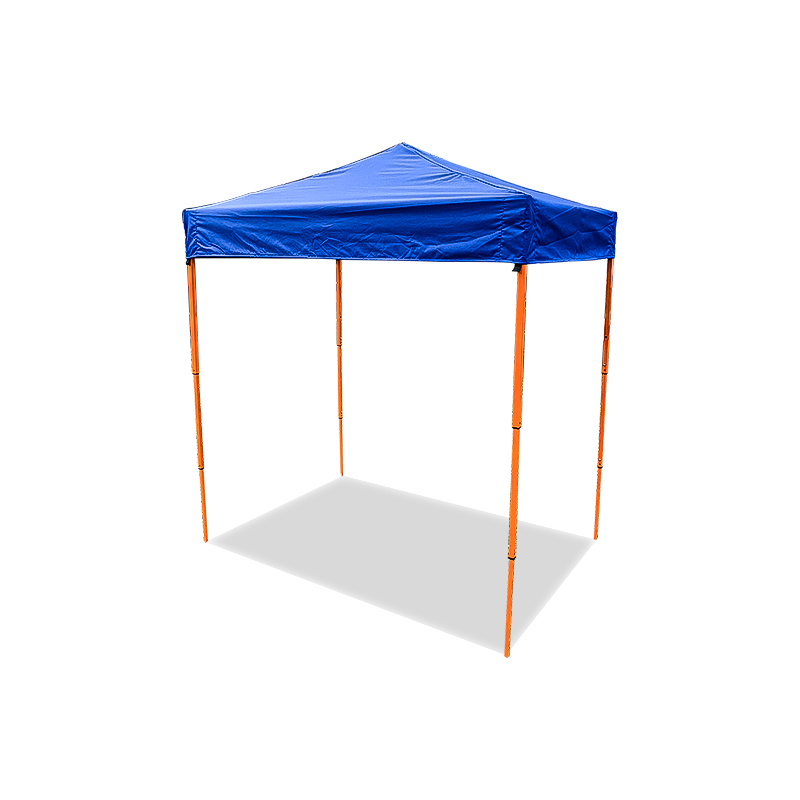
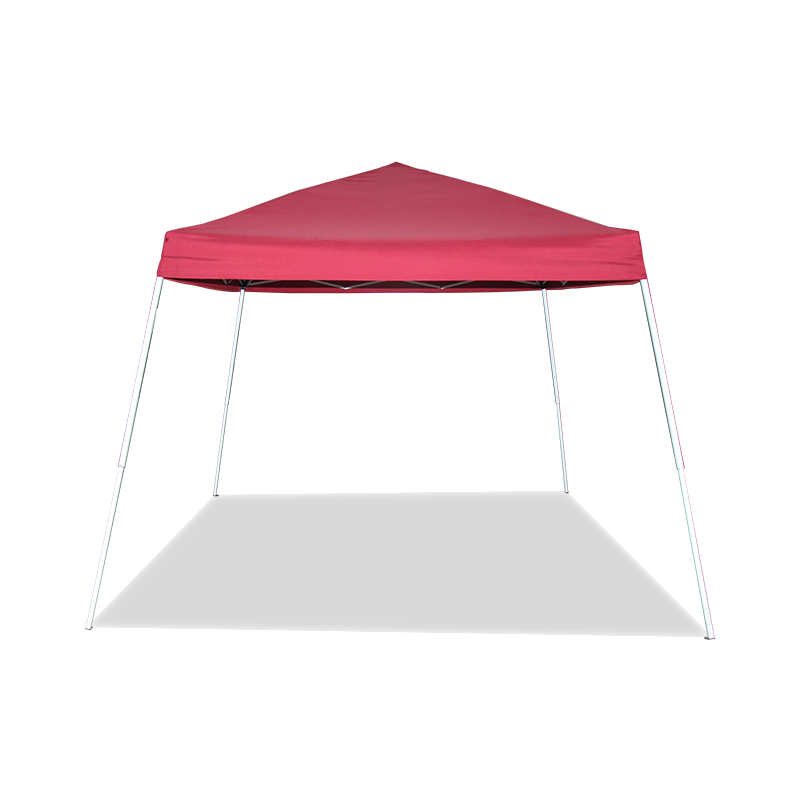
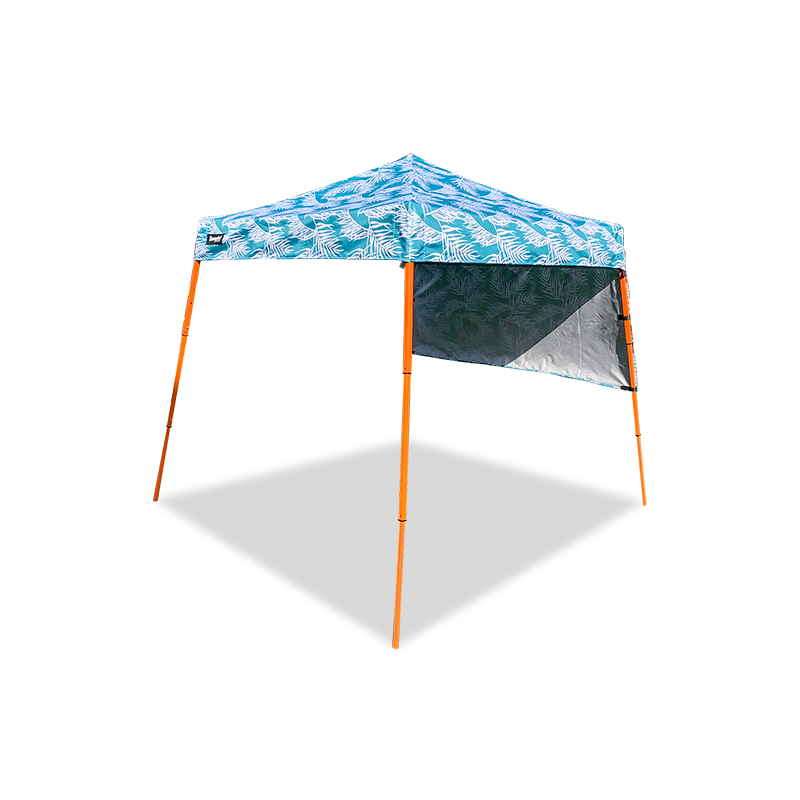
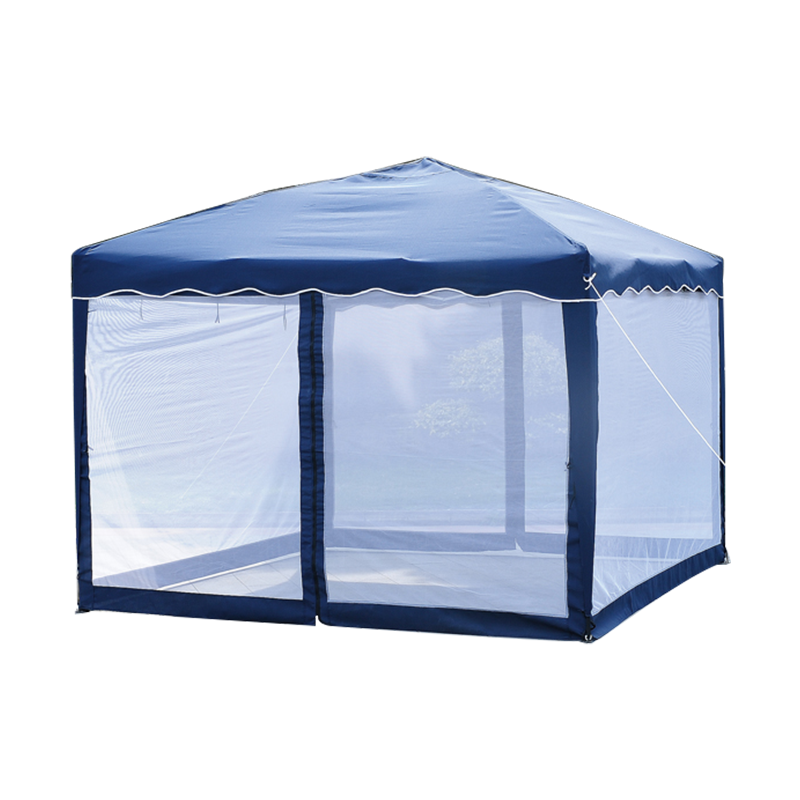
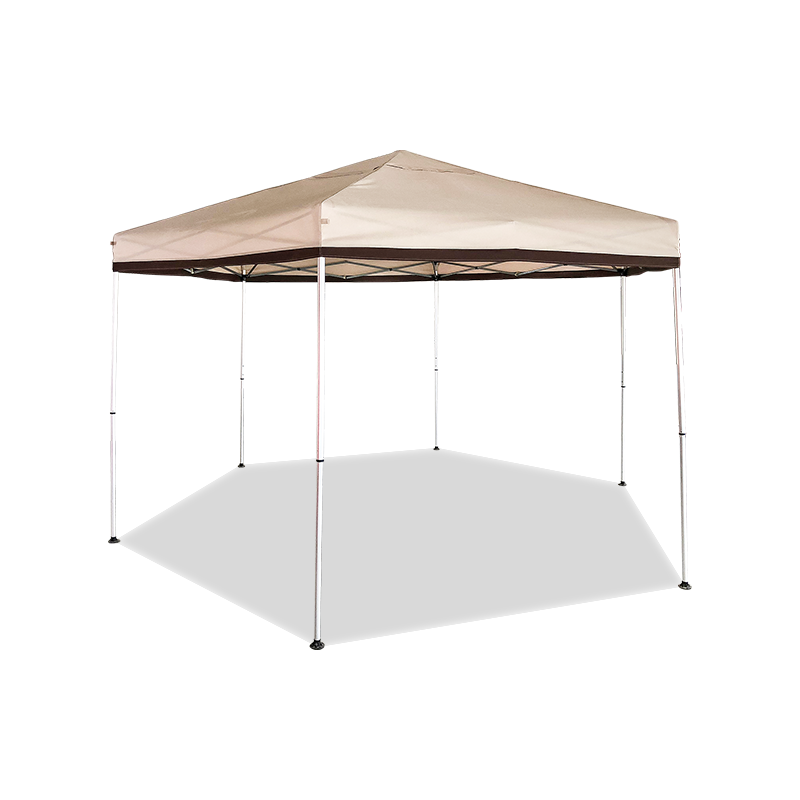
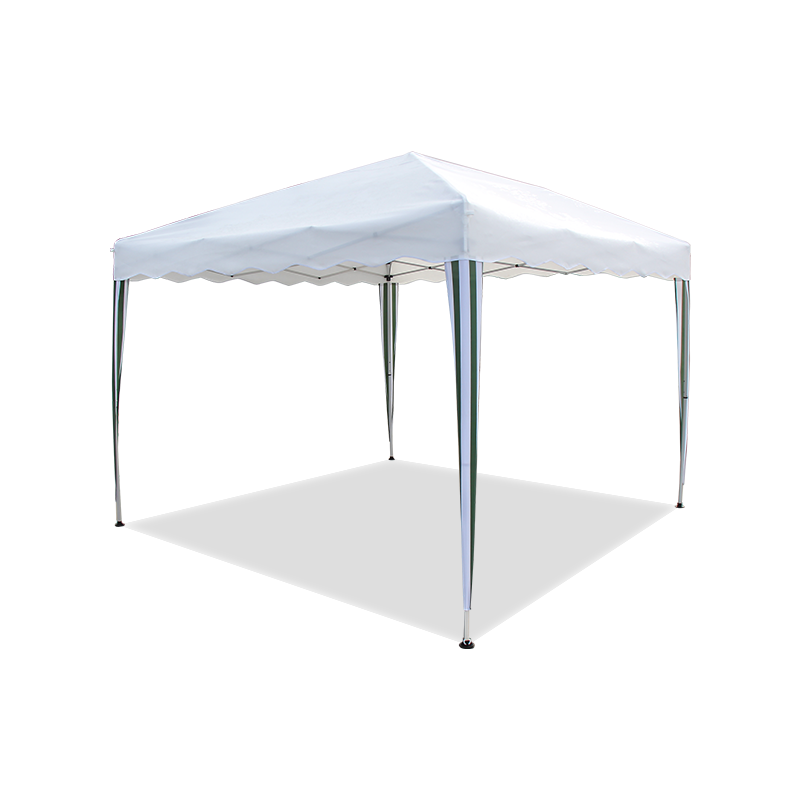
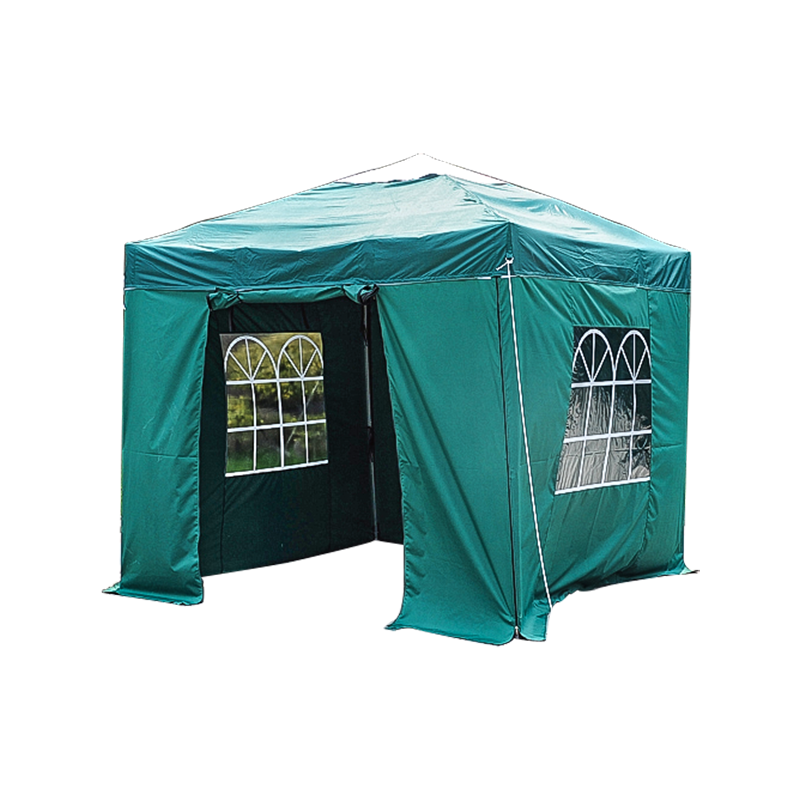
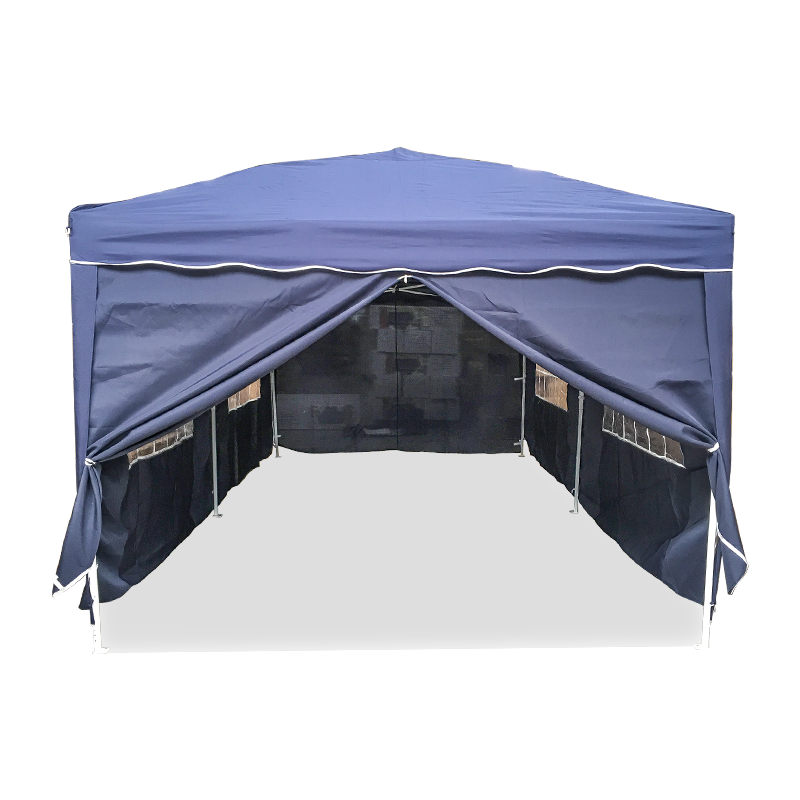
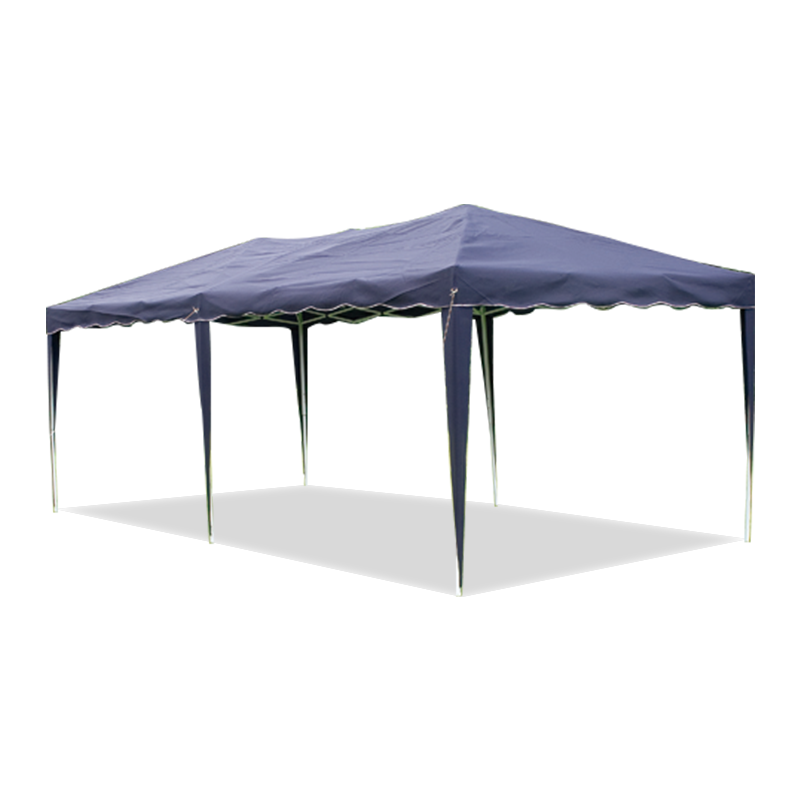
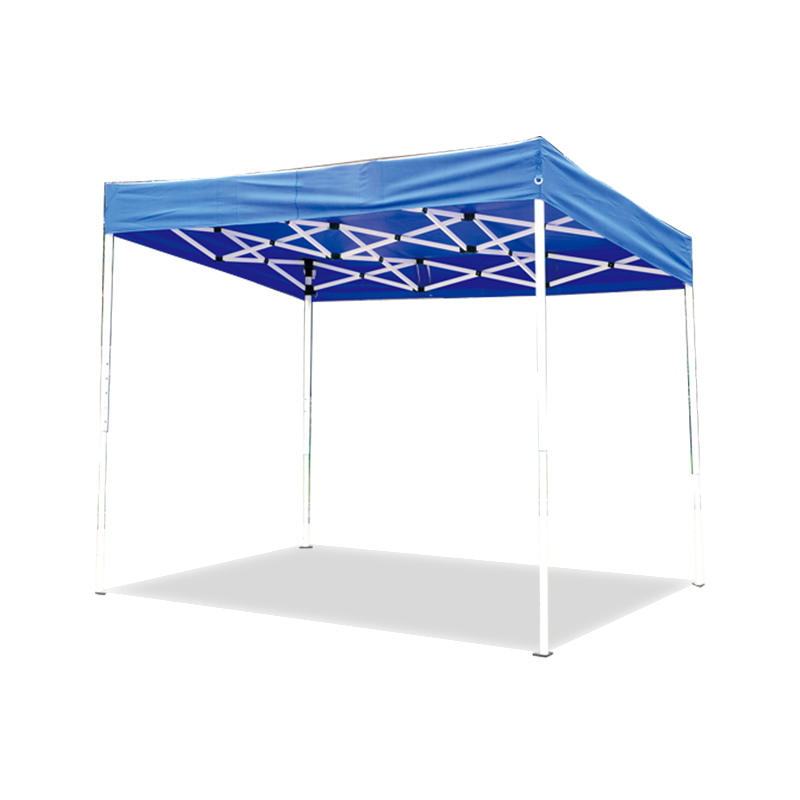
Pop-up canopy tents, also called instant canopies or easy-up shelters, are the most common form of portable canopy on the market. They use a collapsible steel or aluminum scissor-leg frame that expands with minimal assembly. Standard footprints are 10' x 10' (3m x 3m), though 10' x 15' and 10' x 20' versions are widely available for vendor booths and outdoor dining setups.
The canopy top on these structures is typically a 150D–600D polyester fabric with a PU or PVC coating for water resistance. Weight ratings matter — cheap pop-up canopies marketed as "waterproof" may only resist light drizzle, while commercial-grade canopy tops rated to 2,000mm hydrostatic head pressure will handle sustained rainfall without leaking. Wind resistance also varies enormously: a consumer canopy may list "up to 35 mph wind resistance" with stakes, while a commercial frame canopy with proper ballasting handles 45+ mph gusts safely.
Common applications for pop-up canopies include:
- Farmers markets and street fairs
- Outdoor sporting events and sideline shelters
- Tailgate parties and outdoor gatherings
- Trade show booths in outdoor settings
- Temporary shade for construction sites and job sites
Frame Tents and Pole Tents
Frame tents use a rigid steel or aluminum perimeter frame with no center poles, which provides a clear, unobstructed interior. This makes them ideal for events, dining, and any application where interior layout matters. A typical commercial-grade frame tent can cover 400 to 2,000 square feet and is designed for repeated setup and takedown over many seasons. The canopy fabric on frame tents is almost always PVC-coated polyester, with fire retardancy certifications required by most event permits.
Pole tents, by contrast, use a combination of perimeter stakes and interior center poles to support a high-peaked canopy top. They require more staking area but create a visually dramatic silhouette that is popular for weddings and outdoor receptions. Pole tent canopy covers require precise tensioning — a canopy that's too loose will pool rainwater and eventually collapse under the load.
Pergola and Patio Canopies
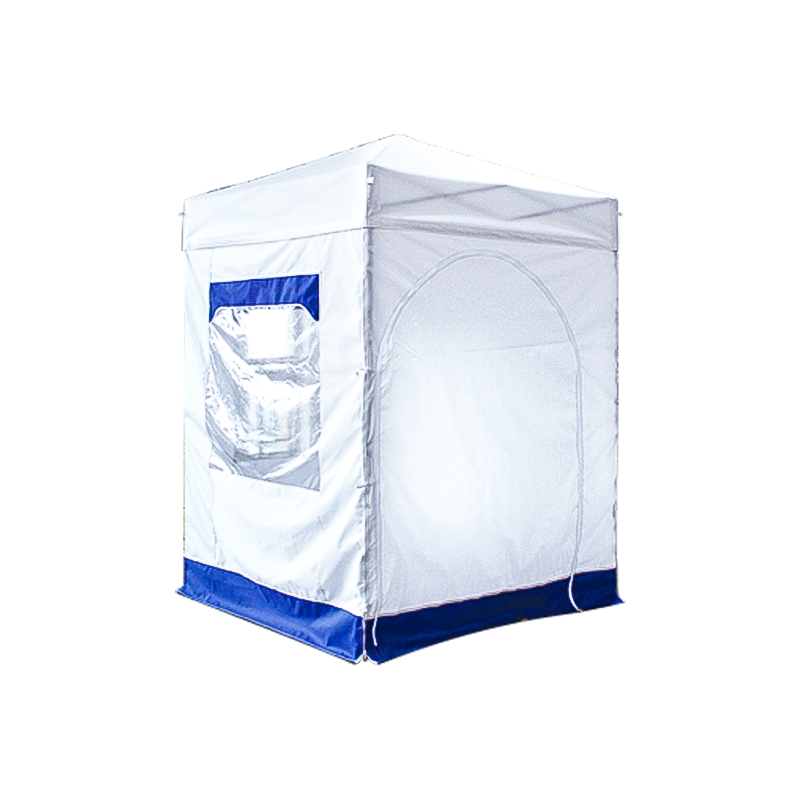
Pergola canopies are designed for semi-permanent residential and commercial outdoor spaces. They attach to a fixed pergola structure and provide shade on a seasonal basis. Most pergola canopy fabric is UV-stabilized polyester or acrylic (such as Sunbrella-type outdoor fabric), rated to resist 1,500+ hours of UV exposure before significant fading or strength loss occurs. Retractable pergola canopy systems allow homeowners to adjust coverage based on sun angle and weather, which is a major selling point in climates with variable summer conditions.
Agricultural and Industrial Canopy Structures
In agricultural settings, canopies protect equipment, livestock, and crops from rain, hail, and excessive sun. Greenhouse canopy systems and shade house structures use mesh or polycarbonate panel covers rather than fabric tarps, optimizing light transmission while blocking heat. Industrial canopy structures — used for warehousing, vehicle storage, and outdoor manufacturing — are typically galvanized steel truss frames with PE or PVC canopy covers, designed for spans up to 60 meters and rated for wind and snow loads per local building codes.
Tarp Applications: Beyond Basic Coverage
Tarps are among the most versatile protective products available. While most people think of a tarp as something you throw over a woodpile, the range of industrial and commercial tarp applications is far more extensive — and the specifications required for professional use are far more demanding.
Construction and Roofing
On construction sites, tarps are used to protect building materials, cover incomplete roofing during rain, shield scaffolding work areas, and wrap equipment overnight. A standard construction tarp specification calls for 12 mil or heavier PE with reinforced grommets spaced no more than 24 inches apart around the perimeter. In roofing applications specifically, tarps are often installed to protect a damaged or open roof for days or weeks at a time, meaning UV stability and waterproofing performance are critical — not optional features.
FEMA and disaster relief organizations stockpile millions of square yards of blue PE tarps for emergency roofing after hurricanes, tornadoes, and severe hail events. These tarps must meet specific performance standards including a minimum tensile strength of 40 lbs/in warp and fill direction and resistance to leakage under 25mm water column pressure.
Transportation and Freight
Flatbed trucking relies heavily on tarps to protect cargo from weather and road debris. Steel tarps, lumber tarps, and machinery tarps are purpose-engineered for this sector. A steel tarp — used to cover coiled metal or steel sheet loads — is typically 4' to 6' tall with a 12' to 16' nose flap and weighs 40–100 lbs depending on size and material. Lumber tarps are wider, often 24' x 27', and include D-ring reinforcements along the edges for tie-down straps. These tarps are manufactured to DOT requirements and are inspected regularly as part of carrier safety protocols.
Agriculture and Aquaculture
In farming, tarps serve multiple purposes. They cover stored grain, hay bales, and silage to prevent spoilage from moisture. They line irrigation ditches and holding ponds as flexible waterproof liners. They are used as ground tarps for mulching — a technique where black PE tarps are laid over soil to suppress weeds and retain moisture, reducing irrigation needs by up to 30–40% in dry climates. In aquaculture, HDPE pond liners — which are a heavy-duty form of tarp — hold water in fish farming operations and prevent ground contamination.
Outdoor Recreation and Survival
Lightweight silnylon and Dyneema composite tarps have become standard gear for ultralight backpackers and wilderness campers. A silnylon tarp measuring 9' x 7' can weigh as little as 8–12 oz while providing full weather protection when properly pitched. These tarps are versatile — they function as overhead shelters, ground cloths, emergency ponchos, and wind breaks, depending on how they are rigged. The canopy-style pitch, where the tarp is staked at an angle with one side low to the ground, is one of the most common configurations for solo rain protection on long trails.
Sizing Canopies and Tarps: Getting It Right the First Time
Undersized coverage is one of the most common and costly mistakes buyers make when purchasing canopies or tarps. The instinct is to measure the object being covered and order accordingly — but this consistently leads to a tarp that barely reaches the edges and provides no meaningful overhang or drip line.
The standard recommendation for tarps used to cover objects on the ground is to add at least 2 feet per side to the object's dimensions to allow for overhang and tiedown. For covering a truck bed measuring 6' x 8', you would need at minimum a 10' x 12' tarp — and a 10' x 15' would give more reliable coverage in rain. For canopy applications, the sizing logic is slightly different because the structure itself defines the covered footprint. A 10' x 10' canopy does not provide 100 square feet of rain-free space — the actual protected area under a standard canopy with straight legs is closer to 81–90 square feet once you account for the eave overhang and the angle of rainfall at the perimeter.
Sizing for Events and Seating
Event planners typically use the following benchmarks when sizing canopy coverage for seated guests:
- Banquet-style seating (round tables): 8–10 sq ft per person
- Reception or cocktail-style (standing): 5–6 sq ft per person
- Classroom or theater seating: 6–8 sq ft per person
A dinner reception for 100 guests in a banquet configuration needs approximately 900 square feet of usable canopy space, which translates to something like a 30' x 30' tent structure — not a 10' x 10' pop-up canopy. Getting this sizing wrong means either a dangerously overcrowded tent or unexpected rental costs when you realize the original booking was insufficient.
Grommet Spacing and Load Points
For tarps that will be used under tension — stretched between anchor points or over a frame — grommet placement and reinforcement quality directly affect how well the tarp performs under stress. A tarp with grommets spaced 24 inches apart distributes wind and tension loads across more points than one with 36-inch spacing, reducing the likelihood of a single grommet tearing out under load. Reinforced grommets with heat-sealed webbing around the grommet hole resist tear-out far better than stamped metal grommets in basic PE material. In high-wind applications, always use straps or bungees at every grommet point — never skip anchor points to save time.
1.jpg)
Wind, Water, and UV: Understanding the Real Performance Specs
Marketing terms like "waterproof," "UV-resistant," and "wind-rated" are used loosely across the canopy and tarp industry. Understanding what these terms actually mean in measurable terms helps buyers evaluate competing products honestly.
Waterproofing: Hydrostatic Head Pressure Ratings
Waterproofing in canopy and tarp fabrics is measured in millimeters of hydrostatic head pressure (HH). This number represents how tall a column of water the fabric can withstand before water begins to seep through:
- Below 1,500mm HH: Water resistant — suitable for light drizzle only
- 1,500–3,000mm HH: Waterproof — handles moderate sustained rain
- Above 3,000mm HH: Highly waterproof — appropriate for heavy rainfall and prolonged exposure
Many budget canopies are rated at 600–900mm HH, which means they will leak during moderate rain — not ideal for anything beyond brief sun shade. Commercial canopy tops rated at 3,000mm HH or higher will stay dry in a downpour, provided the seams are also properly sealed or taped.
Wind Load Ratings for Canopies
Wind is the primary structural threat to any canopy. A 10' x 10' canopy acts as a sail in wind, generating lift and lateral force that can overturn the structure entirely if it is not properly ballasted or staked. A canopy top exposed to a 40 mph wind experiences an aerodynamic force of approximately 80–120 lbs depending on the roof pitch and the presence of sidewalls. Sidewalls dramatically increase wind load — a canopy with full sidewalls in 40 mph wind may experience 300–400 lbs of total force.
Industry guidelines recommend a minimum of 40 lbs of ballast per leg for a 10' x 10' canopy in moderate wind conditions. In gusty or exposed locations, 60–80 lbs per leg is more appropriate. Water weight bags, sandbags, and concrete-filled buckets are all used as ballasting solutions. Stakes are only reliable when the ground is soft enough to hold them — concrete, asphalt, and packed gravel require ballast weights instead.
UV Protection: UPF Ratings and Fade Resistance
Shade canopies are often rated with an Ultraviolet Protection Factor (UPF) score, which indicates how much UV radiation is blocked by the fabric. A canopy fabric with a UPF rating of 50+ blocks more than 98% of UV radiation, which is the threshold used by Australian/New Zealand standards (AS/NZS 4399) to classify a product as "excellent" UV protection. For shade canopies over playgrounds, pools, and outdoor work areas where prolonged UV exposure is a health concern, a UPF 50+ rated canopy fabric should be the baseline specification, not an upgrade.
Installation and Safety: What Most Buyers Overlook
A canopy or tarp that fails during use is not just a financial loss — it is a safety hazard. Canopy collapses at public events have caused injuries and fatalities. Tarps that blow off trucks on highways have caused serious accidents. Taking installation and anchoring seriously is not optional for professional or commercial applications.
Canopy Installation Best Practices
- Always assemble the canopy frame before attaching the canopy top. Trying to install a canopy cover on a fully erect frame often strains the fabric at the corner pockets and causes premature wear.
- When using a canopy outdoors at a public event, verify whether local permit requirements specify fire-retardant canopy fabric — most US counties require CPAI-84 or NFPA 701 certification for any tent or canopy covering an assembly of people.
- Do not use a canopy during thunderstorms, hail, or sustained winds over 35 mph unless the structure has been engineered and rated for those conditions.
- Inspect the canopy frame for bent or cracked tubes before each setup — damaged aluminum poles are a known failure point under load.
- Use water-weight ballast bags rated at a minimum of 25 lbs per leg; larger or sidewall-equipped canopies require heavier ballasting.
Tarp Securing Methods and Load Standards
For tarps used in freight transport, FMCSA regulations require that cargo be secured with tie-downs meeting minimum aggregate working load limit (WLL) requirements based on cargo weight. A tarp is not a tie-down — it is a protective covering, and the tarp itself must be secured with straps rated for the wind and aerodynamic forces it will encounter at highway speeds. At 65 mph, a loose tarp flap generates roughly 200–400 lbs of lift and drag force depending on the exposed area — enough to strip an improperly secured tarp from a flatbed within minutes.
For roofing and construction tarps, OSHA recommends that tarps used over open structures be secured at every grommet point and that excess tarp not be left flapping freely where it could catch wind and dislodge roofing materials or pose a trip hazard for workers.
Maintenance and Storage: Extending the Life of Your Canopy or Tarp
The lifespan of a canopy or tarp depends almost entirely on how it is used, cleaned, and stored between uses. A commercial-grade PVC canopy top rated for 10 years of use may fail in 3 years if stored wet and folded tightly. A basic PE tarp rated for 2 years may last 5 years if properly cleaned and stored in a UV-protected environment.
Cleaning Canopy Fabric and Tarps
Most canopy fabrics and quality tarps should be cleaned with mild soap and water — not pressure washers, bleach-based cleaners, or solvents. Harsh chemicals degrade PVC coatings, strip UV inhibitors from PE tarps, and can void manufacturer warranties on canopy tops. For mold or mildew on canvas or acrylic canopy fabric, a diluted solution of 1 part white vinegar to 4 parts water is effective and non-damaging. Allow the fabric to air dry completely before folding and storing.
Storage Guidelines
- Never store a wet canopy or tarp — moisture trapped in folds causes mold, mildew, and material degradation within days.
- Fold tarps loosely rather than rolling tightly — tight rolling creates permanent creases in PE tarps that weaken the material at the fold lines over time.
- Store canopy fabric and tarps in a cool, dry, UV-protected space — a garage or storage room is far better than an outdoor shed with a leaky roof or direct sun exposure through a plastic panel.
- Inspect grommets and seams before each season. A failed grommet can be repaired with a grommet repair kit for under $15 — replacing the entire tarp because of a single grommet failure is unnecessary.
- Store canopy poles and frames separately from canopy covers to avoid abrasion damage to the fabric from metal edges and connectors.
When to Replace Rather Than Repair
Small tears in PE tarps and canopy fabric can be repaired with peel-and-stick repair tape or patch kits. A 3-inch tear repaired within 48 hours of occurrence — before the tear propagates — will hold for the remainder of the season under normal use. However, canopy fabric or tarps showing widespread UV degradation (chalking, cracking, or brittleness across the surface), delamination of the PE coating, or rust staining from grommet corrosion should be replaced entirely. Patching a tarp that is fundamentally degraded is a short-term fix that will fail unpredictably, often at the worst possible time.
.jpg)
How to Choose Between a Canopy and a Tarp for Your Specific Need
The decision between using a canopy versus a tarp is not always obvious, especially for buyers who need overhead protection in semi-permanent or portable outdoor settings. Here's a practical decision framework:
| Requirement | Use a Canopy | Use a Tarp |
|---|---|---|
| Overhead shelter for people | Preferred | With rigging |
| Covering stored objects on ground | Overkill | Ideal |
| Repeated setup and takedown | Pop-up canopy | Flexible |
| Permanent or semi-permanent installation | Frame or pergola canopy | Not recommended |
| Budget-driven purchase | Higher cost | Lower cost |
| Flame retardancy required | FR canopy available | FR tarp available |
| Transport or freight coverage | Not suitable | Freight tarps |
The most important takeaway: a tarp is not a substitute for a properly designed canopy when people are working or gathering underneath. A canopy provides a stable, supported structure with defined load ratings and predictable performance. A tarp rigged between trees or poles introduces variables — rope failure, pole flex, anchor point degradation — that make it unreliable for sustained occupancy. For covering objects, protecting surfaces, or short-term emergency use, tarps are faster, cheaper, and more adaptable than canopies. For reliable human shelter, a canopy — properly ballasted, correctly sized, and built to relevant standards — is the right tool.

