
 English
 Español
Customer expresses intent; Communicate between the two parties; Provide analysis reports to customers; Reach a cooperation intention.
Content
- 1 Frame Construction: What Makes a Canopy Truly Heavy Duty
- 2 Fabric Weight and Waterproofing: Reading the Numbers Correctly
- 3 Sizing a Heavy Duty Outdoor Canopy Tent to the Job
- 4 Wind Stability: Anchoring and Realistic Expectations
- 5 Weight, Portability, and Setup Speed
- 6 Maintenance, Replacement Parts, and Real Lifespan
- 7 Heavy Duty Outdoor Canopy Tent: Common Questions
- 7.1 How much weight is needed to hold down a 10x10 ft canopy?
- 7.2 Is a straight-leg cross-truss canopy better than a slant-leg model?
- 7.3 Are heavy duty canopy tents fully waterproof?
- 7.4 Can one person set up a heavy duty outdoor canopy tent?
- 7.5 How long does a heavy duty outdoor canopy tent last?
- 7.6 Can I leave a heavy duty canopy tent up overnight?
- 7.7 What size canopy do I need to cover a car?
A heavy duty outdoor canopy tent is defined by specific numbers, not vague marketing phrases. The frame should use cross-truss construction with 25 mm or larger steel tubing, the roof fabric should start at 250 gsm with a PVC coating for rain-rated performance, and the complete unit should weigh at least 45 lb (20 kg) for a 10x10 ft footprint. Industry comparison guides from 2026 consistently place cross-truss steel canopies at roughly 50 lb (22.7 kg) for a 10x10 ft model, which is the practical threshold for weekly commercial use - tradeshows, carports, catering stations, and multi-day events.
This guide walks through frame materials, fabric specifications, sizing logic, wind anchoring math, setup times, and maintenance routines that determine whether a canopy lasts two seasons or eight. Each section ends with a practical takeaway you can apply before placing an order.
Frame Construction: What Makes a Canopy Truly Heavy Duty
The frame takes the wind load first. A consumer pyramid canopy uses slant legs and lightweight 19-22 mm tubing with 1.0 mm walls; a heavy duty outdoor canopy tent uses a cross-truss roof with interlocking steel arms, vertical legs of 25 mm round or 30x30 mm square steel, and gusset plates where the roof braces meet the legs. The result is a structure that resists twisting instead of folding sideways the moment the wind shifts.
Weight is the fastest way to spot the class of tent you are looking at. According to canopy comparison data published in 2026 review guides, heavy-duty cross-truss frames are built from thicker steel than pyramid-style frames and average about 50 lb (22.7 kg) for a 10x10 ft canopy. Slant-leg consumer tents of the same footprint typically weigh 25-32 lb (11-14.5 kg). When you lift the bag out of the box, you already know which category you are buying.
| Frame Type | Leg Material | Unit Weight | Wind Behavior | Typical Lifespan |
|---|---|---|---|---|
| Pyramid / slant leg | 19-22 mm steel, 1.0 mm wall | 25-32 lb | Fold-over risk above 16-18 mph | 1-3 seasons |
| Cross truss, round steel | 25 mm steel, 1.2 mm wall, powder coated | 45-55 lb | Stable to 25-30 mph with ballast | 3-6 seasons |
| Cross truss, square steel | 30x30 mm steel, 1.5 mm wall, powder coated | 55-70 lb | Stable to 35 mph with ballast | 5-8 seasons |
| Cross truss, aluminum | 25 mm 6061-T6 aluminum | 35-45 lb | Stable to 25-30 mph with ballast | 4-7 seasons |
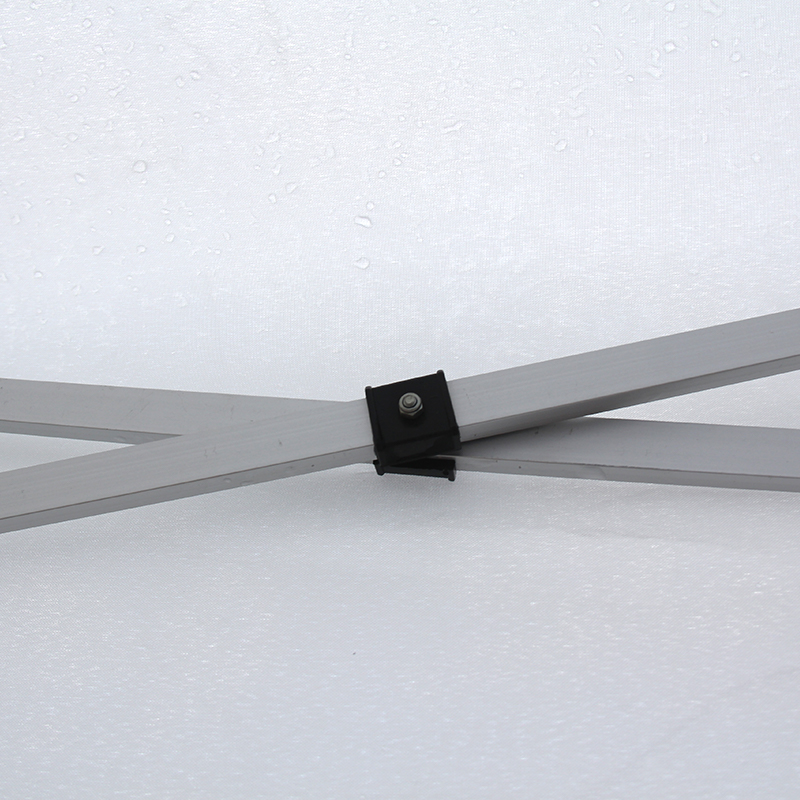
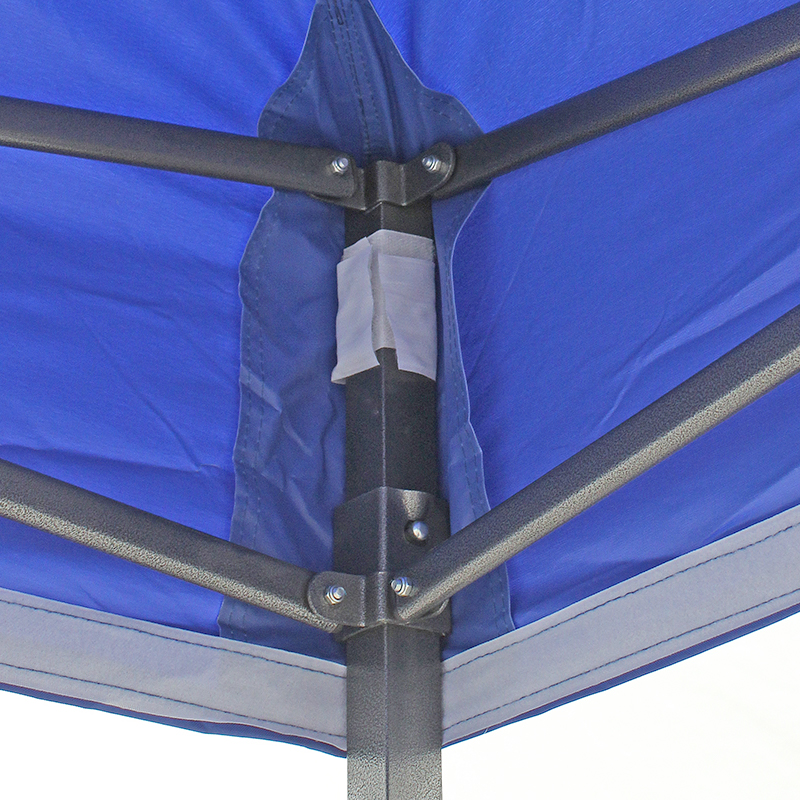
Count the truss arms before buying. Economy cross-truss models use four folding arms per side, while genuine heavy duty units use six or more, with a stamped-steel gusset plate at every pivot point. Gusset plates spread the load so the frame does not bend at the hinge. The pivot points are the first components to develop play on a frequently used canopy; larger plates and thicker rivets slow that wear dramatically.
Connector quality matters as much as tube size. Plastic connectors are acceptable for seasonal home use, but aluminum alloy or heavy stamped-steel connectors handle repeated setup cycles without cracking. Most commercial canopies offer both choices; if you set up more than twice a month, choose the metal connector version.
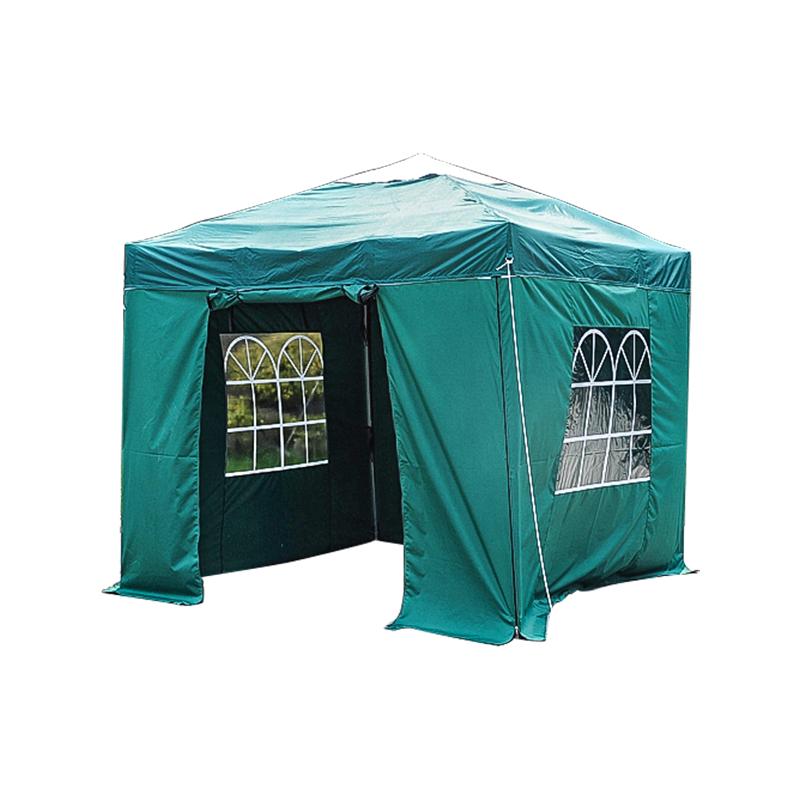
 A05 Steel Frame Black Powder Coated 140g Polyester Folding CanopyThis steel-framed canopy with black powder coating offers a stiffer, durable structure. The metal connectors and corrosion-resistant finish make it a reliable choice for repeated setup, as emphasized in the preceding discussion on connector quality.View Product →
Steel vs. Aluminum: Trade-Offs Beyond Weight
Powder-coated steel is the default for heavy duty outdoor canopy tent frames because it is stiffer, easier to weld into complex truss shapes, and cheaper than aluminum. The black powder coating provides corrosion resistance; expect rust only where the coating is scratched, so handle the legs carefully on rough surfaces.
Aluminum 6061-T6 frames weigh 25-30 percent less and never rust, which makes them a favorite for mobile event crews and anyone who lifts a canopy in and out of a van several times a week. The trade-off is price: an aluminum cross-truss frame typically costs 40-60 percent more than an equivalent steel frame. For a fixed installation or a seasonal setup, steel is the better value.
Fabric Weight and Waterproofing: Reading the Numbers Correctly
Roof fabric is rated in grams per square meter (gsm). The value combines the polyester base weave with any coating applied on top. As a buying rule: below 200 gsm is shade fabric; 250 gsm with PVC coating is the minimum for a rain-rated heavy duty outdoor canopy tent; 300 gsm PVC-coated polyester is the commercial standard; and 520 gsm PVC tarpaulin is used on large party tents where the roof also carries structural tension.
- 140 g polyester with PU silver coating - reflects UV and sheds light rain, but the fabric saturates quickly in a downpour. Suitable for market stalls and daytime events.
- 250 g PVC-coated polyester - fully rain-rated for practical purposes; the PVC layer seals the weave and resists water pooling. This is the entry point for serious outdoor use.
- 300 g PVC-coated polyester - heavier coating, better tear strength, longer service life under repeated sun and rain exposure. Common on 3x3 m and 3x4.5 m folding gazebos built for export.
- 520 gsm PVC tarpaulin - the heaviest practical grade, used on four-sided party tents and wedding marquees where water must never reach the interior.
Hydrostatic head numbers - the height of a water column a fabric can hold before leaking - appear on some spec sheets. A rating of 1500 mm is acceptable for light rain; 3000 mm or higher is the reliable zone for a canopy left up overnight. PVC-coated fabrics typically exceed 3000 mm because the coating blocks water entirely, whereas uncoated 140 g polyester may test below 800 mm.
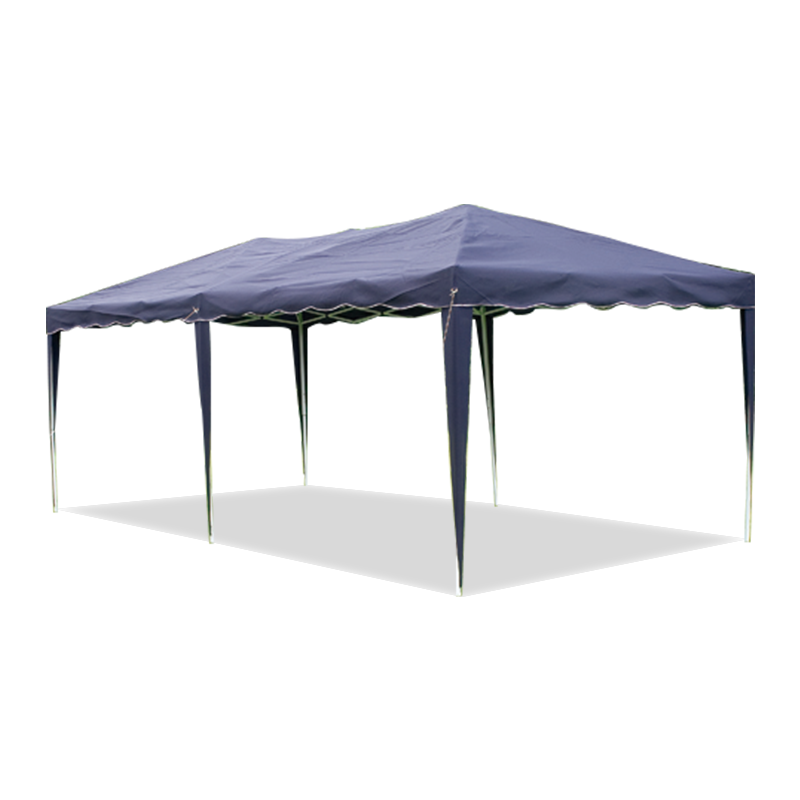
 A06 250g PVC Coated Polyester Folding Canopy GazeboWith 250g PVC-coated fabric, this canopy likely exceeds 3000 mm hydrostatic head for reliable waterproofing. The preceding paragraph notes the importance of seam construction, and this model’s coated material reduces leak risk at seams.View Product →
Why Seams and Corners Fail Before the Fabric Does
A heavy duty outdoor canopy tent usually leaks at the seams, not through the panel. Look for double-stitched seams with folded hems and a welded or taped finish on PVC-coated material. Reinforced corner triangles - the webbing patches at the four roof corners - distribute tension and prevent the fabric from tearing where the frame pushes upward. If a spec sheet does not mention reinforced corners, assume they are absent.
Color choice affects interior temperature. White and silver-coated roofs reflect more solar energy, keeping the area underneath noticeably cooler in mid-summer; dark green or navy roofs fade less visibly but absorb heat. Most heavy duty canopies for event use ship in white or off-white for this reason.
Sizing a Heavy Duty Outdoor Canopy Tent to the Job
Size is the most commonly miscalculated specification. The footprint needs to cover the item or people plus a safety margin for wind-driven rain. For a carport, add at least 50 cm of clearance on both sides and 60 cm at the front; for a tradeshow booth, match the canopy footprint to the booth dimensions and the side walls to the booth height.
| Size | Floor Area | Covers | Typical Use |
|---|---|---|---|
| 2x3 m (6.5x10 ft) | 6 sq m | 2-4 people or one car hood | Market stall, camping kitchen |
| 3x3 m (10x10 ft) | 9 sq m | 4-8 people, small hatchback | Standard event canopy, bar station |
| 3x4.5 m (10x15 ft) | 13.5 sq m | 8-15 people, mid-size car | Tradeshow booth, small wedding section |
| 3x6 m (10x20 ft) | 18 sq m | 15-25 people, one full sedan | Carport, large catered events |
Height is the second dimension people forget. A carport needs a peak height of at least 2.8 m to clear an SUV with the tailgate open. A wedding buffet table with a chafing dish needs about 2.4 m of clearance. If standing guests will be under the full footprint, verify the eave height - the clearance at the outer edge - not just the peak height, because a 3 m center peak can drop to 1.8 m at the edges on a slant-leg frame. Cross-truss frames hold a flatter roof profile and keep more usable headroom near the perimeter.
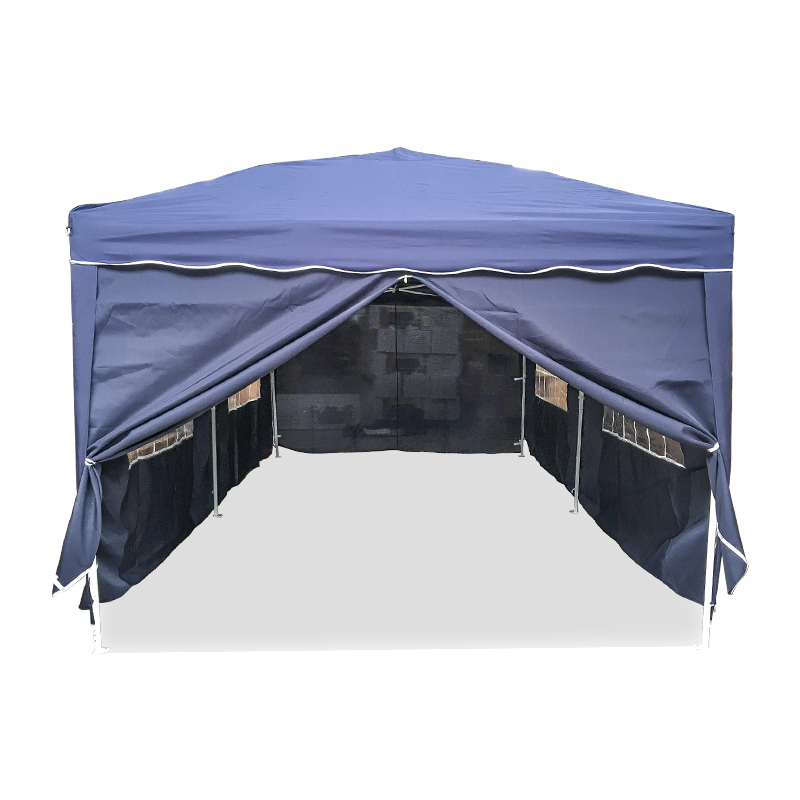
 3x6M Outdoor Folding Canopy Gazebo with PVC Coated RoofThis large 3x6 meter canopy provides 18 sqm of coverage. The PVC-coated fabric and included sidewalls with zippered doors offer weather protection, matching the adjacent context on sidewall functionality and clearance for events.View Product →
Side walls turn a canopy into a room. Removable walls with zippered doors add privacy, block wind, and keep rain from blowing in. Wall material should match the roof: PVC-coated walls for waterproofing, or mesh walls for airflow in hot weather. A 3x3 m canopy with two mesh walls and two solid walls works well for catering stations that need both ventilation and splash protection.
Wind Stability: Anchoring and Realistic Expectations
No unanchored canopy is heavy duty. A flat 9 sq m roof can lift several hundred pounds when wind gets underneath the panel. The rule of thumb used by event suppliers is 40-60 lb (18-27 kg) of ballast per leg for exposure up to 25 mph, and 80-100 lb (36-45 kg) per leg when the forecast calls for 30 mph gusts.
The anchoring method has to match the surface. In grass, use 12 in (30 cm) steel stakes driven at a 45-degree angle. On soft ground, auger anchors grip better and pull out less easily. On concrete or asphalt, use sandbags, water barrels, or weighted steel base plates; a heavy duty outdoor canopy tent frame without leg weights becomes a sail instead of a shelter.
Vented Roofs vs. Solid Roofs
A vented roof design allows air to flow through the top gap instead of pushing the fabric upward from inside. Cross-truss frames with a peaked, vented top are noticeably calmer in gusty conditions. The trade-off is that a vented roof sheds a little less rain if the vent flaps are open; for a carport or permanent installation, choose a solid roof with proper frame bracing and heavy ballast instead.
Guy ropes attached to the frame legs at a 45-degree angle add one more layer of stability in exposed locations. Anchor the rope stakes at least 2 m from the tent leg. For a canopy in an open field, this simple addition can reduce frame flex noticeably.
Before you leave a tent up overnight, compare its frame and anchoring plan against the expected weather. Even a commercial-grade cross-truss unit should be taken down when a severe storm warning is issued. The structure is designed to handle typical wind events, not tornado-class gusts. For a deeper look at what weather a folding canopy can realistically tolerate, read our guide on whether canopies are resistant to the elements.
Weight, Portability, and Setup Speed
A 10x10 ft heavy duty steel cross-truss canopy ships in a roller bag roughly 165 cm long and weighs between 50 and 70 lb (23-32 kg), depending on the fabric grade and connector material. For most commercial users, two people set up the frame in 8 to 12 minutes, then add the roof and side walls in another 5 minutes. A trained single user can complete the job in 15 to 20 minutes with a push-button or pull-ring locking mechanism.
- Lay the folded truss frame flat and release all locking levers.
- Pull the frame outward to its full width; push up from the center until the scissor arms lock.
- Extend each leg and lock the pins; adjust to equal height.
- Drape the top cover over the frame and secure the hook-and-loop straps at each corner.
- Attach ballast or drive stakes before releasing the framework.
If your crew moves the tent more than once a week, consider an aluminum-framed cross-truss model. The 10-15 lb weight saving does not sound large until you are lifting the unit onto a roof rack or carrying it across a parking lot. The price premium pays for itself in reduced fatigue and faster setup on busy days.
The roller bag is a wear item: choose one with reinforced stitching at the handle and double zippers. When you pack the tent, roll the fabric loosely so the fold creases do not align in the same place every time - constant folding on the same lines eventually cracks the PVC coating.
Maintenance, Replacement Parts, and Real Lifespan
With basic care, a steel-frame heavy duty outdoor canopy tent lasts five to eight years of weekend commercial use. The frame itself can run a decade or more; the fabric is normally the first component to fail from UV degradation and repeated folding.
- Clean with mild soap and a soft cloth. Hose the frame down but avoid pressure washing the fabric; high-pressure water forces coating particles out of the weave.
- Dry the roof completely before folding. Storing a damp PVC-coated canopy for more than 48 hours encourages mildew on the polyester backing.
- Keep the unit out of direct sunlight when parked. UV exposure is the main cause of coating embrittlement; a canopy stored in a shaded warehouse will outlast one stored on a sunny rack.
- Replace the top cover instead of patching it. A replacement canopy top usually costs 30-50 percent of a complete new tent and restores waterproofness after the original fabric has degraded.
Leg caps, pull pins, elastic cords, and wheeled bags are all replaceable wear items. Order extras when you buy the tent so that a broken pin does not ground the entire unit during a busy trade show week. If you need help identifying the right replacement part for your frame, contact our service department with your model number.
At the end of the season, disassemble the tent, clean every component, and store the frame and fabric separately in a dry room. Do not stack heavy objects on the folded frame; the truss arms can distort permanently under weight.
Heavy Duty Outdoor Canopy Tent: Common Questions
How much weight is needed to hold down a 10x10 ft canopy?
Use 40-60 lb (18-27 kg) per leg for exposure up to 25 mph. For 30 mph gusts, raise that to 80-100 lb (36-45 kg) per leg. In grass, 12 in steel stakes can substitute for part of the ballast on each leg.
Is a straight-leg cross-truss canopy better than a slant-leg model?
For anything beyond occasional backyard use, yes. Cross-truss frames use thicker steel, offer more headroom at the edges, and handle wind far better. Slant-leg units are lighter and cheaper, but they behave like a sail in gusty weather.
Are heavy duty canopy tents fully waterproof?
Only if the fabric is coated. A 250 gsm PVC-coated polyester roof is rain-rated in practice; 300 gsm and heavier coatings are better for sustained rain. Plain 140 g polyester with PU silver coating blocks sun but saturates in heavy rainfall.
Can one person set up a heavy duty outdoor canopy tent?
Yes, if the frame uses push-button or pull-ring locks and the user follows the right sequence. Expect 15-20 minutes for a 10x10 ft steel cross-truss tent, plus additional time for ballasting and side walls.
How long does a heavy duty outdoor canopy tent last?
A steel cross-truss frame with a 250-300 gsm PVC-coated roof lasts three to six years of frequent commercial use, and five to eight years with lighter weekend use. Replacing the top cover at the halfway point extends the service life of the whole system.
Can I leave a heavy duty canopy tent up overnight?
Yes, when fully staked and ballasted and when the forecast is below the frame's safe wind threshold. Take it down if a severe storm is expected; no portable canopy is designed for tornado-class winds.
What size canopy do I need to cover a car?
A 3x6 m (10x20 ft) canopy covers a full-size sedan with room to open the doors. A 3x4.5 m unit fits a small hatchback or a compact car. Always measure the car plus the door-opening swing before buying.
The takeaway: a heavy duty outdoor canopy tent is an investment in framing, not fabric alone. Buy the cross-truss frame, the 250 gsm or heavier roof, and the anchoring kit as one system, and you will have a shelter that earns back its cost over years of events.

