
 English
 Español
Customer expresses intent; Communicate between the two parties; Provide analysis reports to customers; Reach a cooperation intention.
Content
- 1 Heavy Duty Canopies Are Rated By Frame Gauge, Fabric Weight, And Wind Load, Not Just Size
- 2 Frame Construction Decides Whether A Canopy Survives Its First Storm
- 3 Fabric Weight And Coating Determine Water, UV, And Tear Resistance
- 4 Wind And Snow Load Ratings Should Match The Actual Site, Not The Sales Brochure
- 5 Sizing A Heavy Duty Canopy Correctly The First Time
- 6 Common Applications Where Heavy Duty Specification Actually Pays Off
- 7 Anchoring Method Has A Bigger Impact On Longevity Than Frame Grade Alone
- 8 Maintenance Habits That Extend Canopy Lifespan By Several Years
- 9 Cost Considerations Beyond The Initial Purchase Price
- 10 What To Check Before Buying A Heavy Duty Canopy
- 11 Frequently Asked Questions
- 11.1 What wind speed can a heavy duty canopy actually withstand?
- 11.2 How much snow load can a canopy roof hold before it needs to be cleared?
- 11.3 Is aluminum or steel better for a heavy duty canopy frame?
- 11.4 How long should a heavy duty canopy fabric last outdoors?
- 11.5 Do heavy duty canopies need a building permit?
- 11.6 Can a heavy duty canopy be left up year-round?
- 11.7 What size canopy is needed to cover a standard pickup truck or small RV?
- 11.8 Should sidewalls be left attached during a storm?
- 11.9 Can the fabric cover be replaced without replacing the entire frame?
- 11.10 How often should anchoring hardware be inspected?
Heavy Duty Canopies Are Rated By Frame Gauge, Fabric Weight, And Wind Load, Not Just Size
A structure only qualifies as a true heavy duty canopy when three things line up together: a frame built from thick-wall steel or commercial-grade aluminum tubing, a cover fabric rated at 12 ounces per square yard or heavier, and a documented wind resistance figure, usually somewhere between 50 and 90 miles per hour depending on anchoring. Canopies that are missing any one of these three specifications are general-purpose shelters wearing a heavy duty label, and they tend to fail at the frame joints or the fabric seams within the first two storm seasons.
This distinction matters because heavy duty canopies get bought for a reason: protecting equipment, vehicles, inventory, or livestock that would be expensive to replace if a shelter collapsed. A canopy is a capital purchase, not a disposable accessory, and buyers who treat it that way tend to end up replacing it twice as often as buyers who read the frame and fabric spec sheet carefully before ordering.
The sections below walk through frame construction, cover materials, load ratings, sizing, climate-specific considerations, installation, long-term maintenance, cost comparisons, and a full buying checklist, so the decision comes down to matching a spec sheet to an actual use case instead of guessing from a product photo.
Frame Construction Decides Whether A Canopy Survives Its First Storm
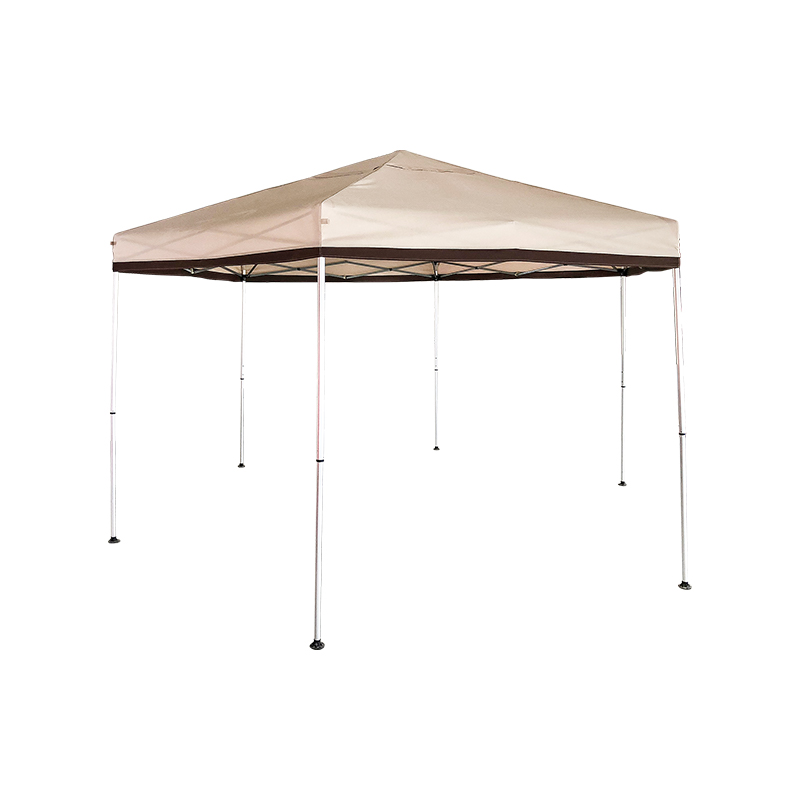
Frame tubing is measured two ways: outer diameter and wall thickness. Outer diameter gets marketed heavily because it is easy to compare, but wall thickness is what actually resists bending and buckling under load. A 2-inch diameter leg with a thin 0.8mm wall will flex and eventually crease long before a 1.5-inch leg with a 1.5mm wall does. This is the single most misunderstood spec in the entire canopy category, and it is the reason two canopies that look nearly identical in a catalog photo can perform completely differently in a real storm.
Standard Steel Frames
Round or square steel tubing between 1.5 and 2 inches, typically powder coated over a galvanized base layer. This is the most common frame class for canopies rated to withstand moderate wind and light to moderate snow accumulation. Expect a usable lifespan of 7 to 12 years when the powder coat stays intact and joints are inspected annually for rust bleed.
Commercial Aluminum Frames
Extruded aluminum with reinforced truss bracing at the ridge and eave lines. Roughly 40 percent lighter than an equivalent steel frame, which simplifies transport and repositioning, but aluminum requires wider or thicker tubing to match steel's rigidity at the same load rating. Corrosion resistance is superior in coastal or high-humidity environments where steel frames are prone to pitting.
Heavy Industrial Steel
Wall thickness of 2mm or more, hot-dip galvanized rather than surface coated, with welded or bolted gusset plates at every connection point. This class is built for permanent or semi-permanent installations carrying continuous structural load, such as covered material storage yards, and is rated for sustained wind exposure above 70 miles per hour when properly anchored.
Why Joint Design Matters As Much As Tube Gauge
Joint design matters as much as tube gauge. Canopies that rely on friction-fit slip joints without a locking pin or ratchet strap tend to walk apart under repeated wind gusting, even when the tubing itself is rated correctly. A bolted or pinned connection at every leg-to-truss junction is one of the more reliable indicators that a frame was engineered for repeated heavy weather exposure rather than occasional light use. Slip-fit connections rely entirely on friction between two metal surfaces, and that friction degrades slightly every time the frame flexes, meaning a joint that felt solid on installation day can loosen measurably after a single windy month.
Truss And Ridge Bracing
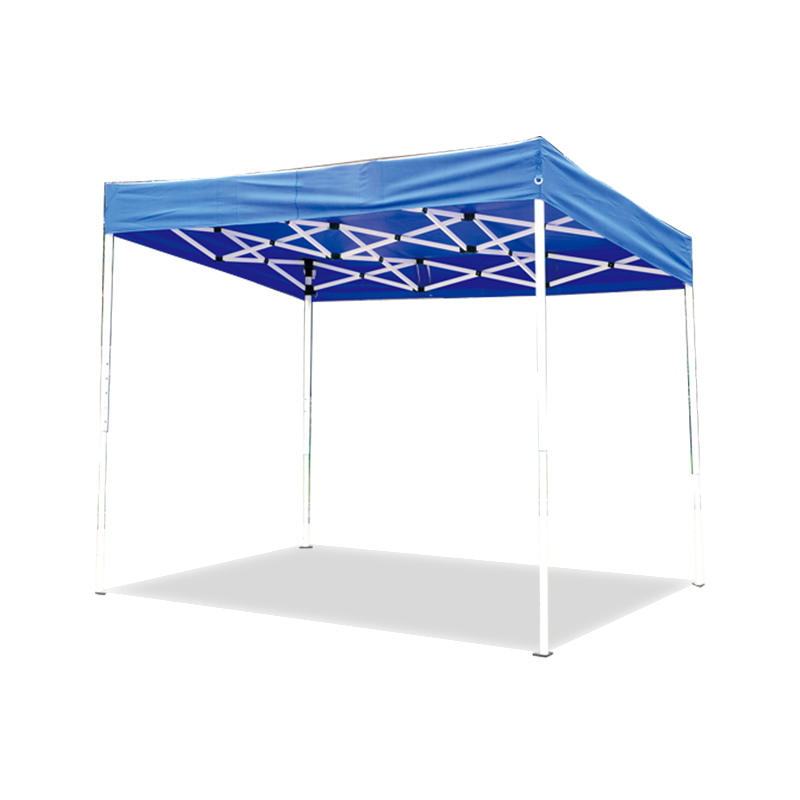
The ridge beam and the truss members that support it carry the majority of roof load transfer down into the legs. Canopies built for genuine heavy duty use include diagonal cross-bracing at the ridge, not just a straight horizontal beam, because a straight beam without bracing can bow under sustained snow or wind pressure even if the legs themselves never move. Look for X-pattern or K-pattern bracing visible in the truss assembly; its absence is a strong signal the frame was designed for light seasonal use rather than continuous outdoor exposure.
Leg Base Plates And Ground Contact
The bottom of each leg matters more than most buyers realize. A flat base plate with pre-drilled anchor holes distributes ground pressure over a wider area and gives a stable point to bolt or stake into, while a bare tube end concentrates all of the structure's weight and wind load onto a small point of contact, which can sink into soft ground over time and throw the entire frame out of level. Reinforced base plates with a minimum 4-inch by 4-inch footprint are a common feature on frames intended for permanent installation.
Fabric Weight And Coating Determine Water, UV, And Tear Resistance
Cover fabric is sold by weight in ounces per square yard, and this single number correlates closely with durability. Lighter fabrics in the 6 to 9 ounce range are common on consumer-grade pop-up canopies and are not built for continuous outdoor exposure. Heavy duty applications start at 12 ounces and commercial installations often specify 14 to 18 ounce material.
| Fabric Weight | Common Material | Typical Use | Expected Outdoor Life |
|---|---|---|---|
| 6 to 9 oz | Polyester or light polyethylene | Occasional events, temporary shade | 1 to 2 seasons |
| 12 oz | Woven polyethylene, PVC coated | Vehicle shelter, tool storage | 3 to 5 years |
| 14 to 16 oz | Reinforced PVC or vinyl laminate | Equipment yards, livestock cover | 5 to 8 years |
| 18 oz and above | Heavy vinyl or tarpaulin composite | Industrial storage, permanent structures | 8 to 12 years |
Coating Chemistry And Waterproofing
Coating chemistry is the other half of the story. Uncoated woven polyethylene sheds light rain but wicks moisture through the weave under sustained downpours. PVC and vinyl coatings seal the weave entirely, which improves waterproofing but adds weight and stiffness, so heavier coated fabrics need a frame rated to carry that additional dead load, not just wind load. UV inhibitor content also varies widely between suppliers; fabric without adequate UV stabilizer can lose 30 percent of its tensile strength within 18 months of direct sun exposure even if it never tears.
Denier Count And Weave Density
Beyond ounce weight, denier count describes the thickness of the individual threads used in the weave, while weave density describes how tightly those threads are packed together. A high denier count with a loose weave can still let water through at the seams, while a lower denier count with a tight, high-thread-count weave sometimes outperforms a heavier but loosely woven fabric on tear resistance. Buyers comparing two fabrics of similar ounce weight should ask about thread count per square inch, since this is often the differentiator between two products that otherwise look identical on a spec sheet.
Seam Construction And Stitching Patterns
Fabric panels are joined using either a double-stitched lock seam, a heat-welded seam, or an RF-welded seam depending on the coating type. Heat and RF welded seams are generally stronger on PVC and vinyl-coated fabrics because stitching creates needle holes that can become leak points over time, while a properly welded seam maintains the fabric's waterproof integrity across the entire panel. Stitched seams remain common on uncoated or lightly coated woven polyethylene because welding does not bond well to that material class, so seam type should always be evaluated relative to the base fabric rather than treated as a universal quality signal.
Color Retention And Fading
Pigment quality affects more than appearance. Fabrics dyed with lower-grade pigment tend to fade unevenly, and uneven fading is frequently an early visual indicator of UV degradation happening underneath the surface, well before any physical tearing becomes visible. A fabric that fades slowly and evenly across its entire surface over several years is generally holding its structural integrity better than one that develops blotchy or streaked fading within the first year.
Wind And Snow Load Ratings Should Match The Actual Site, Not The Sales Brochure
Manufacturer wind ratings are almost always tested under ideal anchoring conditions, meaning full ground stake penetration or concrete footing, sidewalls removed to reduce sail area, and no snow or standing water adding dead load to the roof. Real installations rarely match all three conditions, so the practical wind resistance of an installed canopy is typically 15 to 25 percent lower than the published figure.
- A canopy rated for 60 mph tested with stakes should be treated as roughly 45 to 50 mph rated once sidewalls are attached and the structure is anchored to a lighter surface like packed gravel.
- Snow load ratings assume dry, freshly fallen snow. Wet or compacted snow can weigh two to three times as much per inch of depth, which is why roof pitch matters as much as fabric strength for winter installations.
- Corner and mid-span anchor points carry disproportionate load during gusting wind. Canopies anchored only at the four corners fail more often at the unsupported mid-span than ones with anchor points every 8 to 10 feet along each side.
- Roof pitch above 20 degrees sheds both rain and snow significantly faster than flat or low-pitch designs, reducing the accumulated dead load the frame has to carry during a storm.
- Elevation and terrain exposure change effective wind load substantially. A canopy installed on an open, elevated site experiences higher effective wind pressure than the same structure installed in a location sheltered by buildings, tree lines, or terrain features.
How Wind Load Testing Is Actually Performed
Wind ratings published by most manufacturers come from either wind tunnel testing on a scaled or full-size model, or from engineering calculations based on the frame's structural properties combined with regional building code wind pressure tables. Testing conditions rarely disclose gust duration, and sustained wind versus a short gust places very different stress on a frame; a structure that survives a five-second gust at a given speed will not necessarily survive that same wind speed sustained for several minutes, which is common during actual storm systems.
Cross-Bracing And Guy-Wire Add-Ons
For sites with known severe weather exposure, cross-bracing kits and additional guy-wire anchor points are a lower-cost way to raise effective wind resistance than upgrading to a heavier frame class outright, and most heavy duty canopy manufacturers sell these as add-on kits rather than requiring a full frame upgrade. Guy-wires anchored at a 45-degree angle from the top of each leg distribute lateral wind load into the ground independently of the leg's own base anchoring, which meaningfully reduces the stress concentrated at the leg-to-base joint during gusting conditions.
Regional Climate Considerations
Buyers in coastal regions should prioritize corrosion-resistant frame coatings and salt-air rated hardware, since standard powder coating can degrade noticeably faster within a few miles of open saltwater. Buyers in snow-heavy inland regions should prioritize roof pitch and frame snow-load rating over wind rating, since structural failure in those climates is more commonly caused by accumulated snow weight than by wind alone. Buyers in high-UV desert or high-altitude regions should prioritize fabric UV stabilizer content, since sun exposure intensity in those environments accelerates fabric degradation well beyond what standard product testing typically accounts for.
Sizing A Heavy Duty Canopy Correctly The First Time
Undersizing is one of the most common and most expensive mistakes buyers make, because a canopy that is even a foot too short in any dimension often means the covered item, whether a vehicle, equipment pallet, or livestock enclosure, sits partially exposed to rain runoff along the open edge.
Clearance Height
Clearance height should be measured to the tallest point of whatever will be stored underneath, then a minimum buffer added on top of that figure. For vehicles and RVs, a minimum clearance of 10 to 12 feet is standard to accommodate roof-mounted equipment such as air conditioning units or antennas. For equipment storage, clearance should account for any attachments raised into a transport or storage position, not just the equipment's resting height.
Footprint And Roof Overhang
Footprint should be measured from the outer edge of whatever is being covered, then extended by at least 2 to 3 feet on each side to account for wind-driven rain, which rarely falls perfectly vertically. A canopy sized exactly to the footprint of a vehicle or equipment pallet will still leave the edges exposed during angled rainfall, defeating much of the purpose of the structure.
Multi-Bay And Modular Sizing
Larger operations frequently need coverage for multiple vehicles or equipment bays side by side. Modular truss systems that allow additional bays to be added along a shared ridge line are generally more cost-effective than purchasing multiple standalone canopies, and they also reduce the total number of exposed edge seams where wind and water intrusion typically originate.
Common Applications Where Heavy Duty Specification Actually Pays Off
Equipment And Machinery Storage
Construction equipment, generators, and agricultural machinery left under a canopy year-round need a structure rated for continuous load rather than seasonal use. The cover fabric also needs to resist oil and fuel exposure without becoming brittle, which is why PVC and vinyl-coated fabrics outperform basic polyethylene in equipment yards.
Vehicle And RV Shelter
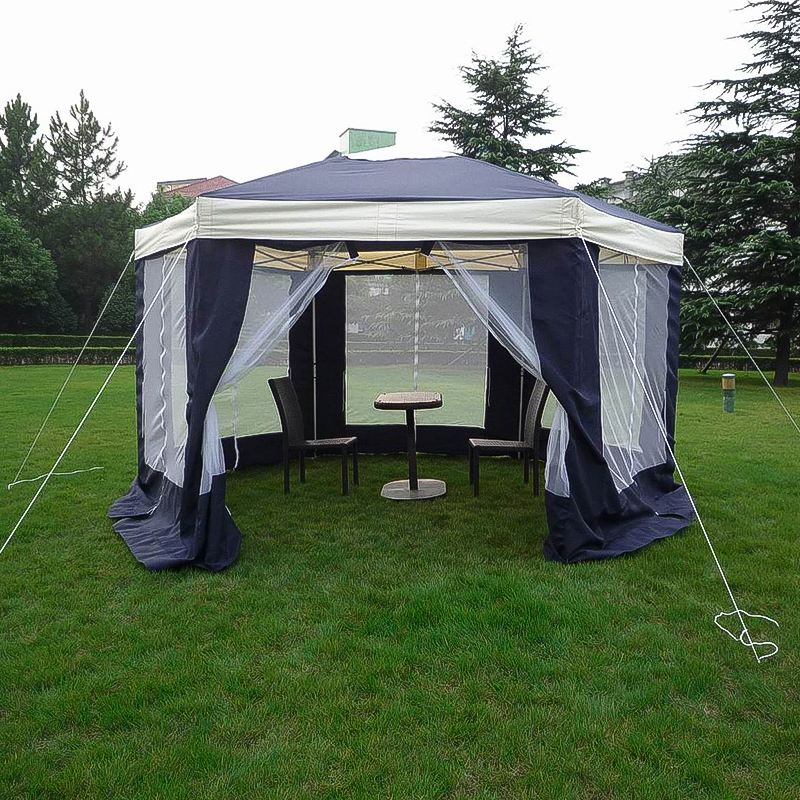
Vehicle canopies need enough clearance height for the tallest item stored, usually a minimum of 10 to 12 feet for RVs and boats, along with a wind rating suited to the region since parked vehicles present a large flat surface that increases sail area under gusting wind.
Warehouse And Loading Dock Overflow
Heavy duty canopies attached to an existing structure at loading docks need fire-retardant fabric certification in many jurisdictions and a frame that can bear snow load without transferring excess stress into the building's existing roofline.
Agricultural And Livestock Cover
Livestock shelters require good airflow alongside structural strength, so open-sided heavy duty frames with a high-tensile roof fabric are more common here than fully enclosed designs, which can trap heat and humidity.
Outdoor Event And Market Structures
Recurring outdoor markets and event venues that set up and break down structures on a weekly or seasonal basis need frames that tolerate repeated assembly cycles without the joints loosening. Quick-connect pinned joints tend to hold up better under this repeated-use pattern than bolted joints, which can strip threads over many disassembly cycles.
Industrial Material Yards
Yards storing raw materials such as aggregate, lumber, or bagged goods benefit from wider bay spans and higher wind ratings, since these sites are often located in open industrial areas with minimal wind shielding from surrounding structures.
Anchoring Method Has A Bigger Impact On Longevity Than Frame Grade Alone
A well-built heavy duty canopy can still fail early if it is anchored incorrectly. The most common installation mistakes are consistent across the industry:
- Using surface-mounted weight plates on soft ground instead of driven ground anchors or concrete footings, which allows the whole structure to shift during sustained wind.
- Skipping cross-bracing on the long axis of rectangular canopies, leaving the structure rigid front-to-back but flexible side-to-side.
- Leaving sidewalls attached in high-wind forecasts instead of rolling them up, which turns the canopy into a sail rather than an open-frame structure.
- Failing to re-torque bolted joints after the first season, since powder-coated bolts can loosen slightly as the coating compresses under initial load cycles.
- Installing on an unlevel surface without shimming the base plates, which concentrates uneven load onto one or two legs instead of distributing it evenly across all support points.
- Overlooking drainage planning around the perimeter, which allows pooled water to soften the ground beneath anchor points over time even when the anchors themselves were installed correctly.
Concrete Footings For Permanent Installations
Concrete footings poured to a depth of at least 24 inches are the most reliable anchoring method for permanent installations, and most heavy duty canopy kits sold for industrial use include footing plate hardware specifically designed for this purpose rather than relying on soil penetration alone. Footing depth requirements can increase in regions with significant frost heave, since a footing that does not extend below the local frost line can be pushed upward as the ground freezes and thaws seasonally.
Ground Anchors For Semi-Permanent Installations
Auger-style ground anchors driven to a depth of 30 to 42 inches offer a middle ground between temporary stakes and permanent concrete footings, allowing the structure to be relocated in the future without the labor cost of breaking up poured concrete. Anchor holding strength depends heavily on soil composition, and sandy or loose soil generally requires longer or wider-diameter augers to achieve the same holding strength as denser clay or loam soil.
Assembly Sequencing
Assembling the frame in the correct sequence, legs and base connections first, followed by truss and ridge assembly, and fabric installation last, reduces the risk of the partially assembled structure becoming unstable in wind during the installation process itself. Fabric should always be the final component installed and the first component removed if severe weather is forecast before anchoring is fully complete.
Maintenance Habits That Extend Canopy Lifespan By Several Years
Frame and fabric degrade through different mechanisms, so maintenance routines need to address both separately rather than treating the canopy as a single unit.
Twice-Yearly Fabric Cleaning
Mild soap and water removes surface debris and mildew spores before they embed into the weave. Pressure washing above 1500 PSI can force water through coated seams and should be avoided on PVC and vinyl-laminate covers.
Annual Joint Inspection
Check every bolted or pinned connection for rust bleed, hairline cracks in powder coat, and loose fasteners. Catching a loose joint before it fails under load is far cheaper than replacing a bent leg after a storm.
Pre-Season Anchor Check
Ground anchors can work loose over freeze-thaw cycles. Re-tensioning anchor straps and confirming stake depth before storm season begins is one of the highest-return maintenance tasks for outdoor structures.
Snow Load Removal
Clearing accumulated snow before it exceeds roughly 4 inches on flat-pitch designs prevents the compounding weight problem where fresh snow adds to already-compacted layers underneath.
Mildew And Mold Prevention
Allowing fabric to dry fully before folding or storing it prevents trapped moisture from developing mildew, which can permanently stain and weaken coated fabrics even after cleaning.
Fastener Re-Torque Schedule
Bolted joints should be re-torqued after the first three months of initial use and then checked at each subsequent seasonal inspection, since initial load cycling causes most of the settling that leads to fastener loosening.
Seasonal Storage For Removable Canopies
Canopies designed to be taken down seasonally should have fabric cleaned and fully dried before folding, frame components stored off the ground to prevent moisture wicking from soil contact, and all hardware bagged and labeled by assembly stage to reduce reassembly time and the risk of lost fasteners between seasons.
Recognizing Early Warning Signs Of Structural Fatigue
Visible sagging along the ridge line, small tears near seam lines, chalky residue on powder-coated surfaces, and audible creaking during moderate wind are all early indicators that a component is approaching the end of its service life. Addressing any one of these signs early, whether through a targeted repair or a partial component replacement, is almost always less expensive than waiting for a full structural failure.
Cost Considerations Beyond The Initial Purchase Price
The lowest sticker price on a heavy duty canopy rarely reflects its total cost of ownership. A structure priced 20 percent lower than a comparable heavy duty option is frequently built with thinner tubing, a lighter fabric class, or friction-fit joints instead of bolted connections, meaning the buyer absorbs the cost difference later through earlier replacement or repeated repairs.
- Frame replacement parts for proprietary truss systems can be difficult to source once a manufacturer discontinues a specific model line, which is worth checking before purchase for structures intended to last a decade or more.
- Fabric-only replacement, rather than replacing the entire structure, is available for most modular canopy systems and typically costs a fraction of a full replacement, provided the frame itself remains structurally sound.
- Anchoring hardware, cross-bracing kits, and sidewall accessories are frequently sold separately from the base structure, and factoring these into the total budget upfront avoids surprises during installation planning.
- Insurance considerations for stored equipment or vehicles sometimes require documentation of the shelter's wind and snow load rating, which is worth confirming with an insurance provider before finalizing a purchase decision for high-value stored items.
Frequently Asked Questions
What wind speed can a heavy duty canopy actually withstand?
Most heavy duty canopies are rated between 50 and 90 mph under ideal anchoring conditions with sidewalls removed. Real-world performance with sidewalls attached and typical ground anchoring is usually 15 to 25 percent lower than the published figure, so a canopy rated at 70 mph should be expected to perform closer to 55 mph once installed with sidewalls in place.
How much snow load can a canopy roof hold before it needs to be cleared?
This depends heavily on roof pitch and frame rating, but as a general guideline, accumulation beyond 4 inches on a flat or low-pitch roof should be cleared, since wet or compacted snow can weigh two to three times more than the same depth of fresh dry snow.
Is aluminum or steel better for a heavy duty canopy frame?
Steel typically offers higher rigidity per dollar and suits permanent installations, while aluminum offers better corrosion resistance and lighter weight, which benefits installations that may need to be relocated or that sit in coastal or high-humidity environments.
How long should a heavy duty canopy fabric last outdoors?
Fabric weighing 14 to 18 ounces per square yard with adequate UV stabilizer typically lasts 8 to 12 years under continuous outdoor exposure, while lighter 6 to 9 ounce fabric is better suited to occasional or seasonal use and may only last 1 to 2 seasons under constant sun and rain.
Do heavy duty canopies need a building permit?
Requirements vary significantly by location and by whether the structure is temporary or permanently anchored, so checking with the local building authority before installation is the most reliable way to confirm what applies to a specific site.
Can a heavy duty canopy be left up year-round?
Yes, provided the frame and fabric are rated for continuous outdoor exposure rather than seasonal or event use, anchoring is inspected before each storm season, and snow accumulation is cleared regularly in climates that receive significant snowfall.
What size canopy is needed to cover a standard pickup truck or small RV?
A minimum clearance height of 10 to 12 feet along with a footprint extending 2 to 3 feet beyond the vehicle's outer dimensions on all sides is generally recommended to account for wind-driven rain and to leave working room around the vehicle.
Should sidewalls be left attached during a storm?
No, sidewalls significantly increase the surface area exposed to wind, effectively turning the structure into a sail. Rolling up or removing sidewalls before a forecasted high-wind event is one of the most effective ways to reduce stress on the frame during a storm.
Can the fabric cover be replaced without replacing the entire frame?
Yes, for most modular heavy duty canopy systems, replacement fabric covers are sold separately, and replacing only the fabric once it reaches the end of its service life is significantly less expensive than purchasing an entirely new structure, provided the frame remains structurally sound.
How often should anchoring hardware be inspected?
At minimum once per year before the start of the local storm or winter season, with an additional check recommended after any unusually severe weather event, since a single extreme storm can loosen anchors that had otherwise held steady for years.

