
 English
 Español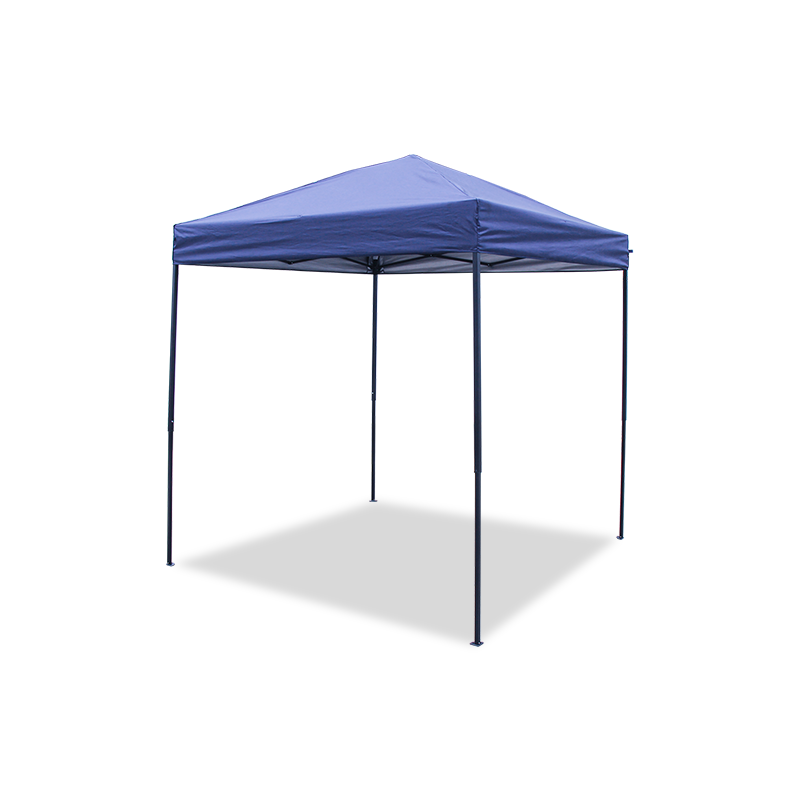
Customer expresses intent; Communicate between the two parties; Provide analysis reports to customers; Reach a cooperation intention.
Content
- 1 What Actually Makes A Canopy Tent Heavy Duty
- 2 Frame Construction: Steel, Aluminum, And Leg Geometry
- 3 Fabric Weight, Denier Ratings, And Waterproofing
- 4 Wind Resistance And Anchoring In The Field
- 5 Matching Canopy Size To Load And Transport Capacity
- 6 Pop-Up Versus Fixed-Frame Canopy Designs
- 7 Setup, Takedown, And Storage Practices That Extend Service Life
- 8 Where Heavy Duty Canopy Tents Get Used
- 9 Straight-Leg Versus Slant-Leg Frames: The Coverage Gap Nobody Advertises
- 10 Roof Geometry: Peak Height, Valance, And Water Runoff
- 11 UV Protection: What A UPF Rating Actually Tells You
- 12 Sidewalls, Enclosure Options, And Airflow Trade-Offs
- 13 Cost Factors And Total Ownership Considerations For Buyers
- 14 Frequently Asked Questions
- 14.1 How much wind can a heavy duty canopy tent actually handle?
- 14.2 What fabric denier should I look for in a rain-heavy climate?
- 14.3 Is aluminum or steel the better frame choice?
- 14.4 How often should I inspect a heavy duty canopy tent?
- 14.5 Can a pop-up canopy match the strength of a fixed-frame shelter?
- 14.6 What is the difference between a wind rating and a wind claim?
- 14.7 Does a straight-leg or slant-leg frame matter for a heavy duty canopy?
- 14.8 What UPF rating should a heavy duty canopy fabric carry?
- 14.9 Should sidewalls stay fully closed during normal use?
- 14.10 Is it cheaper to replace a canopy top or the entire frame?
What Actually Makes A Canopy Tent Heavy Duty
A heavy duty canopy tent is defined by three measurable traits, not marketing language: frame gauge, fabric denier, and a documented wind rating. If a listing cannot show numbers for all three, it is not a heavy duty unit regardless of how it is described. Commercial-grade frames start at 1.5mm wall thickness on aluminum or 17-gauge steel tubing, fabric should sit at 400D or higher, and the frame should carry a wind rating tested with sandbags or water weights attached, not a bare-frame claim.
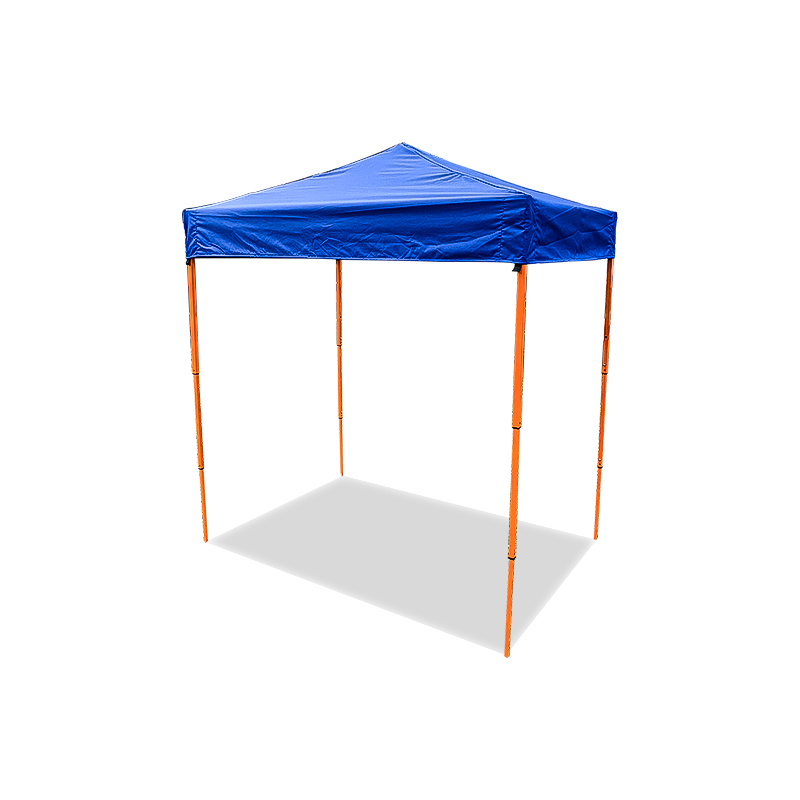
Recreational pop-ups sold for backyard use typically run 0.8-1.0mm wall thickness with slant-leg designs and 150D to 300D polyester. They fold flat, weigh under 40 pounds, and are built for a handful of uses per season. A heavy duty tent is built around the opposite assumption: dozens of setups a year, unpredictable wind, and the expectation that the canopy protects people and merchandise, not just shade from a mild afternoon sun.
| Specification | Recreational Pop-Up | Heavy Duty Canopy |
|---|---|---|
| Frame wall thickness | 0.8mm - 1.2mm | 1.5mm - 2.5mm |
| Fabric denier | 150D - 300D | 400D - 600D |
| Typical leg diameter | 1.0" - 1.2" | 1.75" - 2.0" |
| Documented wind rating | Rarely provided | 30 - 60+ mph with ballast |
Frame Construction: Steel, Aluminum, And Leg Geometry
Frame material decides both the weight of the canopy and how it behaves in a gust. Alloy steel tubing at roughly 35mm diameter or greater, finished with powder coating, is the traditional heavy duty choice for fixed installations and markets where the frame stays anchored for extended periods. Steel resists bending under sustained load but adds mass, which slows transport and setup.
Steel Frames
Steel canopy frames commonly weigh 40-50 pounds for a 10x10 footprint, rising toward 70 pounds or more at 10x20. That extra weight is not wasted; it lowers the tent's center of gravity and reduces flex during wind gusts, which is why steel remains standard for weekly farmers markets, long trade show runs, and semi-permanent outdoor stations.
Aluminum Frames
Aluminum frames run 30-40% lighter than steel while holding comparable strength when the wall thickness reaches 2mm or more. A 10x10 aluminum frame typically lands between 25-35 pounds, which matters directly for teams handling multiple setups per week or shipping a canopy to fly-in events. Aluminum also resists corrosion without relying on a protective coating, so repeated exposure to coastal air or road salt does not add weight from rust buildup over time.
Leg Profile And Bracing
Hexagonal and octagonal leg profiles distribute wind load more evenly across the frame than the round slant legs found on entry-level pop-ups. Cross-truss bars connecting opposite corners stop the frame from racking, meaning the lateral twisting motion that happens when wind and rain load hit the canopy at the same time. A frame with truss bars on all four sides is a meaningfully different product from one with bars on only two sides, even if both are marketed under the same size and price point.
Fabric Weight, Denier Ratings, And Waterproofing
Denier measures the thickness of the individual fibers used to weave the canopy fabric. A higher denier number means a heavier, more tear-resistant weave, though it also adds pack weight and cost. Rain-resistant canopies should start at 400D polyester with a waterproof coating, and 500D-600D fabrics deliver a noticeably longer service life under repeated sun and moisture cycling.
- 300D-400D: entry-level commercial fabric, suitable for occasional outdoor use with light rain exposure
- 420D-500D: the working standard for vendors running weekly outdoor markets across seasons
- 600D and above: reserved for coastal, high-UV, or year-round installations where fabric fatigue is the main failure point
Coating matters as much as denier. A single PU coating layer blocks light rain, while dual-layer PU coatings push waterproof pressure ratings well past the 1.1 psi baseline seen on basic fabric, with some heavy duty listings documenting figures closer to 2.0-2.1 psi. Seams are the second variable: heat-sealed or fully taped seams prevent the pinhole leaks that untreated stitching allows after repeated folding and UV exposure. Grommets spaced roughly every 45 centimeters along the canopy edge give tie-down points enough frequency to spread tension evenly, rather than concentrating stress at just the four corners.
| Denier Range | Best Suited For |
|---|---|
| 300D - 400D | Occasional weekend events, light climates |
| 420D - 500D | Weekly vendors, seasonal outdoor markets |
| 600D+ | Coastal climates, year-round fixed installations |
Wind Resistance And Anchoring In The Field
Wind resistance ratings currently lack a single universal certification standard across the industry, so a 40 mph claim from one manufacturer will not always match another manufacturer's 40 mph claim. The most credible figures come from wind tunnel testing performed with documented ballast configurations attached, not a bare-frame estimate. Proper anchoring with 40-75 pounds of weight per leg allows a well-built heavy duty canopy to hold through sustained winds in the 30-40 mph range, and some commercial-grade aluminum models with 2mm+ wall thickness and octagonal legs have documented performance up to 50-60 mph when every leg is correctly ballasted.
Field Safety Sequence During Rising Wind
- At 20-25 mph sustained wind, remove the windward sidewall first to cut the sail effect that causes uplift.
- At 25-30 mph, begin takedown: pull all remaining sidewalls, then lower the legs while ballast weights stay attached.
- Bring 2-4 people to control the frame during collapse; a solo takedown in high wind is one of the most common causes of frame damage and injury.
- If a sudden storm front arrives faster than the takedown sequence allows, prioritize evacuating people over saving the canopy structure.
Bungee-style tie-downs or adjustable straps are preferable to rigid connections for guy lines, since a rigid line transfers a full gust straight into the fabric and can tear a grommet loose, while an elastic connection absorbs part of that shock.
Matching Canopy Size To Load And Transport Capacity
Frame weight does not scale in a straight line with footprint. A 10x15 canopy typically weighs 40-50% more than a 10x10 of the same build quality, and a 10x20 version can approach double the base weight of the smallest size in the same product line, driven by the extra legs, trusses, and connector hardware needed to support the larger span.
Transport planning should happen before the purchase, not after delivery. A 70-pound frame requires two-person handling on every setup and will exceed standard airline checked-baggage weight limits for any fly-in event. Teams running frequent outdoor markets or multi-city trade show circuits generally find aluminum frames pay for themselves in labor time saved, even though the upfront material cost sits higher than steel.
| Footprint | Aluminum Frame | Steel Frame |
|---|---|---|
| 10 x 10 ft | 25 - 35 lbs | 40 - 50 lbs |
| 10 x 15 ft | 36 - 52 lbs | 58 - 75 lbs |
| 10 x 20 ft | 48 - 68 lbs | 78 - 100 lbs |
Pop-Up Versus Fixed-Frame Canopy Designs
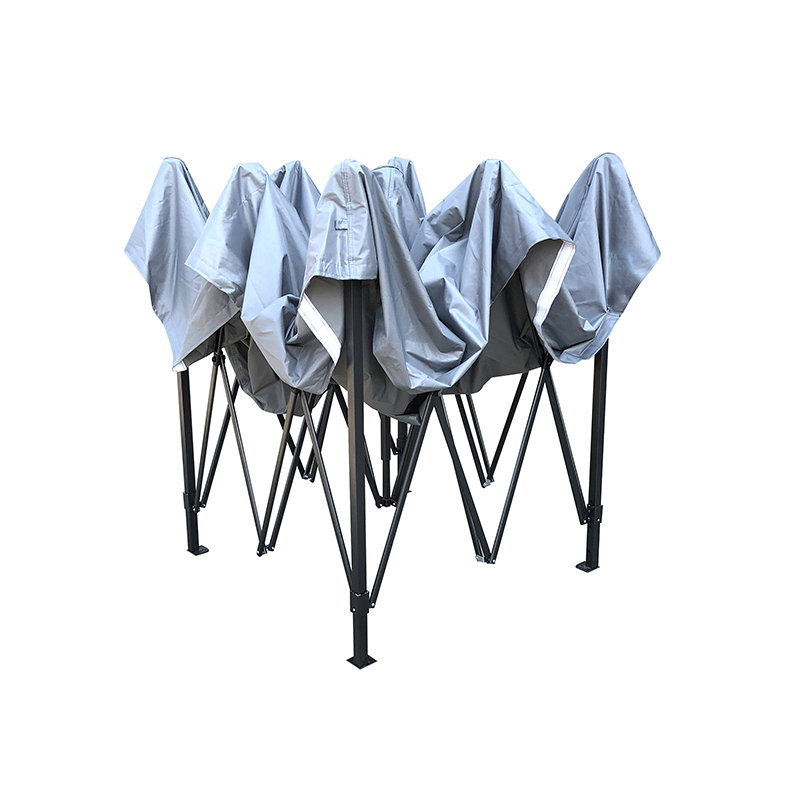
Commercial pop-up canopies fold down for storage and transport, trading a small amount of maximum strength for portability. Fixed-frame shelters assemble from separate poles and connectors, sacrificing quick setup for a stiffer, stronger structure that holds up better against extended wind exposure. Neither design is universally correct; the right choice depends on how often the canopy moves versus how long it stays anchored in one location.
When A Pop-Up Design Fits Better
Vendors and demo teams doing 8-10 or more events per year, especially at different venues, benefit from the folding mechanism and carry bag that a pop-up provides. A heavy duty pop-up with reinforced corner brackets and thick hex legs closes most of the strength gap with fixed-frame units while keeping the transport advantage intact.
When A Fixed-Frame Design Fits Better
Installations that stay anchored for a full season, such as a permanent market stall or a loading dock cover, gain more from a fixed-frame structure's rigidity than they lose from its slower assembly. The connectors on a fixed frame also tend to tolerate repeated disassembly and reassembly better over multi-year use than the spring-loaded joints on a pop-up mechanism.
Setup, Takedown, And Storage Practices That Extend Service Life
Most canopy failures trace back to handling, not manufacturing defects. Forcing a folding joint that has not fully released, dragging a canopy across gravel while packing it away, or storing a wet fabric top folded inside its bag are the three most common causes of premature wear reported across outdoor vendor communities.
- Always fully dry the canopy top before folding it away; trapped moisture accelerates coating breakdown and promotes mildew growth on the underside of the fabric.
- Loosen all leg locks evenly during collapse rather than forcing one side first, which prevents uneven stress on the truss connectors.
- Store the folded frame flat or upright rather than leaning it against a wall, since prolonged angled pressure can bend hex or octagonal leg profiles over time.
- Inspect grommets and corner brackets each season; a grommet that has begun to pull loose from the fabric is far easier to patch early than after it tears further under load.
Two-person handling on setup and takedown is worth building into the standard operating routine for any frame above roughly 50 pounds, both to protect the hardware and to reduce the physical strain on the crew doing repeated installs across a season.

Where Heavy Duty Canopy Tents Get Used
Outdoor demand for heavy duty canopy tents spans several distinct use categories, each with slightly different priorities in frame weight, fabric grade, and wind tolerance.
Outdoor Vendors And Farmers Markets
Weekly outdoor vendors need a canopy that survives dozens of setups a year in variable weather without frame fatigue. This group typically lands in the mid-weight aluminum or standard steel category, balancing manageable transport weight against consistent wind exposure.
Trade Shows And Fly-In Events
Exhibitors traveling by air need to weigh transport limits as heavily as strength specifications. Lightweight aluminum frames with commercial-grade fabric let a team check the canopy as standard luggage rather than paying oversized freight fees.
Coastal And High-Wind Locations
Persistent coastal breezes call for the top end of the wind-rating spectrum, heavier ballast per leg, and corrosion-resistant aluminum or properly powder-coated steel to withstand salt air over multiple seasons without structural degradation.
Semi-Permanent Installations
Loading docks, seasonal stalls, and fixed outdoor workstations favor steel fixed-frame construction, since the canopy stays in place for extended periods and rarely needs to fold down for transport.
Straight-Leg Versus Slant-Leg Frames: The Coverage Gap Nobody Advertises
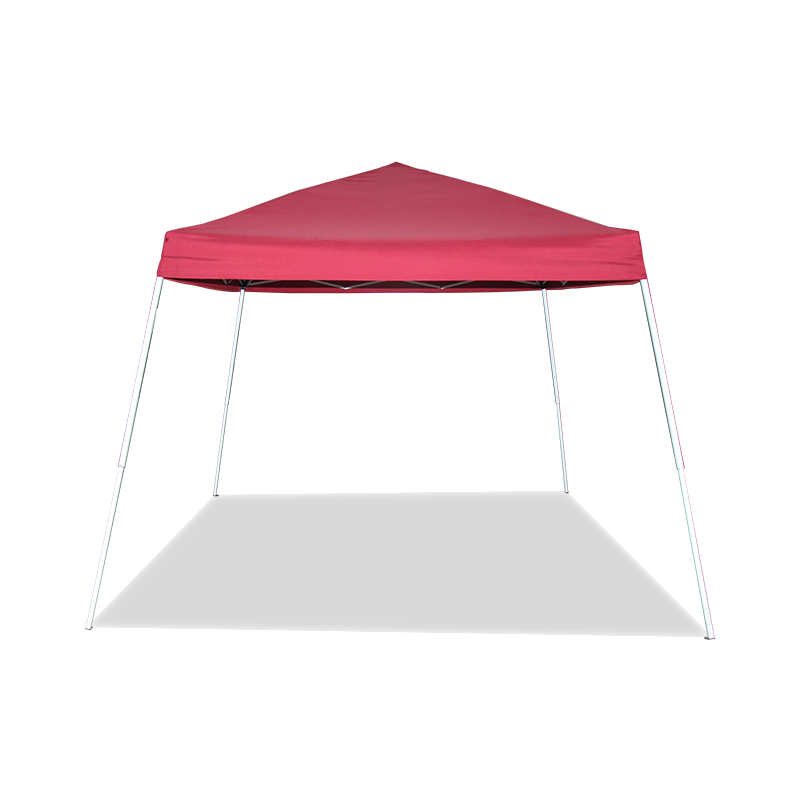
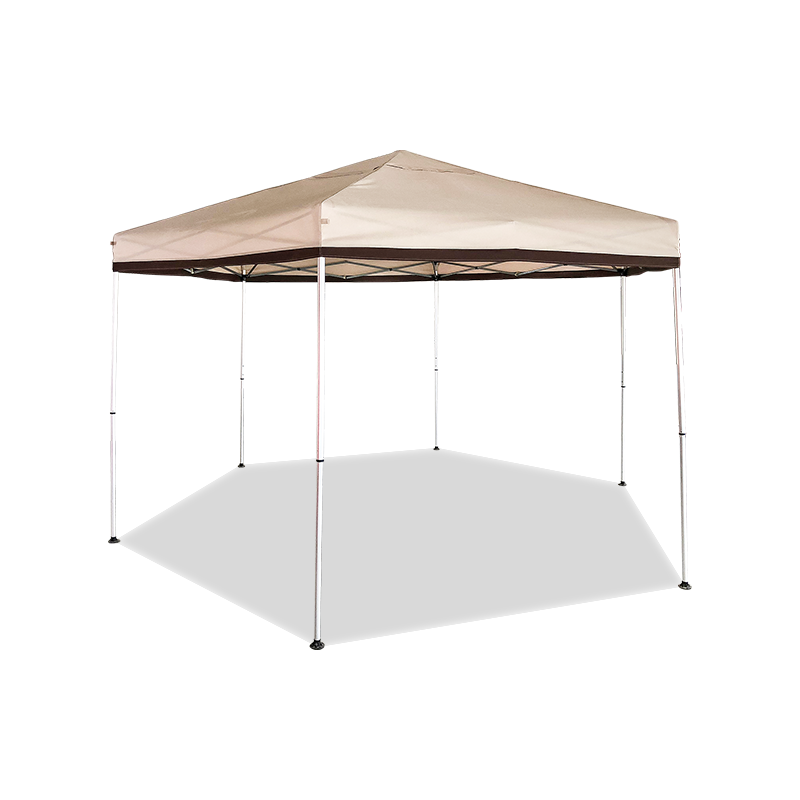
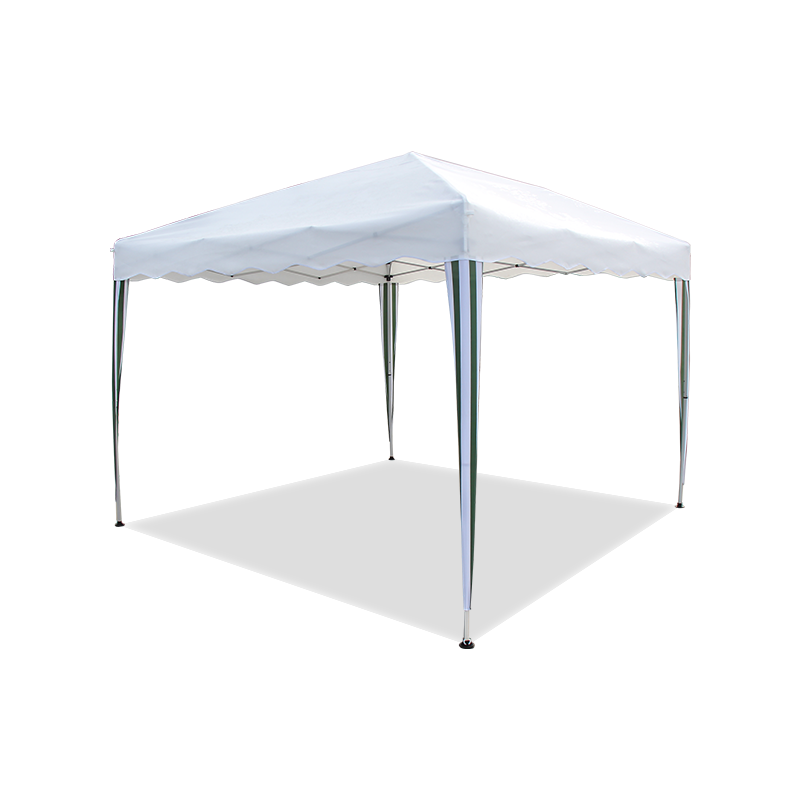
Two canopies can share the same printed dimensions and still shade very different amounts of ground. A straight-leg frame holds its legs at a 90-degree angle to the ground, so the roof footprint and the ground footprint match. A slant-leg frame angles outward at the base for extra stability, which pushes the legs beyond the roof edge and shrinks the usable shaded area underneath. A 10x10 straight-leg canopy delivers roughly 100 square feet of ground-level shade, while a slant-leg canopy with the same 10x10 peak measurement can drop to around 64 square feet of actual usable space once the outward-angled legs are accounted for.
That gap matters directly for anyone placing tables, product racks, or seating under the canopy, since the printed size on a listing does not guarantee the floor space available once the frame is deployed. Straight-leg construction also distributes weight more evenly across all four legs, which is one of the reasons commercial-grade product lines built for daily vendor use tend to standardize on straight legs and reserve slant-leg designs for lighter backyard and recreational categories.
| Peak Dimension | Straight-Leg Ground Shade | Slant-Leg Ground Shade |
|---|---|---|
| 10 x 10 ft | ~100 sq ft | ~64 sq ft |
| 10 x 15 ft | ~150 sq ft | ~96 sq ft |
| 10 x 20 ft | ~200 sq ft | ~128 sq ft |
Roof Geometry: Peak Height, Valance, And Water Runoff
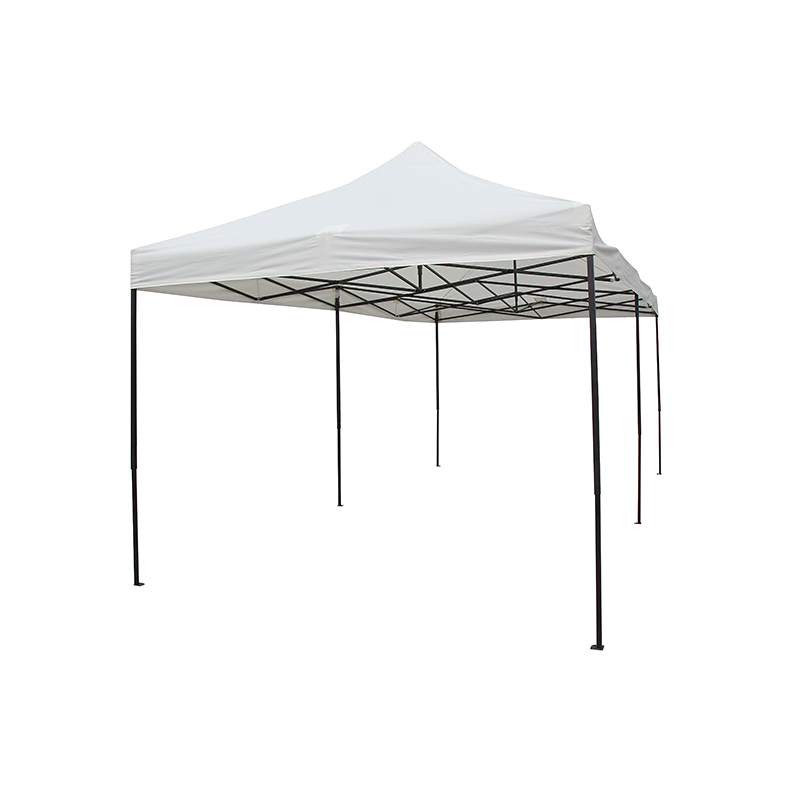
Roof shape controls two things at once: how much rain the canopy sheds and how much wind pressure builds up underneath it. A pronounced peak with steep slopes sheds standing water faster than a flat or low-pitch roof, which matters directly during sustained rain since pooled water on a sagging fabric panel adds weight the frame was never designed to carry and can eventually push a seam past its waterproof limit.
High-Peak Designs
A higher peak angle also creates more interior headroom and pairs naturally with a valanced edge, the short vertical fabric strip that hangs below the roofline. Valances add a finished look and a small amount of extra rain deflection at the edge, and most heavy duty product lines size their optional sidewalls specifically to match a high-peak roofline.
Low-Peak And Flat Designs
Lower-pitch roofs reduce the surface area exposed directly to wind gusts, which can help in exposed, consistently windy sites even though they shed rain less efficiently than a steep peak. Choosing between the two comes down to which failure mode is more likely at the deployment site: standing water in a rain-heavy region, or wind loading in an open, exposed one.
UV Protection: What A UPF Rating Actually Tells You
UPF stands for Ultraviolet Protection Factor, and it measures how much of the sun's ultraviolet radiation passes through a fabric rather than how the fabric looks or feels. A UPF 50+ rating blocks roughly 98 percent of UV radiation, which is the threshold most commercial canopy fabric is built to meet and the figure worth checking on any spec sheet before assuming a fabric offers meaningful sun protection.
- UPF ratings below 30 offer only modest protection and are typically found on decorative or lightweight recreational fabrics.
- UPF 30-40 blocks roughly 96-97 percent of UV radiation and is common on mid-grade polyester canopy tops.
- UPF 50+ blocks 98 percent or more and is the standard reference point for anything marketed as heavy duty or commercial grade.
A silver or reflective coating on the underside of the fabric adds a second, separate benefit beyond the UPF number: it reflects radiant heat back outward rather than letting it build up under the canopy, which noticeably reduces the greenhouse-style heat buildup that makes lower-quality canopies uncomfortably hot inside during peak afternoon sun. It is worth remembering that UPF describes the fabric directly overhead, not the open sides of the structure; UV exposure still reaches anyone standing near the edges of the canopy, particularly during low-angle morning or evening sun.
Sidewalls, Enclosure Options, And Airflow Trade-Offs
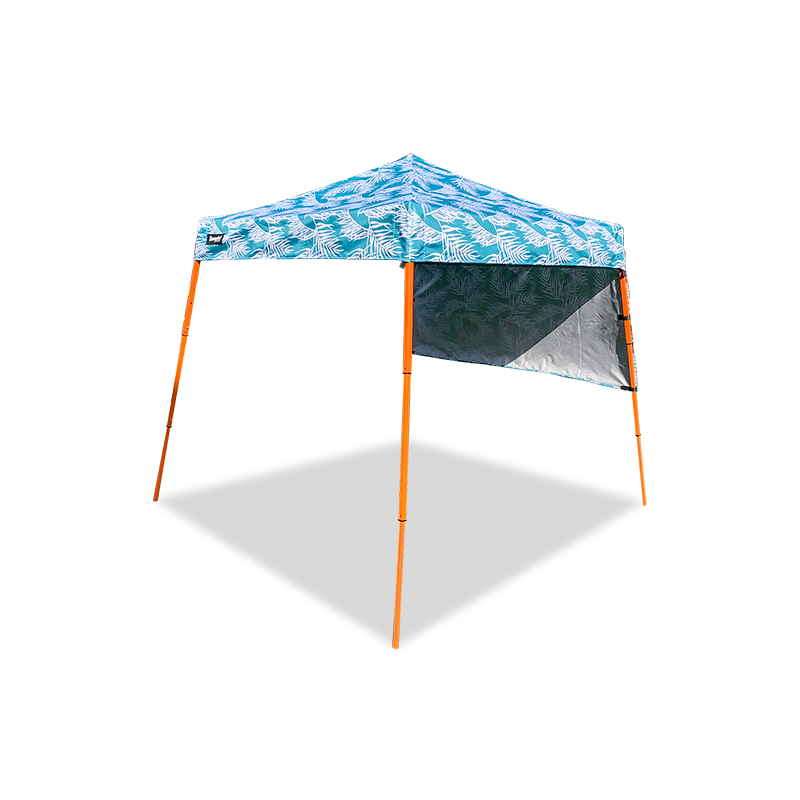
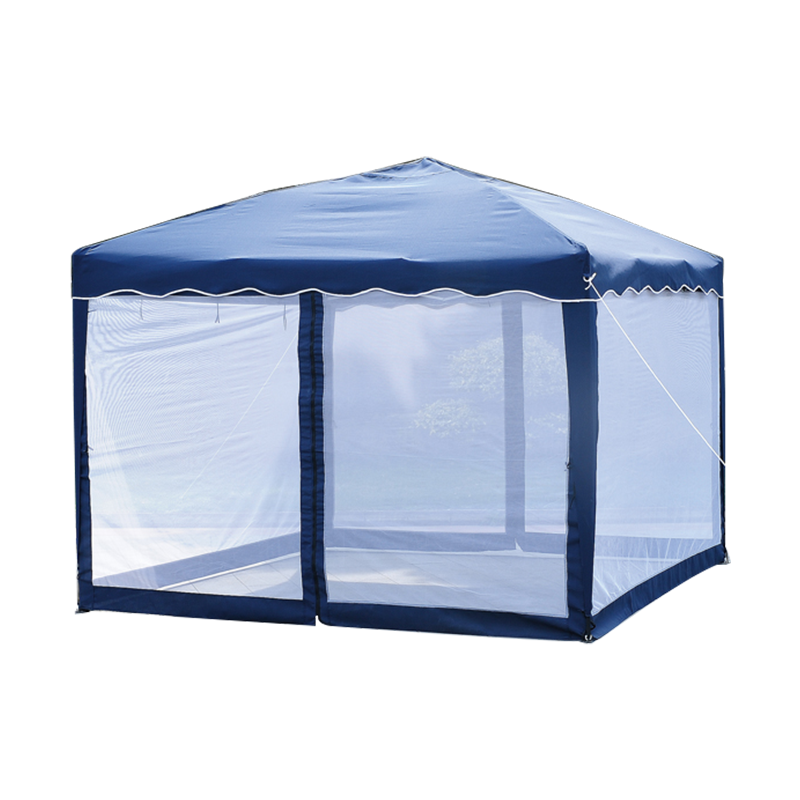
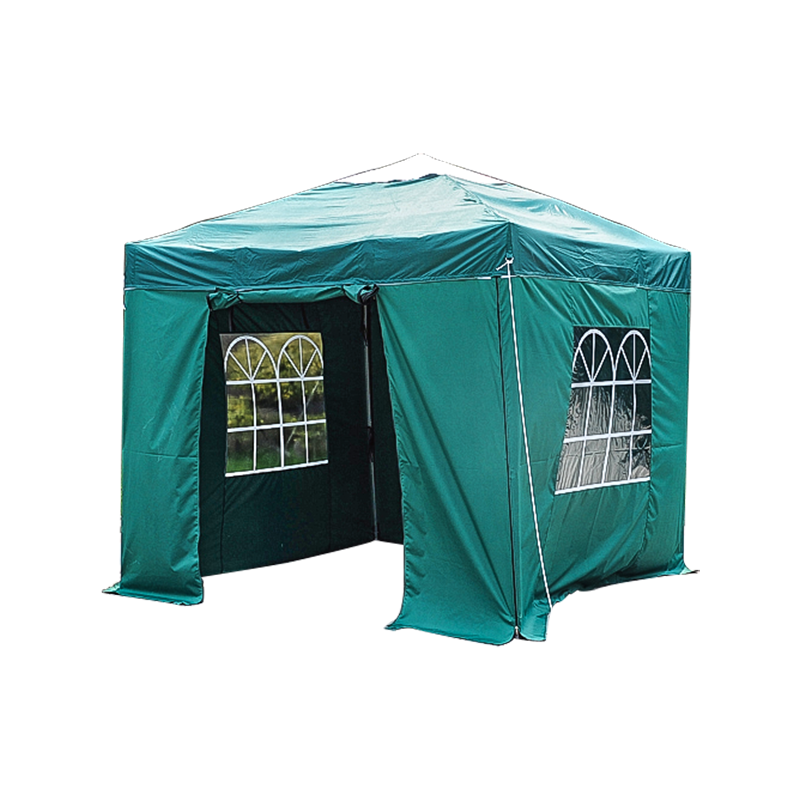
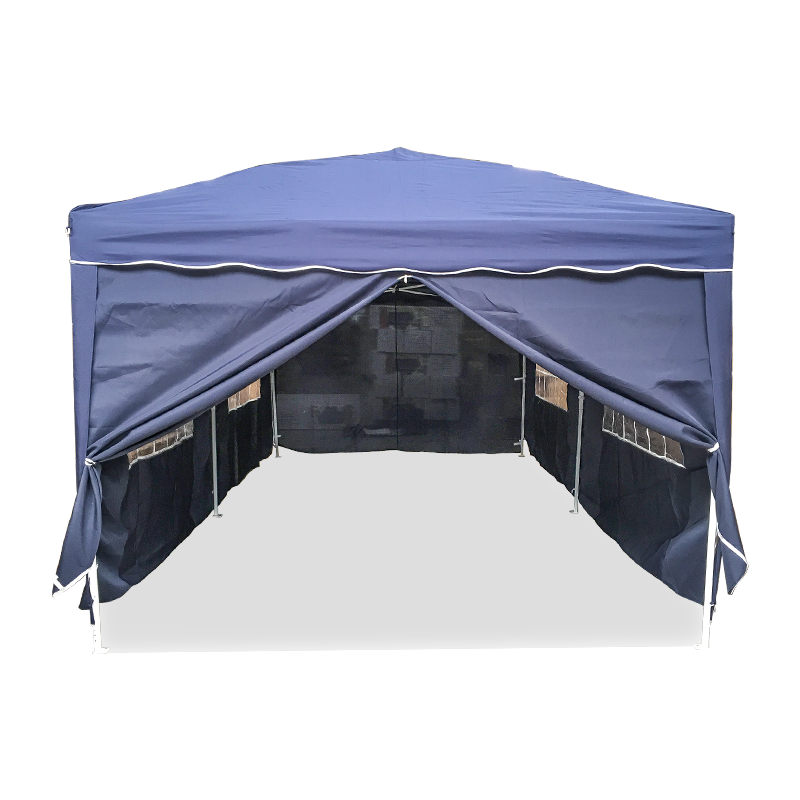
Sidewalls extend a canopy from an open-sided shade structure into a partially or fully enclosed space, and the choice of how many walls to use, and where, changes both the wind behavior and the comfort of the space underneath. Most heavy duty product lines offer removable sidewalls attached with a combination of hook-and-loop strips and zippers, which lets a single canopy switch between fully open, partially enclosed, and fully enclosed configurations depending on the day's conditions.
Clear-Window And Solid Panel Options
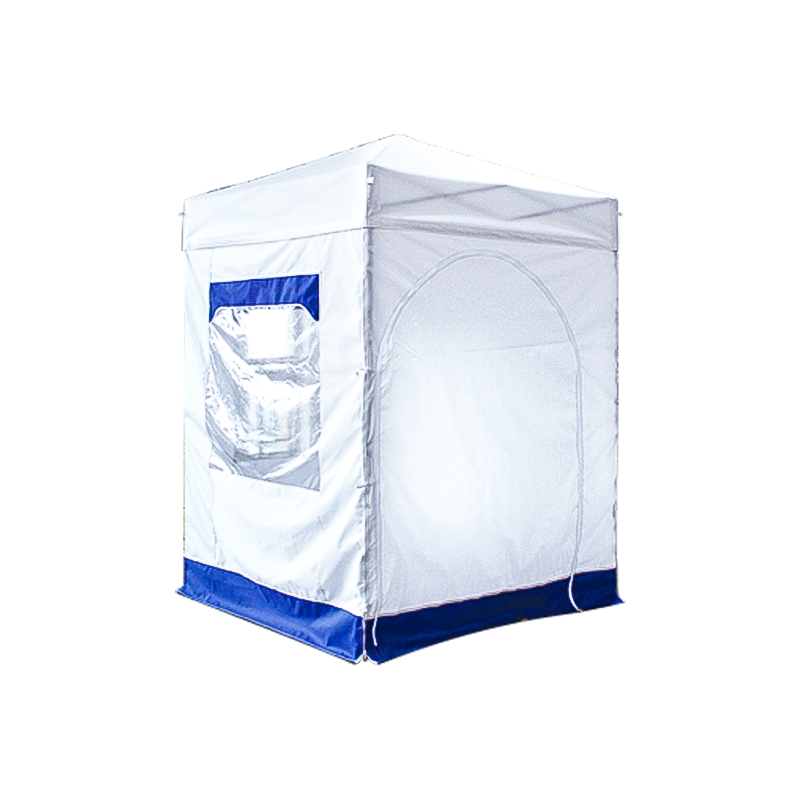
Clear-window sidewalls let daylight through while still blocking wind and light rain, which suits retail and market vendors who want an enclosed space without losing natural light on the product displays inside. Solid panels block sightlines entirely and suit situations where privacy or a controlled backdrop matters more than ambient light.
Zippered Connections Between Panels
Zippered edges that join adjacent sidewall panels together allow several walls to link into a single continuous enclosure rather than leaving gaps at the seams. This detail matters most in wind-exposed settings, since a gap between unzipped panels becomes a pressure point where gusts can catch and pull at the fabric.
Managing Airflow And Heat Buildup
Fully enclosing a canopy on all four sides on a hot, still day traps heat inside, so most experienced outdoor vendors leave at least one side open or partially raised for cross ventilation whenever wind conditions allow it, reserving a full enclosure for active rain or wind events rather than routine daily use.
Cost Factors And Total Ownership Considerations For Buyers
The sticker price on a canopy tent reflects only part of what it costs to own over several seasons. Frame material, fabric grade, and hardware quality all shift the replacement-parts picture down the line, and buyers evaluating options for repeated commercial use benefit from thinking in terms of cost per season of active use rather than the upfront number alone.
Where The Cost Actually Goes
Frame hardware, specifically the leg locks, corner brackets, and truss connectors, tends to be the first point of failure on lower-grade units, and replacing a damaged connector is a smaller expense than replacing an entire frame. Fabric is the second major cost center: a canopy top with a lower denier rating and a single PU coating layer will typically need replacement well before a 500D-600D dual-coated top does, even under identical use conditions.
Replacement Tops And Modular Design
Many commercial-grade canopy lines sell the fabric top separately from the frame, which means a worn or torn canopy top can be replaced without discarding an otherwise sound frame. This modular approach is generally the lower-cost path for anyone running a canopy through multiple seasons of regular outdoor use, since frames typically outlast fabric tops by a significant margin when handled correctly.
Volume And Fleet Purchasing
Organizations deploying multiple identical canopies across several locations, such as a chain of market stalls or a multi-city event team, generally standardize on a single frame and fabric specification across the fleet. This keeps replacement parts interchangeable across units and avoids the situation where a damaged connector on one canopy cannot be sourced because every unit in the fleet uses a slightly different frame generation.
Frequently Asked Questions
How much wind can a heavy duty canopy tent actually handle?
Properly ballasted heavy duty canopies with reinforced frames commonly hold through sustained winds of 30-40 mph, and select commercial models with thicker aluminum profiles and full leg anchoring have documented ratings reaching 50-60 mph under controlled testing conditions.
What fabric denier should I look for in a rain-heavy climate?
Look for a minimum of 400D polyester with a waterproof coating and heat-sealed seams. Climates with frequent or heavy rain benefit from 500D-600D fabric, which resists tearing and holds its waterproof coating longer under repeated wet-dry cycling.
Is aluminum or steel the better frame choice?
Aluminum suits teams that transport and set up the canopy frequently, since it runs 30-40% lighter than steel at comparable strength. Steel suits installations that stay anchored in one place, since the added weight improves stability without a transport penalty.
How often should I inspect a heavy duty canopy tent?
A seasonal inspection covering grommets, corner brackets, leg locks, and fabric coating condition is sufficient for regular outdoor use. Vendors running weekly setups benefit from a quick visual check of the hardware before each event, since loose grommets and worn brackets are easier to address before they fail under wind load.
Can a pop-up canopy match the strength of a fixed-frame shelter?
A heavy duty pop-up with reinforced corner brackets, thick hex or octagonal legs, and cross-truss bracing closes most of the strength gap with fixed-frame designs. It will not fully match a dedicated fixed-frame structure in sustained wind exposure, but it comes close enough for the large majority of outdoor vendor and event use cases.
What is the difference between a wind rating and a wind claim?
A wind rating backed by documented wind tunnel testing and a specified ballast configuration is measurably more reliable than a bare wind claim printed on packaging without supporting methodology. Since there is no single universal certification standard across the industry, checking how a rating was obtained matters as much as the number itself.
Does a straight-leg or slant-leg frame matter for a heavy duty canopy?
Straight-leg frames are the standard for commercial-grade heavy duty canopies because they distribute weight evenly across all four legs and preserve the full advertised ground footprint. Slant-leg designs lose usable shaded area to their outward angle and are generally reserved for lighter recreational categories.
What UPF rating should a heavy duty canopy fabric carry?
UPF 50+ is the standard reference point for commercial-grade canopy fabric, blocking approximately 98 percent of UV radiation. Ratings below 30 offer meaningfully weaker protection and are typically found on lighter, non-commercial fabrics.
Should sidewalls stay fully closed during normal use?
Leaving at least one side open or partially raised is generally recommended during calm weather to allow airflow and prevent heat buildup underneath the canopy. Full enclosure on all sides is best reserved for active wind or rain conditions where the sidewalls are doing protective work rather than just holding in heat.
Is it cheaper to replace a canopy top or the entire frame?
Replacing just the fabric top is almost always the lower-cost option, since frames on well-handled heavy duty units typically outlast the fabric by a wide margin. This is one of the reasons modular product lines that sell replacement tops separately tend to work out cheaper across multiple seasons than fully disposable single-piece units.

