English
 Español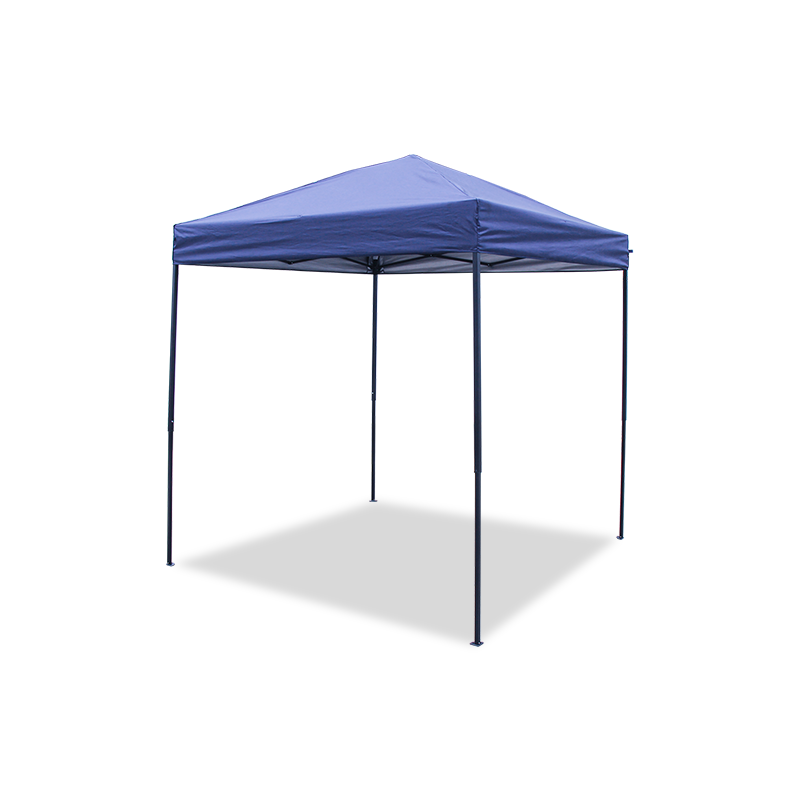
Customer expresses intent; Communicate between the two parties; Provide analysis reports to customers; Reach a cooperation intention.
Content
- 1 Is a Canopy a Place? The Direct Answer
- 2 The Core Definition of a Canopy
- 3 Natural Canopies: The Forest Ceiling and Its Layers
- 4 Architectural Canopies: Structures That Define Space
- 5 Canopy vs. Related Terms: Clearing Up Common Confusion
- 6 How Canopies Create a Sense of Place
- 7 Choosing the Right Canopy for an Outdoor Space
- 8 Canopy in Specialized Contexts
- 9 Practical Canopy Maintenance and Longevity
- 10 Summary: What a Canopy Is, and What It Does
Is a Canopy a Place? The Direct Answer
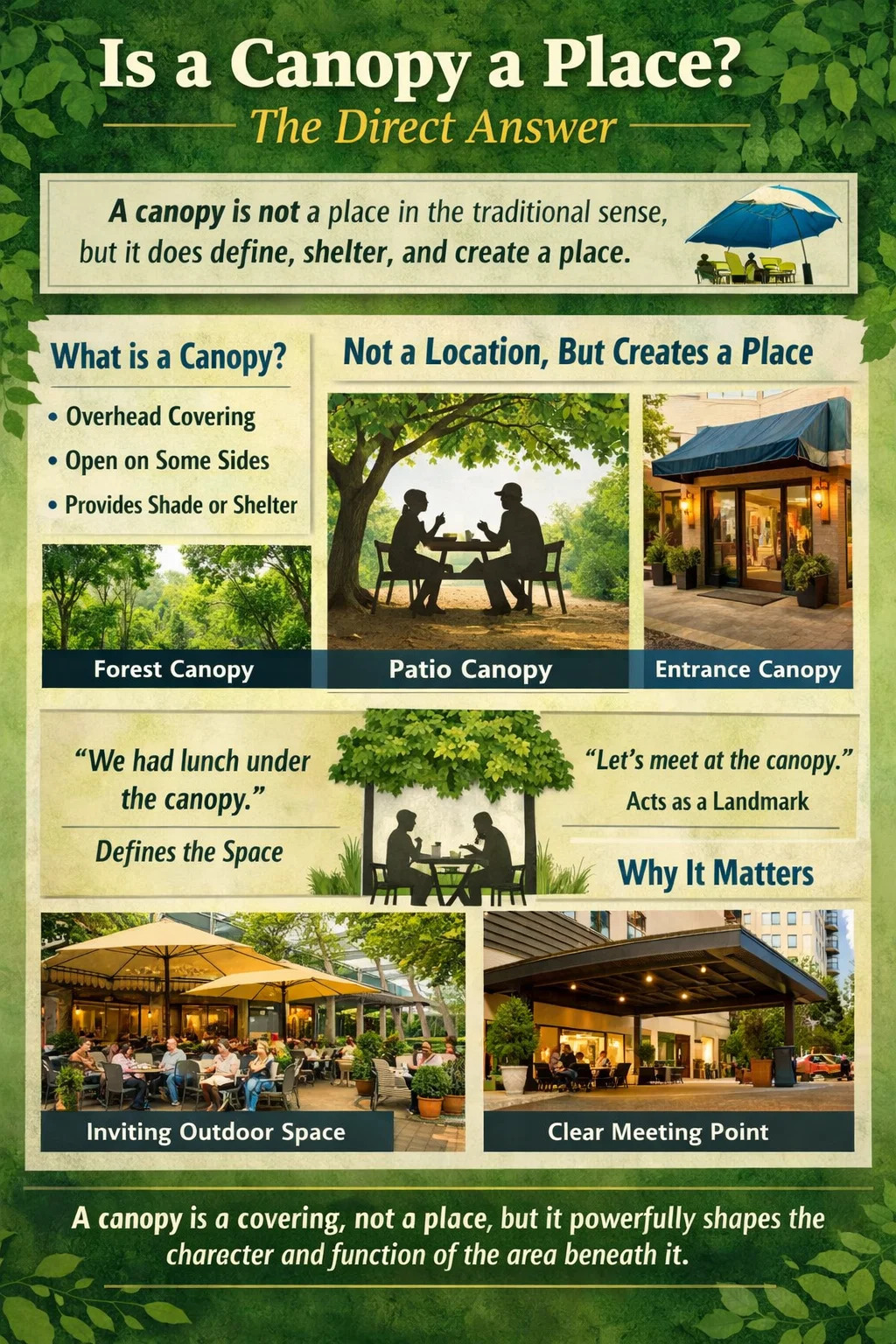
A canopy is not a place in the traditional geographic or civic sense, but it can absolutely define, shelter, or create a place. The word "canopy" refers to a covering structure — natural or man-made — that extends overhead. Think of the dense leaf cover of a rainforest, the fabric shade sail stretched above a patio, or the retractable awning over a storefront entrance. None of these are locations on a map, but each one shapes the character and function of the space beneath it so powerfully that people often associate the canopy itself with the place it creates.
In everyday speech, people do use "canopy" in a loosely locational way. A hiker might say, "We ate lunch under the canopy," treating the overhead tree cover as if it were a named room or destination. A shopper might describe meeting someone "at the canopy" outside a hotel entrance, using the structure as a landmark. So while a canopy is technically a covering rather than a place, its role as a spatial anchor in conversation and in architecture is very real.
Understanding the full scope of what a canopy is — and what it does — matters whether you are a landscaper choosing shade solutions, an event planner setting up an outdoor venue, a homeowner shopping for a patio cover, or simply someone who wants to use the word correctly.
The Core Definition of a Canopy
The word "canopy" traces back to the Greek konopeion, meaning a couch with mosquito curtains, which evolved through Latin into Middle English as a word for a cloth covering suspended over a bed or throne. Today the term has expanded far beyond royal bedchambers. In modern usage, a canopy is any overhead covering — whether formed by nature, architecture, or portable equipment — that provides shade, shelter, or visual definition to the space below.
Dictionaries typically offer two parallel definitions. The first is ecological: the uppermost layer of a forest, formed by the crowns of the tallest trees. The second is structural or architectural: a roof-like projection or covering attached to or suspended over a door, window, stage, bed, throne, or outdoor area. Both definitions share the same essential quality — something overhead that creates a defined zone underneath.
Key Characteristics That Define a Canopy
- It is positioned overhead, above the people or objects it covers.
- It is open on at least some sides, distinguishing it from a fully enclosed room or building.
- It provides protection from sun, rain, wind, or falling debris.
- It can be permanent, semi-permanent, or entirely temporary.
- It shapes the perceived boundary and atmosphere of the space beneath it.
That last point is worth dwelling on. Research in environmental psychology consistently shows that overhead definition — even an incomplete one like a pergola with open slats — increases people's sense of enclosure, comfort, and belonging in an outdoor space. A 2019 study published in the Journal of Environmental Psychology found that participants rated outdoor seating areas with partial overhead coverings as significantly more inviting than fully open areas, even when temperature and noise levels were identical. This is precisely why canopies transform open ground into perceived places.
Natural Canopies: The Forest Ceiling and Its Layers
In ecology, the forest canopy is the primary layer of vegetation formed by the crowns of mature trees. It is one of the most studied and biodiverse environments on Earth. Tropical rainforest canopies can house up to 50% of all terrestrial species despite covering only about 6% of Earth's land surface, according to the Smithsonian Tropical Research Institute. The canopy functions as a distinct habitat — with its own temperature, humidity, light levels, and food webs — that is entirely separate from the forest floor below.
Layers Within a Forest Canopy System
Ecologists divide forest vertical structure into four or five layers, and the canopy sits near the top of this stack:
- Emergent layer: The tallest trees that break through the main canopy, sometimes reaching 60 meters (200 feet) in tropical forests. These trees experience the most wind and the highest temperatures.
- Canopy layer: The dense, continuous ceiling formed by tree crowns at roughly 30–45 meters (100–150 feet) in tropical forests. This is where most photosynthesis occurs and where monkeys, toucans, sloths, and thousands of insect species live.
- Understory layer: Shorter trees and large shrubs growing in the filtered light beneath the canopy.
- Shrub layer: Dense, low-growing woody plants adapted to low light.
- Forest floor: Receives as little as 2% of incoming sunlight in dense tropical forests, creating a cool, dim, humid environment.
Urban forestry has borrowed this concept. City planners now talk about "urban tree canopy" (UTC) as a measurable metric — the percentage of a city's land area covered by tree crowns when viewed from above. Cities like Melbourne, Australia, have set explicit UTC targets: Melbourne's Urban Forest Strategy aims for 40% canopy cover by 2040, up from roughly 22% in the early 2010s. The strategy recognizes that tree canopy directly reduces urban heat island temperatures, improves air quality, and even reduces crime rates in neighborhoods with higher green cover.
Architectural Canopies: Structures That Define Space
In architecture and construction, a canopy is a projecting roof or overhead covering attached to or built into a building, or supported independently by posts. These structures serve functional and aesthetic purposes simultaneously. A well-designed architectural canopy protects building entrances from rain, extends usable outdoor space, reduces solar heat gain through windows, and signals to visitors where to enter.
Common Types of Architectural Canopies
| Canopy Type | Structure | Typical Application | Key Benefit |
|---|---|---|---|
| Fixed entrance canopy | Steel frame with polycarbonate or glass panel | Commercial building entrances, hospitals | All-weather entry protection |
| Retractable awning canopy | Fabric on motorized or manual arm mechanism | Residential patios, restaurant terraces | Flexible shade on demand |
| Tensile canopy | High-strength fabric (PTFE or HDPE) stretched between anchor points | Public plazas, transit stations, stadiums | Covers large spans with minimal support columns |
| Pergola canopy | Open timber or metal framework, often with climbing plants | Gardens, walkways, outdoor dining | Dappled shade, aesthetic definition |
| Porte-cochère canopy | Large projecting roof over a driveway | Hotels, historic estates, hospitals | Vehicle drop-off shelter |
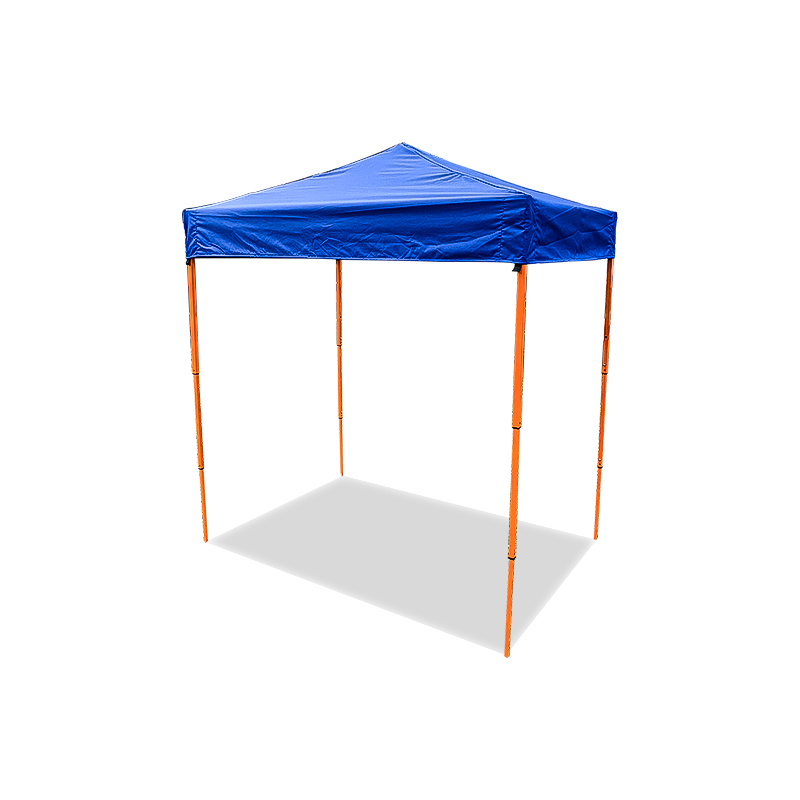
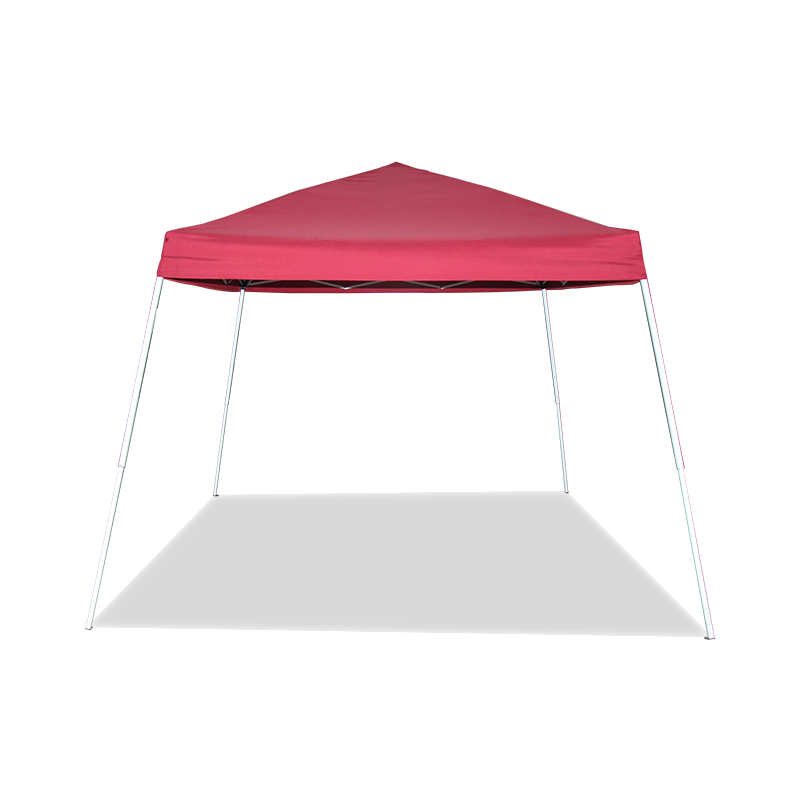
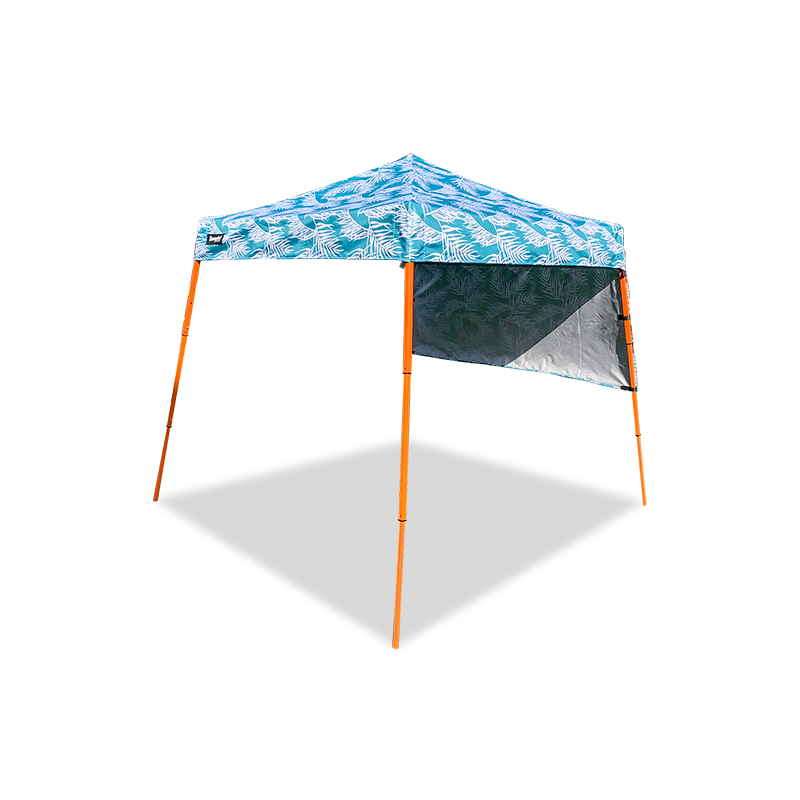
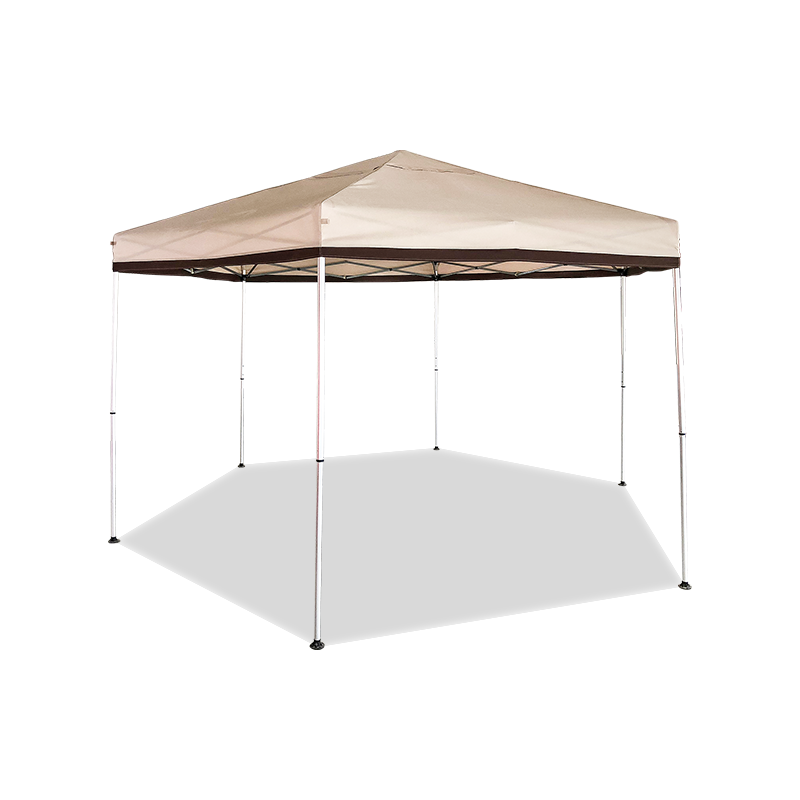
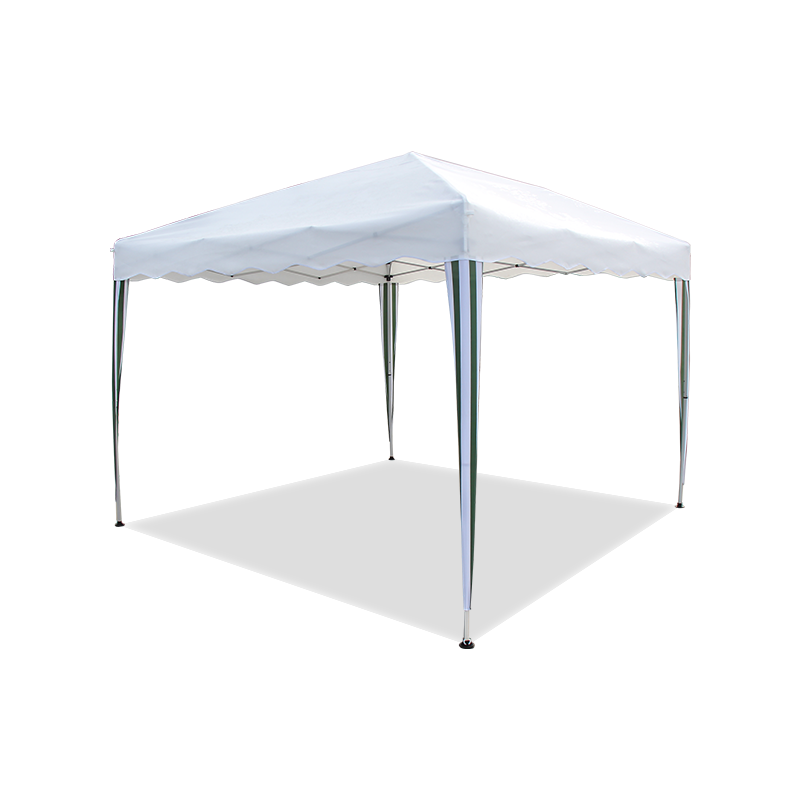
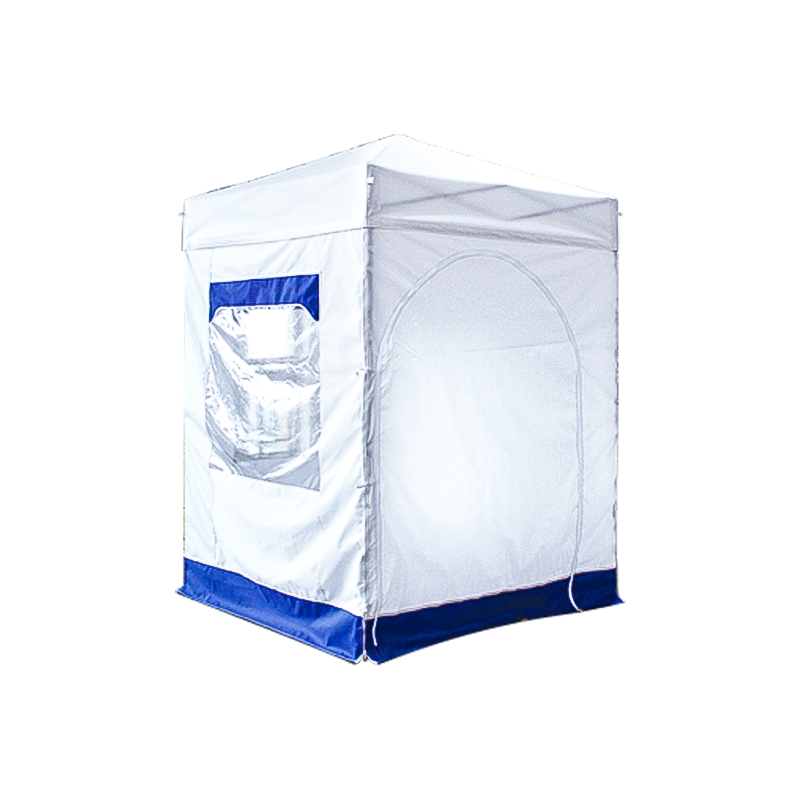
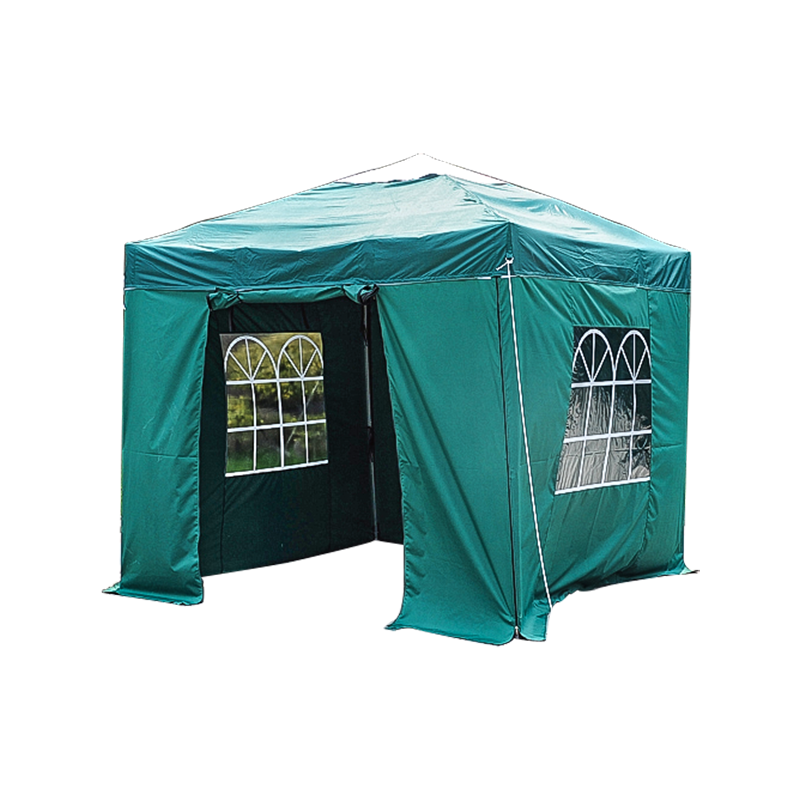
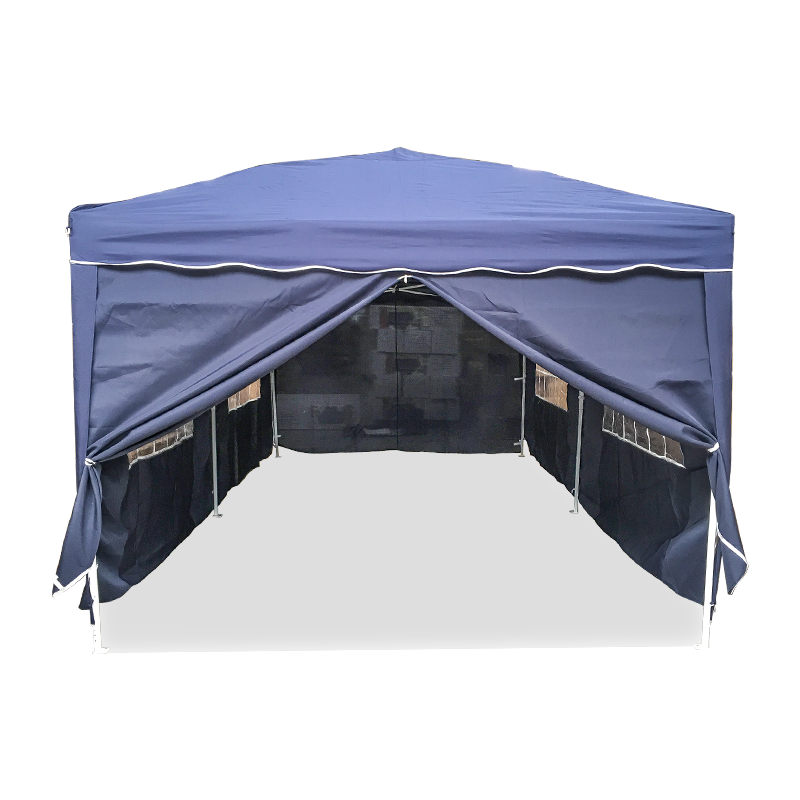
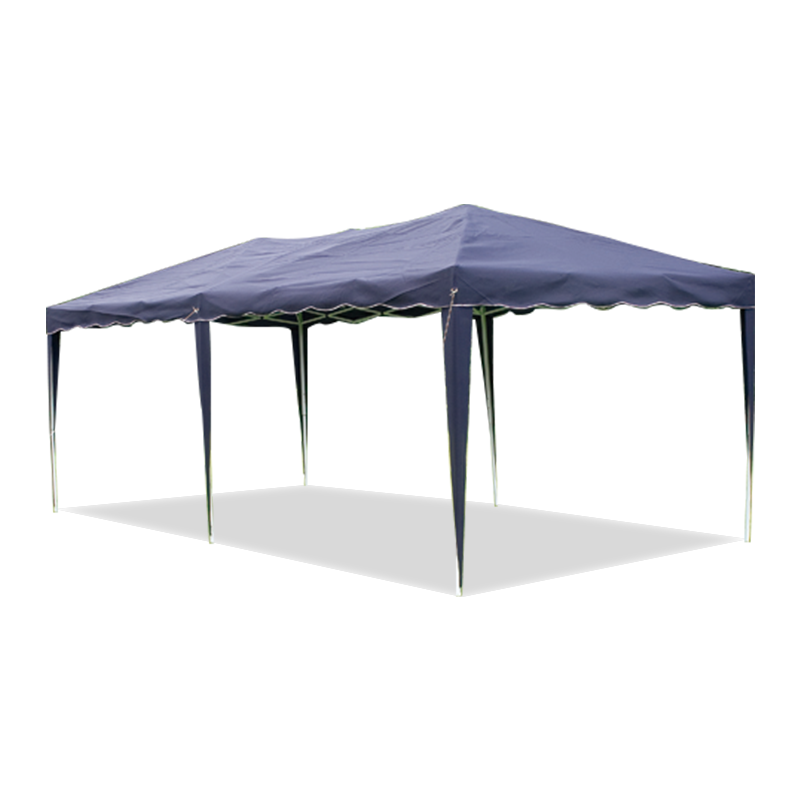
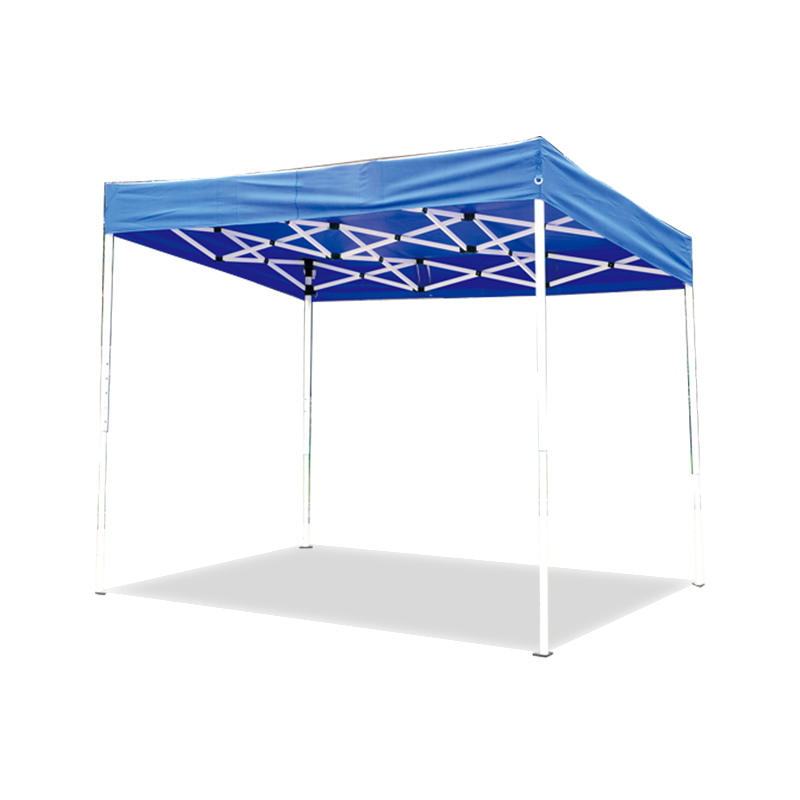
| Pop-up event canopy | Folding steel frame with polyester fabric top | Markets, fairs, outdoor events | Portable, quick to assemble |
Each of these canopy types creates a distinct spatial experience. A tensile canopy over a public square — like the famous Piazza Gae Aulenti in Milan, covered by a large fabric shade structure — transforms an open urban void into a comfortable, populated gathering spot. Without the overhead covering, the same paved area would feel exposed and uninviting during summer months when surface temperatures can exceed 50°C (122°F).
Canopies in Modern Architecture
Contemporary architecture treats the canopy as a serious design element rather than a purely functional afterthought. The Zaha Hadid-designed Heydar Aliyev Center in Baku, Azerbaijan, uses sweeping roof forms that extend outward to form canopy-like overhangs, blurring the line between roof and canopy entirely. The Olympic Velodrome in London, designed by Hopkins Architects, features a dramatic suspended roof that creates a vast covered gathering area while maintaining visual openness. In both cases, the canopy does architectural work — it defines the building's identity and organizes the public space around it.
Canopy vs. Related Terms: Clearing Up Common Confusion
People frequently mix up canopy with several related terms. Understanding the distinctions clarifies not only vocabulary but also what product or structure you actually need when planning an outdoor space.
Canopy vs. Awning
An awning is a type of canopy, but not all canopies are awnings. An awning is specifically a fabric or metal cover that projects from the wall of a building, typically attached just above a window or door. The term implies wall attachment. A canopy is broader — it can be freestanding, supported by its own posts, or suspended from above. A canopy over a market stall attached to no building at all would never be called an awning.
Canopy vs. Pergola
A pergola is an open framework structure — posts supporting an overhead grid of beams and rafters — that may or may not have a covering. When a pergola has fabric panels, polycarbonate sheets, or a retractable shade sail installed on top, that covering becomes the canopy. The pergola is the structural skeleton; the canopy is the covering. Many garden retailers use the terms interchangeably, which creates confusion, but technically a bare pergola provides very little weather protection while a canopied pergola is a genuine outdoor shelter.
Canopy vs. Gazebo
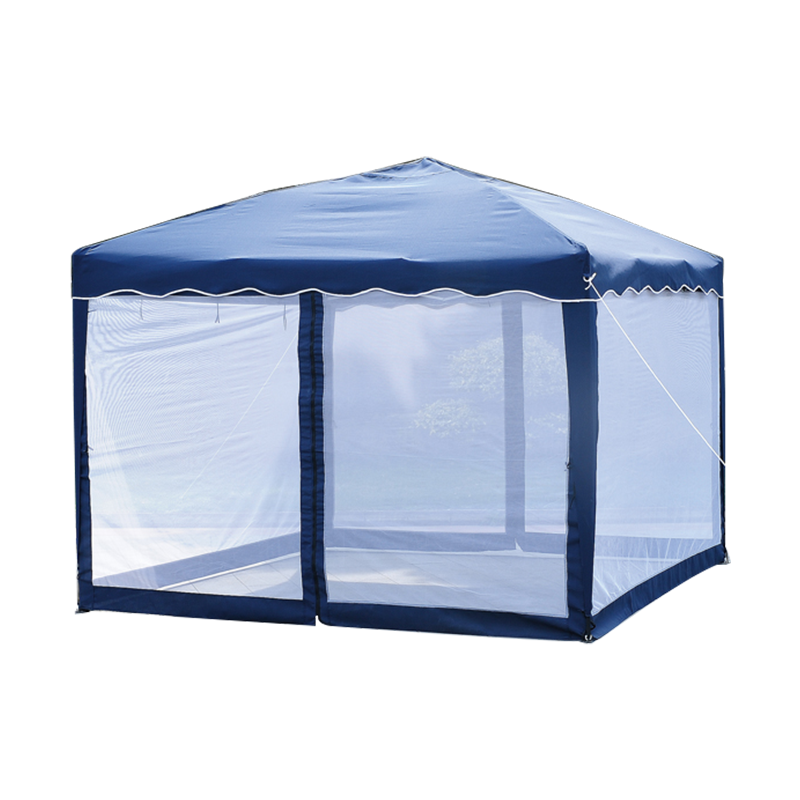
A gazebo is an enclosed or semi-enclosed freestanding structure with a solid roof and defined walls or screens on multiple sides. It is more of a small building than a covering. A canopy, by contrast, is primarily overhead and open on the sides. The gazebo creates a room; the canopy creates a sheltered zone within a larger outdoor area.
Canopy vs. Marquee
In British English especially, a marquee refers to a large, tent-like temporary structure used for events — more enclosed than a canopy but still fabric-based. In American English, a marquee can also mean a projecting roof structure over a theater or hotel entrance (similar to an architectural canopy). Context determines meaning, but in general, marquees imply more enclosure and larger scale than canopies.
How Canopies Create a Sense of Place
Even though a canopy is not a place by strict definition, it reliably produces what urban designers call "place-making" — the process of creating spaces that feel welcoming, purposeful, and memorable. The mechanism is straightforward: human beings are instinctively more comfortable in spaces that have overhead definition. Evolutionary anthropologists suggest this preference traces back to the value of shelter from predators and weather. A canopy triggers that same deep sense of being sheltered without requiring full enclosure.
Jan Gehl, the Danish urban designer whose work has reshaped cities from Copenhagen to Melbourne to New York, documented this pattern extensively. In his book Cities for People, he noted that outdoor seating along building edges — particularly under projecting canopies or awnings — fills up far more quickly and is used for longer periods than identical seating placed in open plazas. The overhead edge creates a psychological "back," making occupants feel secure while still observing the surrounding environment.
Canopies as Landmarks and Wayfinding Aids
Canopies also function as visual landmarks. Hotel portes-cochères, large theater marquees, and illuminated canopy structures over transit entrances all help people orient themselves in unfamiliar environments. The glass canopy over the main entrance of Apple's Fifth Avenue store in New York — a 32-foot glass cube — has become one of the most photographed retail structures in the world and serves as a widely recognized meeting point for people who have never been to that specific address before. The canopy-form entrance became the place.
Canopy Cover and Neighborhood Quality of Life
At the urban scale, canopy cover — both architectural and natural — correlates strongly with quality of life indicators. A 2018 study by the Nature Conservancy analyzed 245 cities worldwide and found that increasing urban tree canopy by 10% reduced summer temperatures in those neighborhoods by up to 2°C (3.6°F). That temperature reduction translates into real economic value: lower air conditioning costs, reduced heat-related illness, and higher outdoor activity rates. Streets shaded by a continuous tree canopy see higher retail foot traffic than comparable unshaded streets, according to research published in Landscape and Urban Planning. People linger where they are comfortable, and canopies — whether leaves or fabric or glass — make lingering possible.
Choosing the Right Canopy for an Outdoor Space
If you are selecting a canopy for a residential, commercial, or event setting, the decision involves several practical factors that go well beyond simply picking a size. Getting this right means the canopy will actually be used and appreciated rather than dismantled after one rainy season.
Climate and Weather Conditions
Wind load is the most commonly underestimated factor. A light pop-up canopy designed for a calm-day market will fail rapidly in coastal or elevated settings where gusts regularly exceed 40 km/h (25 mph). For permanent or semi-permanent installations in wind-exposed locations, steel-framed canopies with concrete footings and engineered tensile fabrics rated for specific wind speeds are the appropriate choice. HDPE (high-density polyethylene) shade sails, for instance, are available in grades certified to withstand sustained winds of 90 km/h (56 mph) when properly installed.
UV resistance matters for fabric canopies. Standard polyester fabric can degrade visibly within 12–18 months of continuous sun exposure. Solution-dyed acrylic fabrics, like those used by Sunbrella and similar brands, retain color and structural integrity for up to 10 years of outdoor use and carry UV-blocking ratings of 50+ in most standard weights.
Size and Coverage Area
A common mistake is sizing the canopy to exactly match the table or furniture beneath it, which leaves people at the edges exposed. A useful rule of thumb for residential patio canopies is to add at least 60–90 cm (2–3 feet) on each side beyond the furniture footprint. For a standard 4-person patio set measuring roughly 2m × 2m (6.5ft × 6.5ft), a canopy of at least 3m × 3m (10ft × 10ft) provides adequate coverage when the sun is at an angle rather than directly overhead.
Permanence and Installation Requirements
Permanent canopy structures attached to buildings typically require building permits in most jurisdictions. In the United States, any structure over 200 square feet (about 18.5 square meters) attached to a home generally requires a permit, and even smaller attached structures may require one depending on local zoning rules. Freestanding canopies under a certain size threshold often avoid permit requirements but may still be subject to setback rules — minimum distances from property lines. Always verify local codes before installation to avoid costly removal orders.
Aesthetic Compatibility
A canopy contributes significantly to the visual character of a building or outdoor space. A bold striped fabric awning suits a Mediterranean-style café but can look jarring on a sleek modernist building. Powder-coated aluminum canopies with clear polycarbonate panels complement contemporary architecture without blocking natural light. Timber pergola canopies with woven shade cloth align naturally with craftsman or cottage-style homes. Matching the canopy material, color palette, and structural style to the existing architecture ensures the addition enhances rather than disrupts the overall aesthetic.
Canopy in Specialized Contexts
Beyond forests and buildings, the word "canopy" appears in a range of specialized fields, each using it to describe something that covers or overlays from above.
Aircraft Canopy
In aviation, the canopy is the transparent enclosure over the cockpit of a fighter jet or light aircraft. It is typically made from acrylic or polycarbonate, provides a 360-degree field of view, and in military aircraft is designed to be jettisoned in fractions of a second during ejection. The F-16 Fighting Falcon's single-piece bubble canopy was specifically designed to give the pilot an unobstructed view in all directions — a critical tactical advantage. The cockpit canopy meets the same basic definition as any other canopy: it is an overhead transparent cover that defines and protects the space beneath it.
Parachute Canopy
The main fabric surface of a parachute is called the canopy. It is the large, dome-shaped or rectangular fabric panel that creates air resistance and slows a descent. A standard round emergency parachute canopy measures about 28 feet (8.5 meters) in diameter, while modern sport parachute canopies (ram-air designs used in skydiving) are rectangular and sized to the jumper's weight, typically ranging from 100 to 220 square feet (9–20 square meters) for recreational use.
Bed Canopy
A bed canopy — or canopy bed — features a fabric covering suspended over the sleeping area, either from a four-poster frame or from ceiling-mounted hardware. Historically, bed canopies served a practical purpose: they retained body heat and protected sleepers from drafts in poorly insulated medieval and Renaissance buildings. Today they are almost entirely decorative, though lightweight gauze bed canopies remain popular in tropical climates as mosquito barriers. The four-poster canopy bed remains a symbol of luxury in hospitality design, with hotels like The Lanesborough in London and Belmond Villa San Michele in Florence featuring original or reproduction canopy beds as centerpiece room elements.
Theatrical and Ceremonial Canopies
Throughout history, portable canopies — called baldachins or baldachinos — were carried over royalty, religious figures, and sacred objects during processions. The term survives in the architectural baldachin, a large canopy structure over an altar or throne, the most famous example being Bernini's bronze baldachin inside St. Peter's Basilica in Vatican City. Standing 29 meters (95 feet) tall, it is the largest bronze structure in the world and marks the precise location of St. Peter's tomb — demonstrating how powerfully a canopy-form structure can sanctify and define a place even within an already monumental space.
Practical Canopy Maintenance and Longevity
A canopy investment — whether a $150 pop-up tent or a $15,000 permanent tensile structure — protects its value only with proper care. Neglected canopies degrade quickly, become eyesores, and can become safety hazards as structural components corrode or fabric weakens under UV exposure.
Fabric Canopy Care
- Brush off debris and standing water after every rain event. Pooled water adds weight, stresses seams, and promotes mold growth.
- Clean fabric panels two to four times per year with mild soap (not bleach on colored fabrics) and a soft brush, then rinse thoroughly.
- Reapply a silicone-based water repellent spray annually for fabrics that are not inherently waterproof.
- Store retractable and removable canopies indoors or in protective bags during winter or storm seasons.
- Inspect seams and stress points annually for fraying, separation, or UV-related brittleness.
Metal Frame and Hardware Care
- Check bolts, fasteners, and connection points annually. Vibration from wind causes fasteners to loosen over time.
- Treat bare steel components with rust-inhibiting primer if any coating is scratched or chipped. Coastal environments with salt air require more frequent inspection — at least every six months.
- Lubricate retractable arm mechanisms with a silicone-based lubricant (not oil-based, which attracts dirt) at the start of each season.
- For permanent post-mounted canopies, inspect the base connections and concrete footings every two to three years for cracking or movement.
With proper maintenance, a high-quality retractable awning canopy should last 10–15 years. A well-maintained architectural tensile canopy with PTFE-coated fiberglass fabric can last 25–35 years, which is comparable to conventional roofing materials. The maintenance investment is modest relative to the cost and disruption of replacement.
Summary: What a Canopy Is, and What It Does
A canopy is not a place — it is a covering. But it is one of the most powerful tools humans use to make places out of open space. Whether it is the interconnected crowns of a ancient rainforest filtering 98% of incoming sunlight to the floor below, a fabric shade sail stretched across a city playground, a bronze baldachin marking holy ground inside a cathedral, or a retractable awning turning a windy balcony into a comfortable afternoon retreat — the canopy performs the same essential act everywhere it appears. It draws a boundary overhead. It says: here, you are sheltered. Here, something is different from the open ground around you. Here is where you can stay.
That is why people use the word as if it describes a place even when it technically describes a structure. The canopy earns that treatment by doing what places do: it changes how people feel, how long they stay, and what they remember about the experience of being there.