
 English
 Español
Customer expresses intent; Communicate between the two parties; Provide analysis reports to customers; Reach a cooperation intention.
Content
- 1 The Specification Ladder: Three Grades Buyers Actually Recognise
- 2 Frame Materials: Steel and Aluminium Measured in Kilograms
- 3 Fabric Weight and Coating: Reading 140g, 250g and 520g Correctly
- 4 Sizing Party Tents and Canopies to Real Events
- 5 Wind, Rain and Anchoring: The Numbers Buyers Should Ask For
- 6 Customisation and Order Planning for B2B Buyers
- 7 Five Specification Mistakes That Cost a Season
- 8 Frequently Asked Questions About Party Tents and Canopies
- 8.1 What size party tent do I need for 50 seated guests?
- 8.2 Can a canopy be left up in the rain?
- 8.3 What is the difference between a canopy and a party tent?
- 8.4 How long does a 250 gsm PVC coated top last?
- 8.5 Do you supply replacement top cloths on their own?
- 8.6 What is the minimum order quantity for custom printing?
- 8.7 Steel or aluminium, which should I stock?
A 3x3 metre pop-up canopy that retails at 39 dollars and one that retails at 120 dollars can look almost identical under showroom lighting. The gap shows up in week three of a trade show season, when a 45 km/h gust folds the cheaper frame at the eaves and a 140 gsm top starts weeping along its seams. That single afternoon usually decides whether a buyer reorders or changes suppliers.
So here is the direct answer for anyone specifying party tents and canopies: choose the frame by tube diameter and wall thickness, choose the top by fabric weight and coating, and treat the anchor kit as its own purchase line rather than a freebie. Colour, printing and carry bag style are cosmetics. Frame geometry and fabric specification are what your customer judges you on after the first rainy weekend.
The notes below come from our own production floor. We build foldable gazebos, canopies and party tents at a 12,000 square metre plant in Yuyao, Zhejiang, roughly 60 km from Ningbo Port, with 200 staff spread across hardware, plastic coating, assembly and sewing workshops, shipping mainly into Europe, the United States and Australia.
The Specification Ladder: Three Grades Buyers Actually Recognise
Most importers end up carrying three tiers at once: an entry line for one-day events, a commercial line for weekly markets and exhibitions, and a heavy line for weddings, festivals and multi-day installations. The tiers are not marketing language. They map to measurable differences in tube dimensions, fabric weight and connector material, and those differences drive the price gap you see between quotations.
| Component | Entry Grade | Commercial Grade | Heavy Event Grade |
|---|---|---|---|
| Frame tube | 25 mm steel, 0.7 mm wall | 28 to 32 mm steel, 0.9 to 1.0 mm wall | 30 mm aluminium, 1.2 mm wall |
| Top fabric | 140 gsm polyester, PE coated | 250 gsm PVC coated polyester | 300 gsm PVC coated polyester or 520 gsm PVC tarp |
| Connectors | Plain moulded plastic | Reinforced plastic or aluminium | Cast aluminium with pull ring or button lock |
| Working wind limit when anchored | 30 to 35 km/h | 40 to 50 km/h | 55 to 65 km/h |
| Duty cycle | 10 to 20 events per season | 30 to 60 events per season | 60 or more events, or multi-day use |
| Realistic service life | One season | Three to five seasons | Five to eight seasons |
Read the table from top to bottom rather than jumping straight to the price column. The wind limit row is the one that matters commercially, because it sets the point at which a rental operator has to send staff out to strike the structure. If your market runs outdoor markets along a coast, an entry grade frame will be returned to you with bent eaves before the season ends.
Frame Materials: Steel and Aluminium Measured in Kilograms
Frame conversations usually collapse into "steel is stronger, aluminium is lighter", which tells a buyer almost nothing. Tube diameter, wall thickness and the connector material at the eaves determine how a canopy behaves in load, and all three are printed on a real specification sheet.
Steel frames: stiffness at a low unit cost
A 25 mm steel tube with a 0.8 mm wall is the entry standard, and a 3x3 metre frame in that tube typically lands between 12 and 14 kg. Stepping up to a 1.0 mm wall on the same diameter adds roughly 3 to 4 kg but noticeably reduces flex at the eaves, which is where pop-up frames usually bend first. Steel also holds paint well, so black and white powder coating stay sharp across several seasons of handling.
Aluminium frames: the portability trade-off
A 30 mm aluminium leg with a 1.2 mm wall brings the same 3x3 metre frame down to roughly 9 to 11 kg, a reduction of around 30 percent. That matters when one person has to move 40 units in and out of a van every weekend. The cost penalty is real, generally 25 to 40 percent more than an equivalent steel frame, so aluminium belongs on rental fleets and on premium retail lines rather than on entry-level promotional stock.
The connector decides where the frame fails
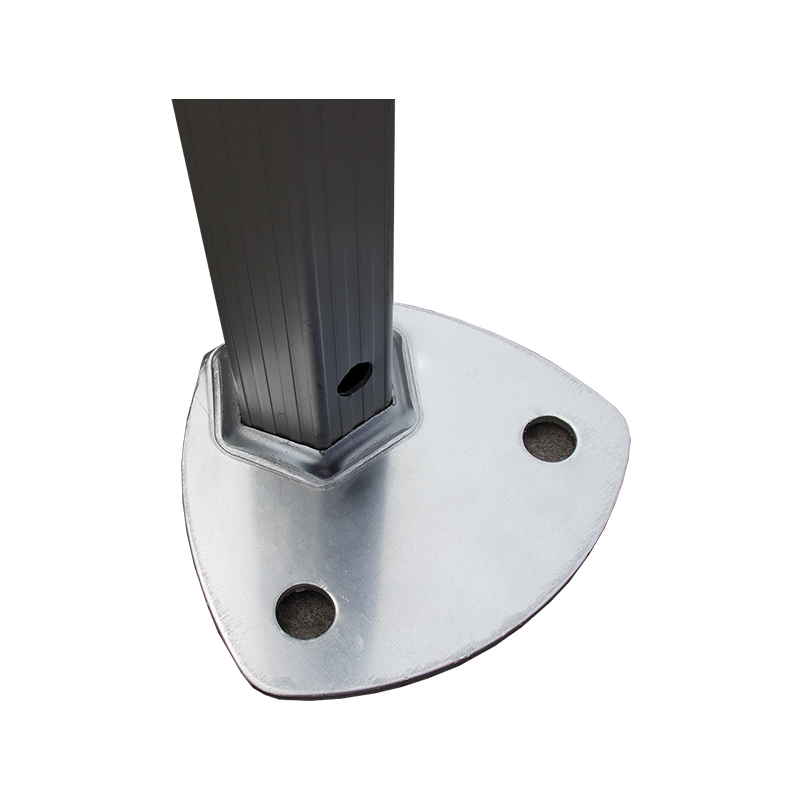
There is little point upgrading tubes while keeping plain plastic hubs. The eave connector absorbs the highest bending moment in the whole structure. Cast aluminium connectors with a pull ring or a button lock hold the truss tight, reduce rattling, and stop the frame collapsing unexpectedly during setup, which is also the moment most injuries happen on site.
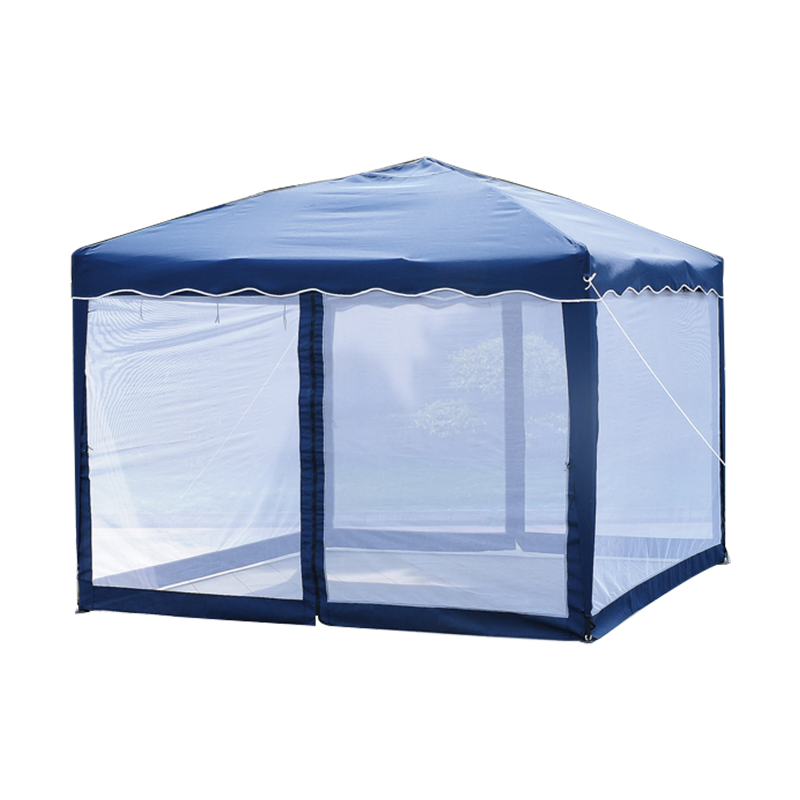
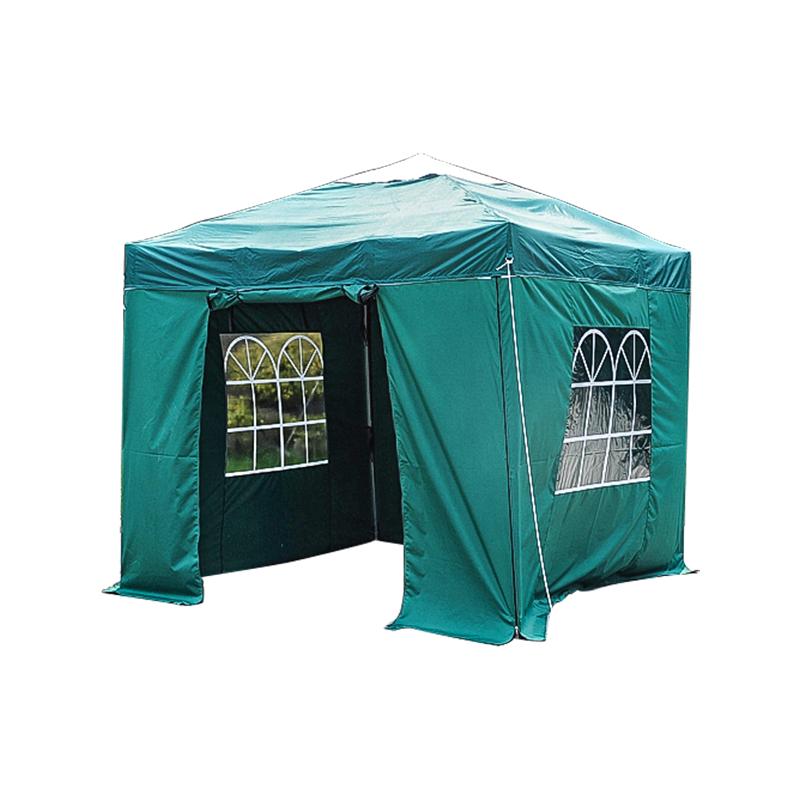
 3x3m Aluminum Frame Folding Gazebo with Sidewalls and Carry BagA folding 3x3m gazebo with aluminum frame, four sidewalls, zip and window panels, and a wheeled carry bag. Its PVC-coated polyester cover and taped seams suit buyers comparing frame connectors and coated fabrics.View Product →
Fabric Weight and Coating: Reading 140g, 250g and 520g Correctly
Fabric weight is quoted in grams per square metre, and two tops carrying the same number can still behave differently once the coating and the seam construction are taken into account. Fabric alone is never the whole story, but it is the fastest filter when you compare quotations from three factories.
- 140 gsm polyester with PE coating. The lightest option, packs small and folds flat, with a water column in the region of 800 to 1,000 mm. Fine for shade and drizzle, but seams are usually the first place water appears.
- 250 gsm PVC coated polyester. The workhorse of commercial canopies, with a water column around 1,500 to 2,000 mm, better seam creep resistance, and a surface that takes printed logos and heat transfer cleanly.
- 300 gsm PVC coated polyester. Common on aluminium frames for garden gazebos used all year, with stronger UV stability. A 3x3 metre top in this weight runs roughly 4.5 to 5.5 kg, so it is noticeably heavier to lift onto a frame.
- 520 gsm PVC tarp. Blockout fabric with a water column above 3,000 mm, built for multi-day installations and professional-use folding tents where the structure stays up through a full event cycle.
Silver coated and PU coated versions of the same base cloth are worth quoting separately. A silver coating reflects a meaningful share of radiant heat and keeps the space under the canopy several degrees cooler on a summer afternoon, which is often the deciding factor for caterers and for anyone selling into markets with long, hot event seasons.
Sizing Party Tents and Canopies to Real Events
Buyers frequently under-order floor area and then add sidewalls to compensate, which reduces usable space even further. A simple rule of thumb is to allow 1.5 to 2 square metres per seated guest including circulation, and about 0.8 square metres per standing guest.
- 2x2 metre portable gazebo: 4 square metres, enough for one market stall or two people seated behind a table.
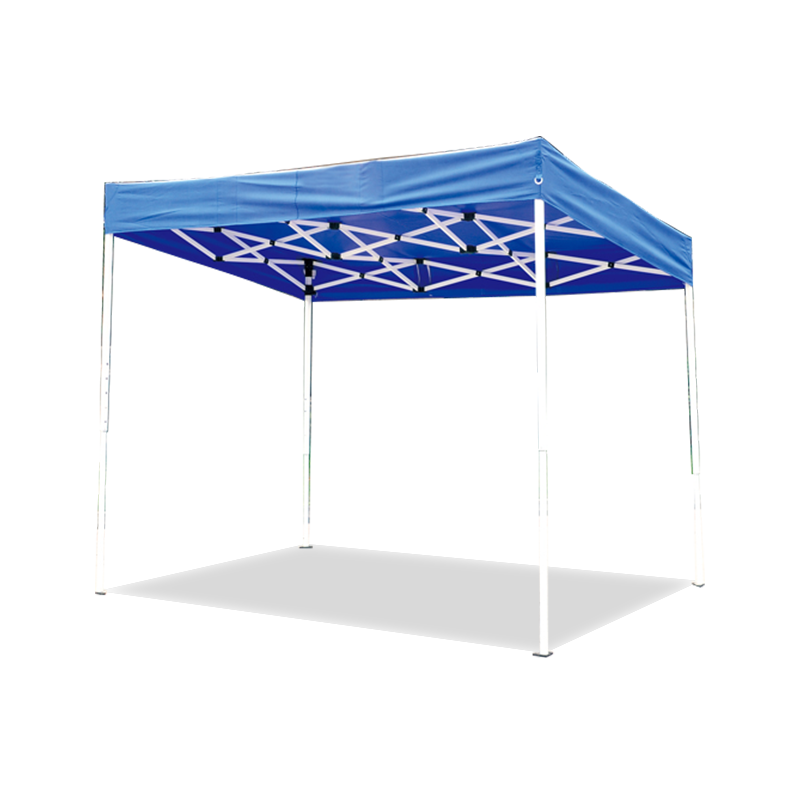
- 3x3 metre canopy: 9 square metres, the default trade show unit, comfortable for a single booth and around ten standing visitors.
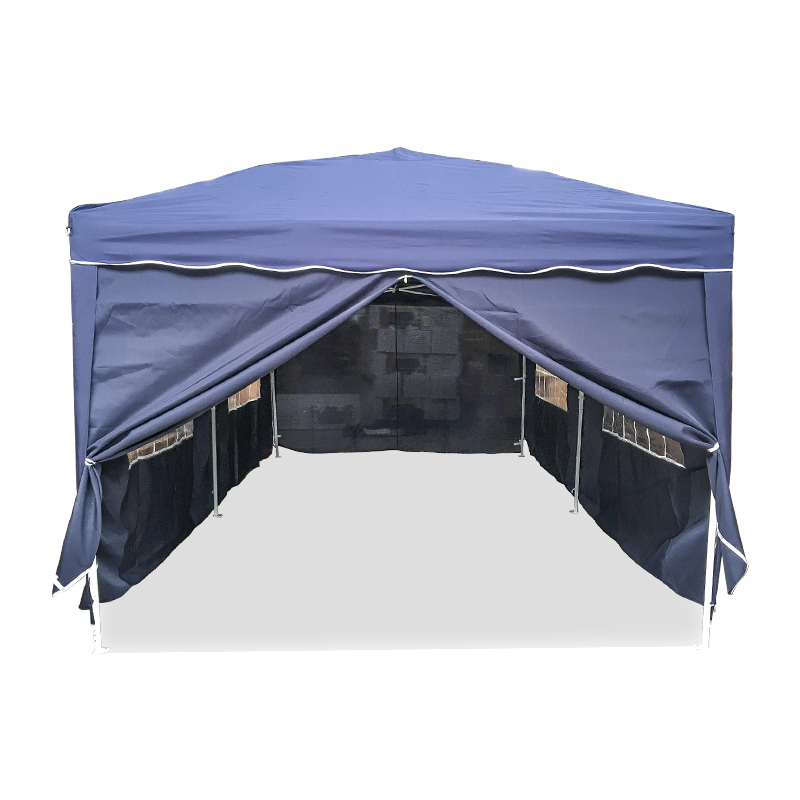
- 3x4.5 metre canopy: 13.5 square metres, two linked stall bays or a long table seating roughly twelve.
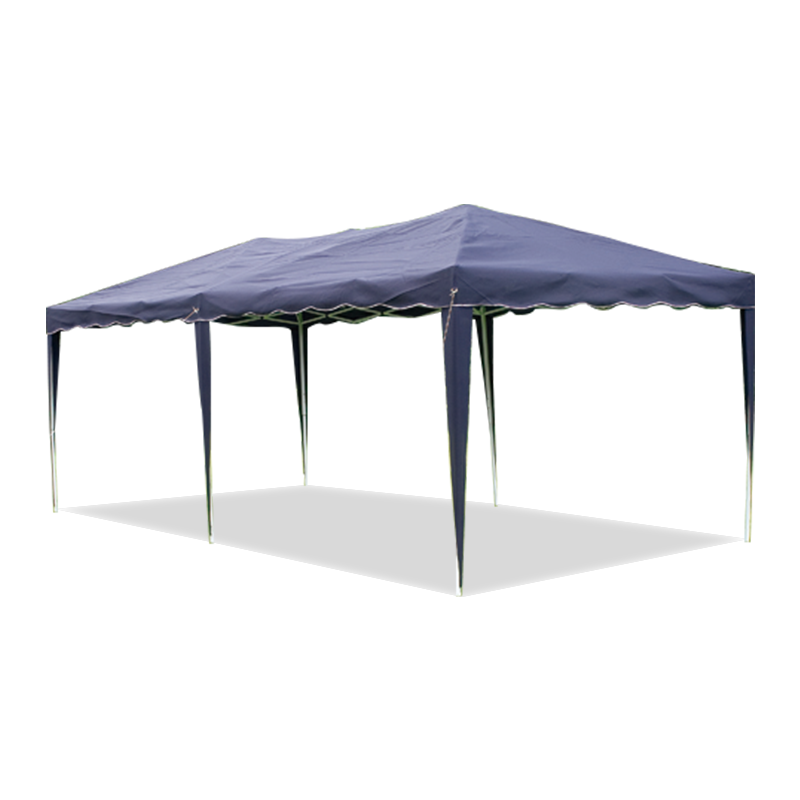
- 3x6 metre canopy: 18 square metres, the standard double booth footprint at European trade fairs.
- Pavilion range event tent at 4x8 metres and above: 32 square metres and up, suitable for ceremony seating for 30 to 40 guests with a centre aisle.
Party tents follow a different logic from pop-up canopies. They are assembled from poles, rafters and sidewalls, so they scale in modules rather than in single footprints, and the steel frame white powder coated format remains the most requested configuration because it photographs well and matches almost any venue. If you are comparing ownership against hiring for a one-off event, it is worth reading what to check before renting a party tent, since rental terms often decide which size actually gets delivered.
Wind, Rain and Anchoring: The Numbers Buyers Should Ask For
Weather limits are quoted loosely in sales conversations and precisely in engineering documents. The Beaufort scale, a long standing reference used in marine and construction work, puts force 6 at wind speeds from 10.8 m/s, which is about 39 km/h, and force 7 from 13.9 m/s, about 50 km/h. Those two thresholds are the useful reference points, because most canopy failures reported by rental operators happen between them.
- Ballast: 20 to 25 kg per leg for a 3x3 metre canopy on hard standing, doubled on open ground near a coastline.
- Stakes: driven at roughly 45 degrees, about 25 cm into firm soil, at every leg rather than only at the corners facing the wind.
- Guy ropes: 4 mm cord from each eave corner, tensioned so the frame cannot rock, not so tight that the tube bows.
- Strike threshold: anything sustained above 40 km/h, and always before leaving a site unattended overnight.
- Drainage: keep the top pitched and taut so rain sheds instead of pooling, since standing water adds hundreds of kilograms of load within an hour.
The single most expensive habit in this category is leaving a canopy erected between events. Fabric that is never dried before folding grows mildew along the creases within two weeks, and frames that stay up through a storm season collect fatigue cracks at the eave welds long before their nominal service life ends.
Customisation and Order Planning for B2B Buyers
Custom work on party tents and canopies is rarely limited to a logo. It touches the top cloth, the packaging and the paperwork that gets the goods through customs and onto a retail shelf.
- Top cloth artwork printed or heat transferred to a supplied design file, including church style or gauze style window panels.
- Woven labels, hang tags, barcodes and QR codes applied at the sewing line rather than added later.
- Retail-ready cartons in custom sizes and print, which reduces repacking costs at your warehouse.
- Replaceable top cloth as a separate SKU, so your customers can refresh a frame instead of replacing the whole unit.
Typical timelines look like this: samples from 7 to 10 days, bulk production from 25 to 35 days depending on fabric and printing, and ocean freight out of Ningbo with the factory located roughly 60 km from the port. Our annual output exceeds 50,000 tents and portable hammocks, and buyers who need design support, artwork handling or full private label production can review our OEM and custom manufacturing service before sending drawings.
Five Specification Mistakes That Cost a Season
- Comparing fabric weight without comparing coating. A 140 gsm cloth with a thin PE layer and a 250 gsm PVC coated cloth are not interchangeable, even when a supplier describes both as waterproof.
- Ordering frames without the anchor kit. Stakes, ropes and ballast plates are cheap line items that prevent the failures customers photograph and post.
- Ignoring pack dimensions. A canopy that is 8 cm longer in its folded state can push a shipping carton into a different container loading category.
- Specifying printing on entry grade cloth. Ink adhesion on low weight PE coated polyester degrades quickly, and a peeling logo is worse than no logo.
- Skipping the changeover to replaceable tops. Offering a replacement top cloth keeps a customer in your catalogue for years instead of sending them to a competitor for a whole new unit.
Each of these points is measurable before a purchase order is signed, which is exactly why they matter. Most disputes in this product category are not about quality in the abstract, they are about a specification that was never written down and a buyer who assumed a particular number.
Frequently Asked Questions About Party Tents and Canopies
What size party tent do I need for 50 seated guests?
Budget roughly 1.5 to 2 square metres per seated guest once tables, chairs and circulation aisles are included, so 50 guests at banquet rounds need about 75 to 100 square metres of covered floor. That usually means a modular event tent in the 6x12 metre or 10x10 metre range, or two linked 5x10 metre structures.
Can a canopy be left up in the rain?
Yes, provided the top is 250 gsm or heavier, the fabric is pitched taut so water runs off, and the frame is anchored. The risk is standing water rather than rain itself. A sagging top can collect enough water to overload a light frame within a single hour, so anyone using a canopy through a wet season should check tension after every downpour.
What is the difference between a canopy and a party tent?
A canopy, often sold as a pop-up or foldable gazebo, uses a folding scissor frame that one or two people can raise in a couple of minutes and normally has no walls. A party tent is assembled from separate poles, rafters and sidewalls, covers larger areas, and is designed to stay standing for days rather than hours.
How long does a 250 gsm PVC coated top last?
With correct drying and storage between events, three to five seasons is a realistic expectation for commercial use. The variables that shorten that figure are folding a damp top, storing it in direct sunlight, and packing it against sharp frame edges without a protective sleeve.
Do you supply replacement top cloths on their own?
Yes. Several canopy models are built around a replaceable top cloth design, which lets a retailer or rental operator refresh a frame without buying a complete unit. Replacement tops can be supplied in the original fabric weight or upgraded, for example from 140 gsm polyester to 250 gsm PVC coated polyester.
What is the minimum order quantity for custom printing?
For printed tops, a practical minimum sits around 100 to 200 pieces per colour and model, because print setup and fabric cutting are batched together. Unprinted stock can be mixed more freely within a container, which is a useful route for a first order while artwork and packaging are finalised.
Steel or aluminium, which should I stock?
Stock steel for price sensitive retail and promotional channels, and aluminium for rental fleets, garden centres and any customer who handles the product alone. The 3 to 5 kg difference on a 3x3 metre frame is the single specification most end users actually notice.
Party tents and canopies reward buyers who specify in numbers. Tube diameter, wall thickness, fabric weight, coating type, connector material and anchor kit together describe a product far more accurately than any photograph, and they give you something concrete to hold a supplier to when a container arrives.
If you are building a range for the next season, start with the events your customers actually run. A coastal market, a weekend exhibition stand and a garden barbecue need three different products, and a catalogue that separates them will outsell one that tries to cover all three with a single entry level canopy.
- Write the wind limit into your specification sheet, not just the tube size.
- Quote the anchor kit separately so it never gets dropped to save a few cents.
- Keep one replaceable top cloth SKU per popular frame size in your range.

