
 English
 Español
Customer expresses intent; Communicate between the two parties; Provide analysis reports to customers; Reach a cooperation intention.
Content
- 1 Types of Canopy Side Panels
- 2 Material Comparison: What Each Fabric Is Actually Good At
- 3 Wind Performance: Why Sides Change the Load on a Canopy Frame
- 4 Sizing Canopy Sides Correctly
- 5 Attaching Sides to a Canopy Frame
- 6 Matching Sides to the Canopy's Job
- 7 Keeping Canopy Sides in Working Condition
- 8 Common Mistakes When Choosing Canopy Sides
- 9 Frequently Asked Questions
- 9.1 Can canopy sides be added to any canopy after purchase?
- 9.2 Do mesh sides provide any rain protection?
- 9.3 How many sides does a canopy typically need?
- 9.4 What is the difference between a valance and a side panel?
- 9.5 Can clear vinyl sides be used alongside solid or mesh sides on the same canopy?
- 9.6 How long do canopy side panels typically last outdoors?
Quick Answer
Sides for a canopy are the removable or fixed wall panels that attach to a canopy's frame to close off the open sides, and they come in four main forms: solid vinyl walls for full weather blockage, mesh walls for airflow with insect and sun control, clear vinyl windows for visibility during closure, and roll-up or zippered panels that switch between open and closed in seconds. The right choice depends mainly on wind exposure, the season, and whether the canopy is used for storage, retail, farming, or events.
A canopy without sides is really just a roof. The moment wind picks up, rain turns sideways, or the sun drops low enough to blind a customer at a market stall, the frame alone stops doing its job. Sides turn an open-air structure into something closer to a real room: a place that keeps product dry, keeps equipment out of the weather, and keeps people comfortable regardless of what the sky is doing. This guide walks through the material options, how sides are sized and attached, what actually holds up in wind, and the mistakes that shorten a canopy's usable life.
Types of Canopy Side Panels
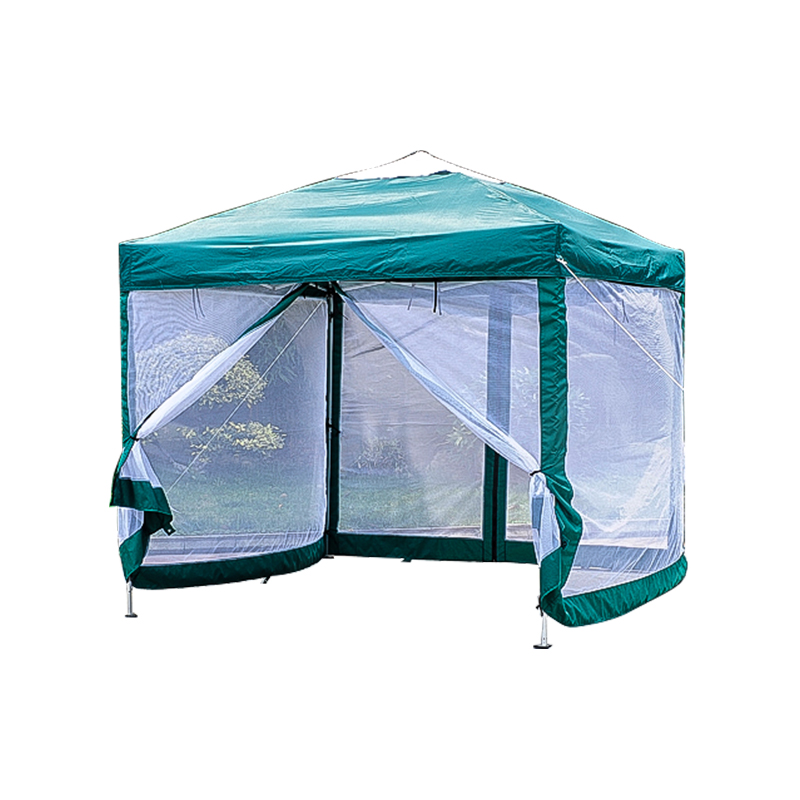
Most canopy side systems fall into one of four categories, and a well-equipped canopy setup often uses two or three of them in rotation depending on the day.
Solid Wall
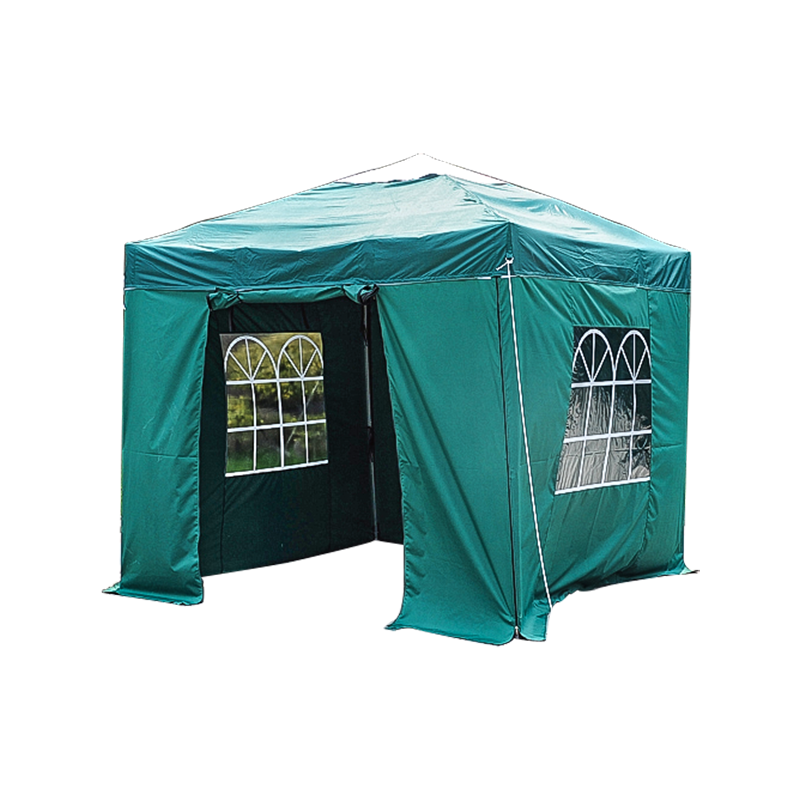
Solid Vinyl Sides
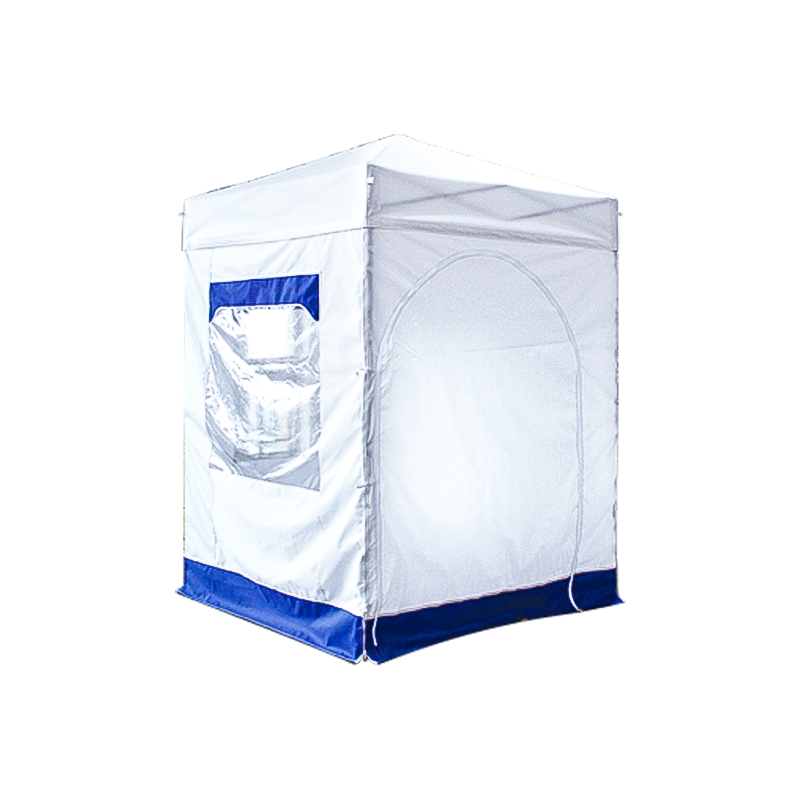
Made from coated polyester or PVC-laminated fabric, solid sides block wind, rain, and direct sun entirely. They are the standard choice for storage canopies, cold-weather use, and any setup where the interior needs to stay fully dry.
Ventilated
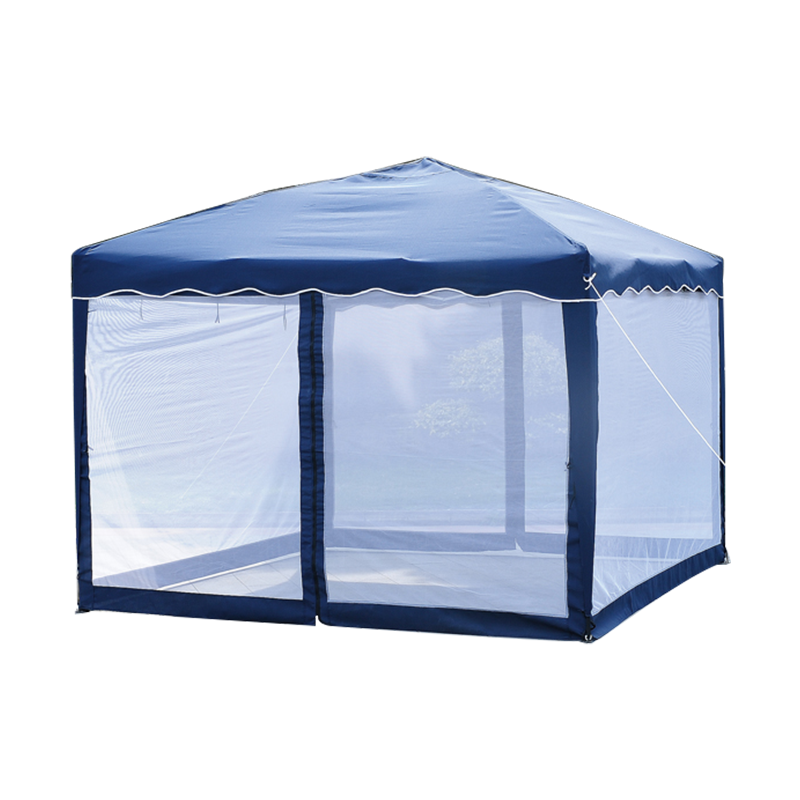
Mesh Sides
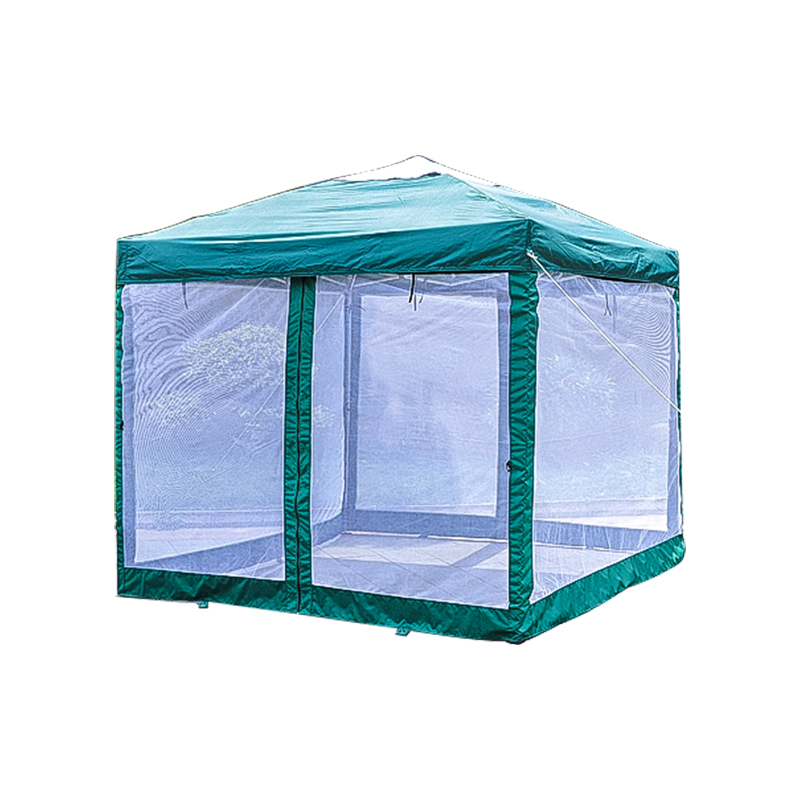
Woven or knitted mesh panels cut sun glare and keep insects out while still letting air move through. They are the default for livestock shelters, greenhouses, and summer market stalls where heat buildup is a bigger problem than wind.
See-Through
Clear Vinyl Panels
Transparent PVC sheeting, usually 20-40 mil thick, lets in daylight and keeps sightlines open even when the canopy is fully enclosed. Restaurants, showrooms, and event tents rely on these to avoid a closed-in feel.
Convertible
Roll-Up & Zip Sides
These attach with a track, hook-and-loop strip, or grommet-and-bungee system so the panel can be rolled, tied, or unzipped in under a minute. They suit sites where the canopy needs to open for customer flow during the day and close at night.
Material Comparison: What Each Fabric Is Actually Good At
Fabric weight and coating determine how a side panel performs far more than color or brand. The table below lines up the four common materials against the factors that matter most when specifying sides for a canopy.
| Material | Typical Weight | Water Resistance | Best Use |
|---|---|---|---|
| 18 oz PVC-coated polyester | 16-20 oz/sq yd | Fully waterproof | Storage, cold storage, winter enclosures |
| Knitted shade mesh | 6-9 oz/sq yd | Water-resistant, not waterproof | Livestock, greenhouses, hot-climate markets |
| Clear PVC sheeting | 20-40 mil thickness | Fully waterproof | Restaurants, showrooms, event enclosures |
| Standard polyethylene tarp | 8-12 mil thickness | Waterproof, shorter lifespan | Short-term jobs, temporary storage |
The heavier the coating, the shorter the mesh life expectancy in direct sun. PVC-coated polyester generally holds up for several years of continuous outdoor exposure, while uncoated shade mesh tends to need replacement sooner if it is left up through every season without seasonal storage.
Wind Performance: Why Sides Change the Load on a Canopy Frame
Adding sides to a canopy does not just block wind, it changes how wind loads the entire structure. An open-sided canopy lets gusts pass through the frame; a fully enclosed one turns the whole canopy into a sail. This is the single most misunderstood part of specifying canopy sides.
3-4x
Higher wind load on a fully-enclosed canopy compared with the same frame left open on all sides
1-2
Sides typically left open or vented on the windward side to relieve pressure in gusty conditions
40%+
Open weave commonly used in mesh sides to let wind pass through rather than push against the panel
Frame manufacturers rate canopy structures for a maximum wind speed with sides installed and a separate, usually higher, rating with sides removed. Anyone adding full solid walls to a canopy that was only rated with an open frame should check that rating before assuming the structure can handle the same storm conditions. In practice, the safest approach in high wind is to leave the windward side open or use a vented mesh panel there while keeping solid sides on the remaining three, so air has somewhere to go instead of loading the frame directly.
Sizing Canopy Sides Correctly
Side panels are measured against the canopy's leg-to-leg span and the height of the frame at the eave, not the overall footprint of the tent. Getting either number wrong is the most common reason a new set of sides does not fit.
Measuring for a Straight-Leg Frame
On a straight-leg canopy, measure the distance between the outer edges of two adjacent legs for the width, and measure from the ground to the underside of the eave (where the roof meets the leg) for the height. Straight-leg frames are the simplest to fit because the wall panel hangs in a flat vertical plane.
Measuring for a Slant-Leg or Pop-Up Frame
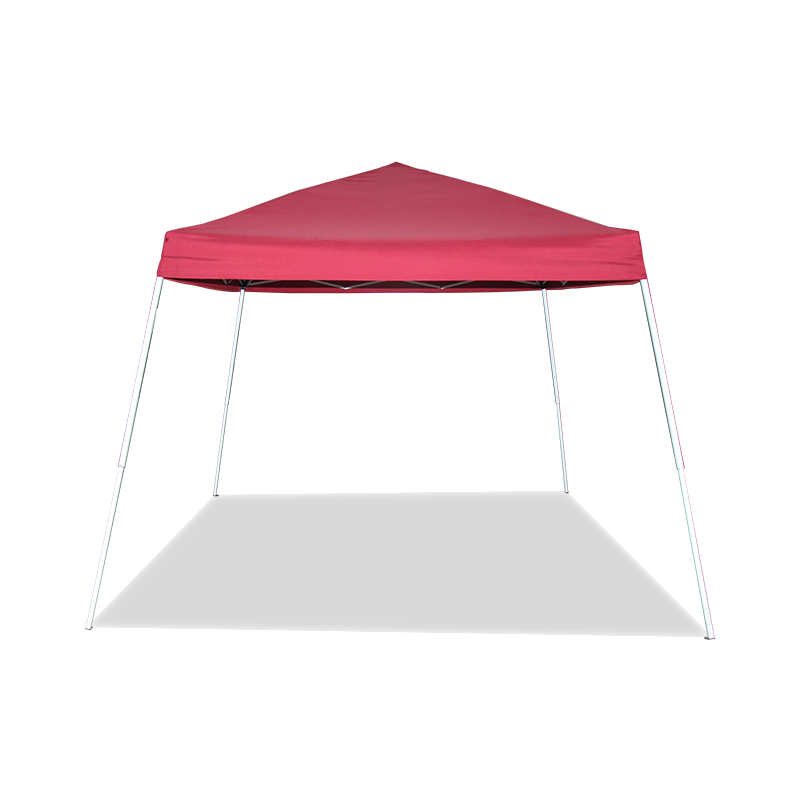
Slant-leg canopies angle outward toward the ground, so a side panel needs a wider base than the eave measurement alone would suggest. Manufacturers typically list a separate "slant-leg side" size for this reason, and using a straight-leg panel on a slant-leg frame usually leaves gaps at the bottom corners.
Before ordering, confirm:
- Frame type: straight-leg, slant-leg, or a truss/pole-barn style canopy
- Bay width between each pair of legs, since long canopies are sided one bay at a time
- Eave height at the lowest point of the roofline
- Attachment method the frame supports: grommets, hook-and-loop strips, zippers, or a track system
Attaching Sides to a Canopy Frame
Attachment method affects both how quickly sides go up and how well they hold in wind. The four methods below cover the large majority of canopy structures in commercial and residential use.
- 1. Bungee-and-grommet: Grommets along the top and sides of the panel hook onto bungee cords or ball bungees fixed to the frame. Fast to install and forgiving of minor sizing differences, but the least secure option in sustained high wind.
- 2. Hook-and-loop strip: A continuous strip of hook-and-loop fastener runs along the frame and the panel edge. Gives a cleaner, more finished look and a tighter seal than bungees, though the strip needs periodic cleaning to keep its grip.
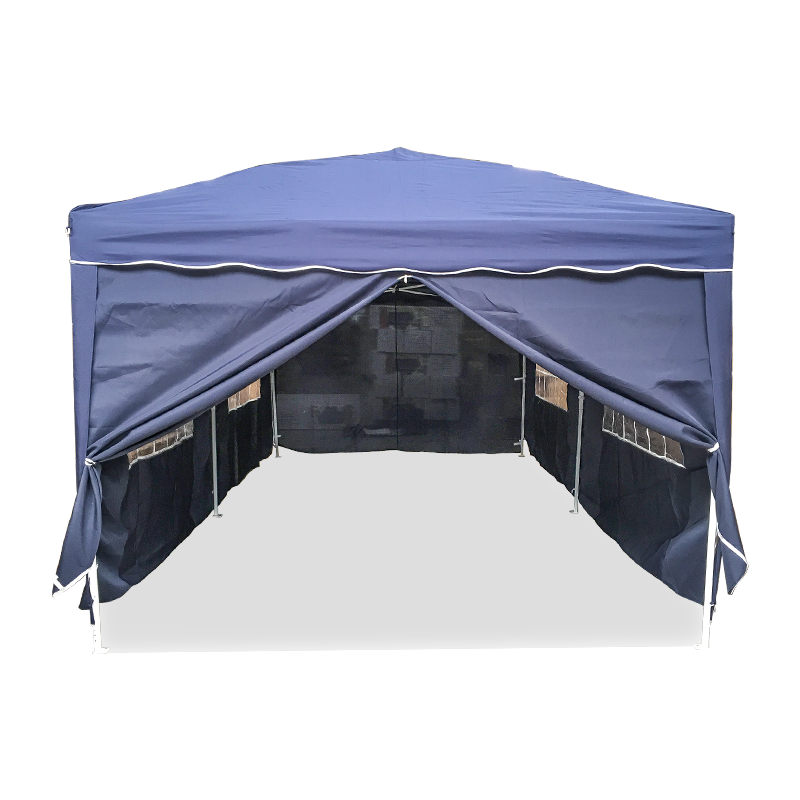
- 3. Zipper connection: Panels zip directly to the roof valance or to each other at the corners. This is the standard for enclosed event tents because it seals corner gaps that other methods leave open.
- 4. Track and keder system: A rubber-edged keder strip sewn into the panel slides into an aluminum track on the frame. This is the most weathertight and most wind-resistant method, and it is standard on structure tents and large commercial canopies, though it typically requires the track to be built into the frame from the start.
Matching Sides to the Canopy's Job
The best side configuration changes with what the canopy is actually protecting. A few common setups:
Farmers Markets and Retail Booths
One or two solid back walls to block afternoon sun and wind at the vendor's back, left open at the front for customer access, with a roll-up side on one flank for quick pack-up at closing time.
Equipment and Material Storage
Solid vinyl on all sides, secured with a track or zipper system rather than bungees, since a storage canopy is usually left unattended and needs to hold its seal without daily adjustment.
Livestock and Agricultural Shelters
Mesh sides on the sun-facing and downwind sides for airflow, with a solid panel on the prevailing wind side during colder months, swapped seasonally as the weather shifts.
Events and Hospitality Tents
Clear vinyl panels to keep the space bright and open sightlines for guests, often paired with solid sides only on the side facing parking lots or service areas.
Keeping Canopy Sides in Working Condition
Side panels see more handling than the roof of a canopy, since they get rolled, unzipped, and re-attached far more often. A few habits noticeably extend how long a set of sides lasts:
- Rinse mud and dust off before rolling and storing panels, since grit trapped in folds abrades the coating over time
- Let panels dry fully before packing them away to prevent mildew, especially with PVC-coated fabric stored in a closed bag
- Store rolled rather than folded when possible, since sharp folds crack coated fabric faster than a loose roll
- Check grommets, zipper teeth, and hook-and-loop strips each season and repair small tears before they spread
- Avoid dragging panels across gravel or pavement during setup and takedown, which is the most common cause of small punctures
Common Mistakes When Choosing Canopy Sides
| Mistake | Why It Causes Problems | More Reliable Approach |
|---|---|---|
| Enclosing all sides in high wind | Turns the canopy into a sail and can overload the frame | Leave one side vented or open on the windward face |
| Ordering straight-leg sides for a slant-leg frame | Leaves gaps at the bottom corners where weather gets in | Confirm frame type before ordering panel sizes |
| Using bungee attachment for permanent storage sides | Bungees stretch and loosen over months of continuous tension | Use zipper or track attachment for sides left up long-term |
| Storing wet panels rolled tightly in a sealed bag | Trapped moisture leads to mildew and coating breakdown | Dry panels fully before rolling and storing |
Frequently Asked Questions
Can canopy sides be added to any canopy after purchase?
Most straight-leg and slant-leg canopy frames can accept aftermarket sides as long as the frame has a valance or track to attach to, but the sides need to match that specific frame's width, leg angle, and eave height, so measuring the existing frame first is essential.
Do mesh sides provide any rain protection?
Mesh sides reduce wind-driven spray and cut direct sun, but they are not waterproof, so they are better suited to dry-season use or as a secondary layer alongside a solid panel rather than as the sole weather barrier.
How many sides does a canopy typically need?
Many setups use two to three sides rather than four, leaving one side open for access or leaving the windward side vented in gusty conditions, since fully enclosing a frame increases the wind load it carries.
What is the difference between a valance and a side panel?
A valance is the short skirt of fabric that hangs from the roof edge and is often permanently attached; a side panel is the full-height wall that extends from the valance down to the ground and is usually removable.
Can clear vinyl sides be used alongside solid or mesh sides on the same canopy?
Yes, mixing panel types on different sides of the same canopy is common, for example clear vinyl on the customer-facing side for visibility and a solid panel on the back or wind-facing side for protection.
How long do canopy side panels typically last outdoors?
Heavier PVC-coated fabric left up continuously in direct sun generally lasts a few years before the coating starts to crack, while lighter mesh or basic tarp material tends to need replacement sooner; taking panels down between seasons extends the life of either material considerably.

