
 English
 Español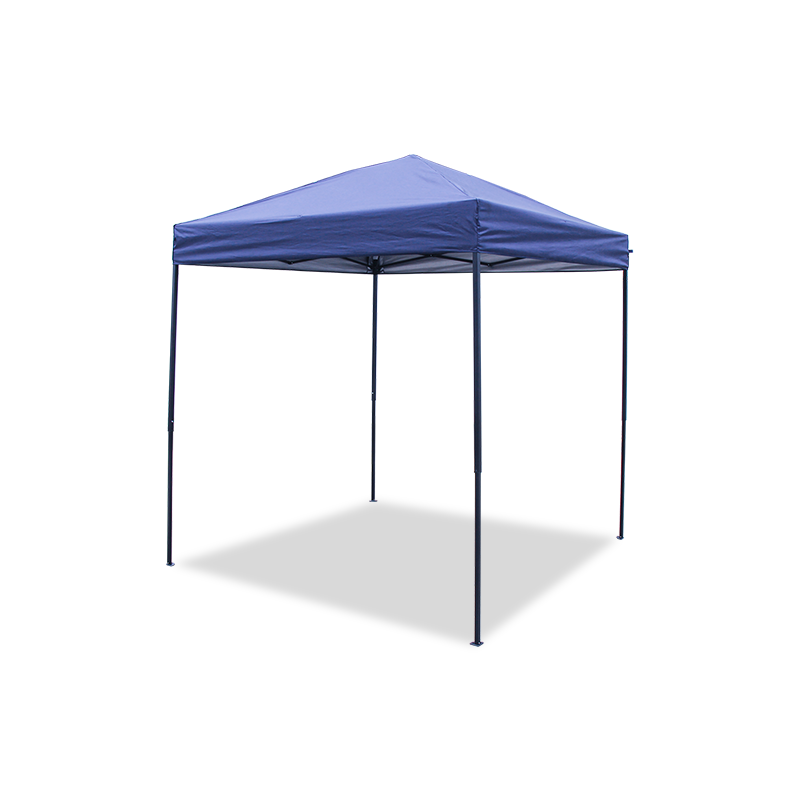
Customer expresses intent; Communicate between the two parties; Provide analysis reports to customers; Reach a cooperation intention.
Content
- 1 What Makes a Small Pop Up Canopy Worth Buying
- 2 Common Sizes and What They Actually Cover
- 3 Frame Materials: Steel, Aluminum, and Fiberglass Compared
- 4 Canopy Top Fabrics: What the Specs Actually Mean
- 5 Wind Resistance: The Most Overlooked Spec on Any Pop Up Canopy
- 6 Top Use Cases for a Small Pop Up Canopy
- 7 How to Set Up a Pop Up Canopy Correctly
- 8 Canopy Accessories That Actually Add Value
- 9 Price Ranges and What You Get at Each Level
- 10 Maintaining and Storing Your Canopy to Maximize Lifespan
- 11 Custom Printed Canopy Tops: Branding Your Space
- 12 Frequently Asked Questions About Small Pop Up Canopies
What Makes a Small Pop Up Canopy Worth Buying
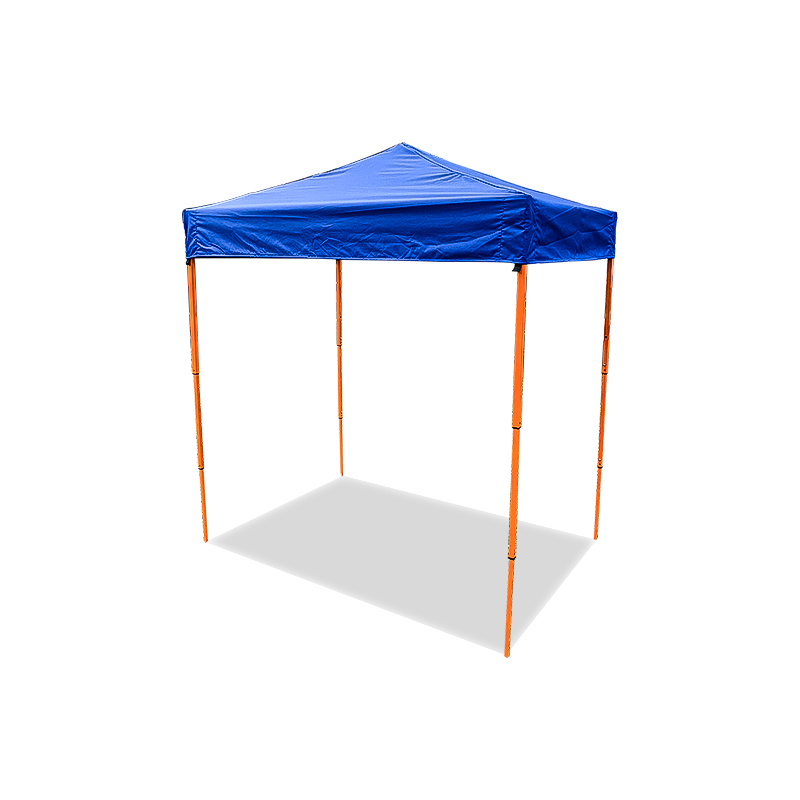
A small pop up canopy is a compact, collapsible shelter that sets up in minutes without tools, providing instant overhead coverage for outdoor events, markets, camping trips, or backyard gatherings. The bottom line: if you need portable shade for a space roughly 6×6 ft to 10×10 ft, a pop up canopy is the fastest, most practical solution on the market. Unlike permanent gazebos or bulky frame tents, these canopy shelters fold down into a rolling bag you can load into a car trunk, making them accessible for solo users and small teams alike.
The global canopy and tent market has grown steadily, with portable shelter products seeing a double-digit increase in demand post-2020 as outdoor events, farmers markets, and recreational activities expanded. A well-chosen small canopy tent does more than block sun — it frames your space, protects merchandise or food from light rain, and signals a professional setup at craft fairs or sports sidelines.
Common Sizes and What They Actually Cover
Size is the first decision you make when shopping for a small pop up canopy. The label says "10×10," but what does that mean in practice? The dimension refers to the footprint at the base when the legs are at maximum spread — it does not equal usable standing space, because the canopy frame legs occupy the corners and the roof slopes inward on most models.
| Canopy Size | Base Footprint | Usable Interior (approx.) | Best For |
|---|---|---|---|
| 6×6 ft | 36 sq ft | ~28 sq ft | Solo vendors, beach shade, small displays |
| 8×8 ft | 64 sq ft | ~54 sq ft | 2–3 person teams, small craft booths |
| 10×10 ft | 100 sq ft | ~82 sq ft | Standard market booths, team events, backyard parties |
| 10×15 ft | 150 sq ft | ~125 sq ft | Larger events, food service areas, sports sidelines |
The 10×10 ft pop up canopy remains the industry standard at most farmers markets and craft fairs — many event organizers specifically allocate 10×10 booth spaces. If you plan to vend regularly, starting with this size saves you from having to re-buy later. For beach trips, picnics, or personal shade at sporting events, a 6×6 or 8×8 canopy is lighter and easier to carry solo, often weighing just 15–25 lbs compared to 35–50 lbs for a full 10×10 setup.
Slant Leg vs. Straight Leg Canopy Frames
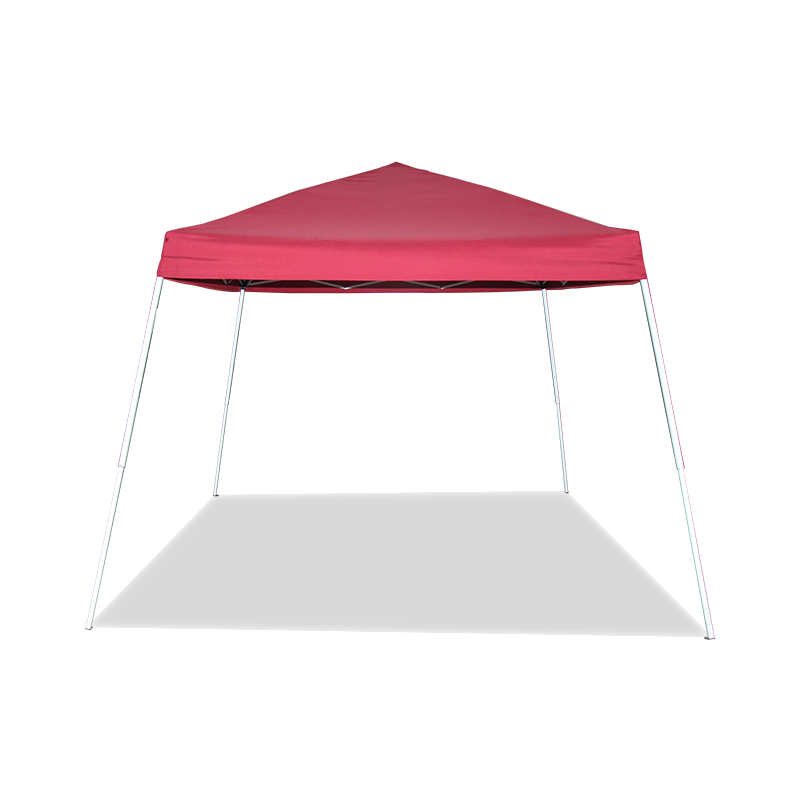
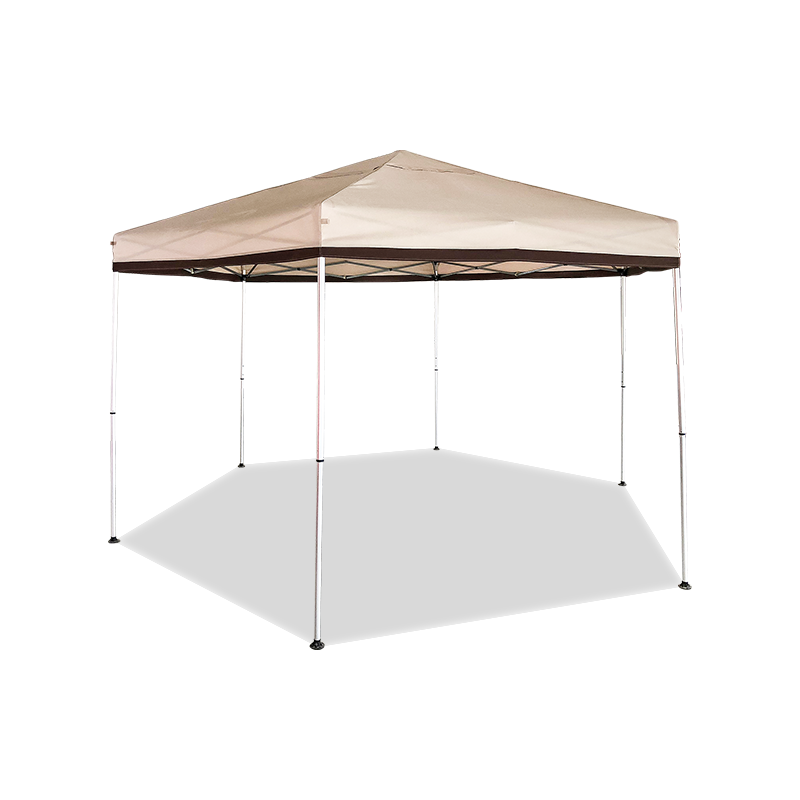
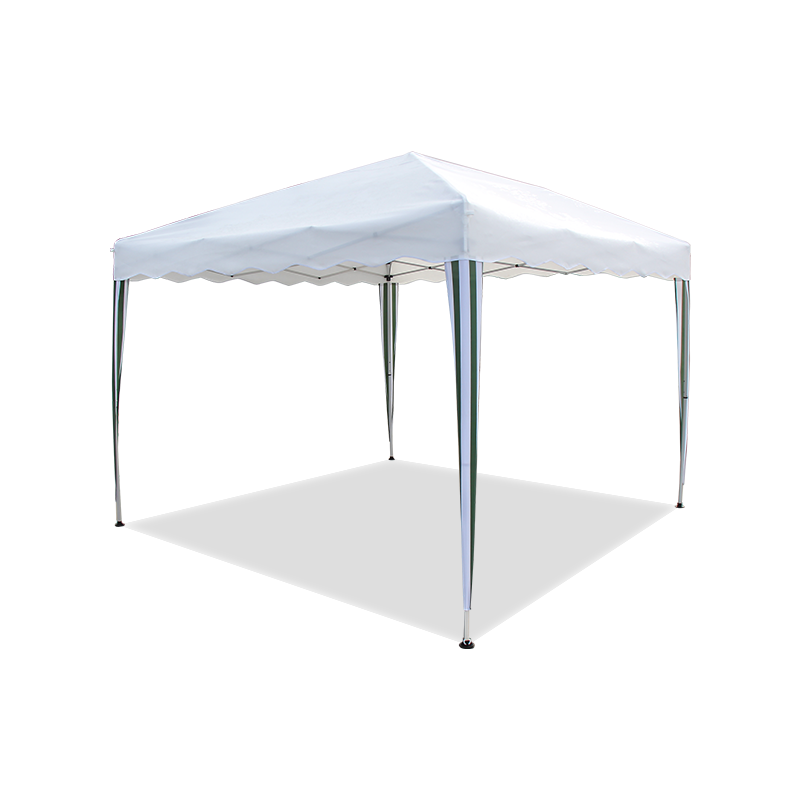
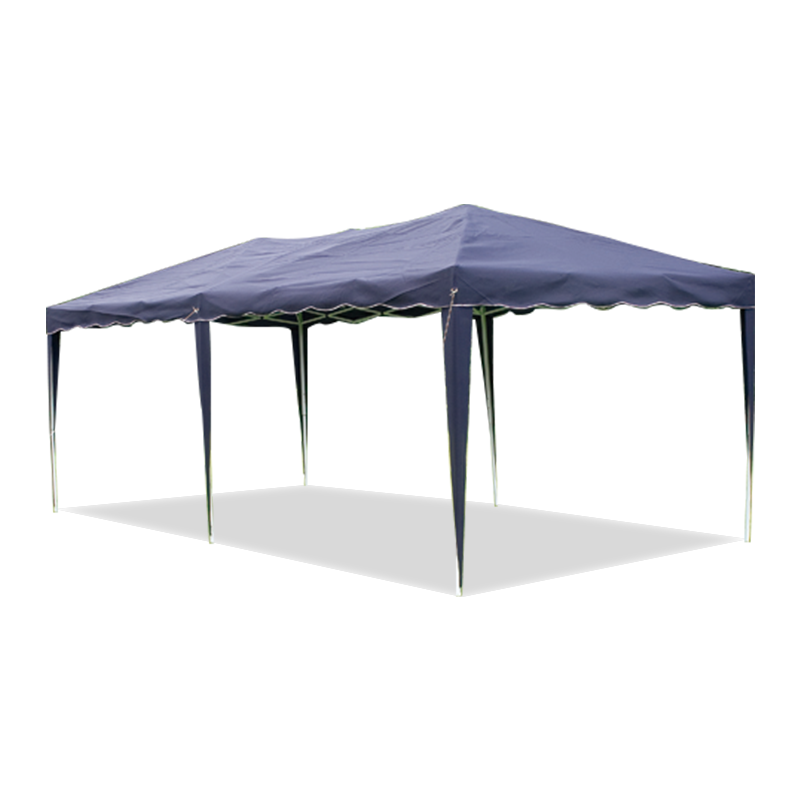
Most small pop up canopies come with either slant legs or straight legs. Slant-leg models angle outward from the roof to the ground, meaning the roof coverage is slightly smaller than the base footprint — a 10×10 slant-leg canopy may only provide about 8×8 ft of roof shade. Straight-leg canopy frames keep the legs vertical, so the roof and the base footprint match. For vendor use where every square foot matters, straight-leg canopy structures give you more overhead coverage and a more professional, upright appearance.

Frame Materials: Steel, Aluminum, and Fiberglass Compared
The canopy frame is the backbone of any pop up shelter. Three materials dominate the market, and your choice affects weight, durability, and price significantly.
Steel Frames
Steel canopy frames are the heaviest option, typically adding 10–15 lbs over comparable aluminum designs. However, they are generally the most affordable entry point — budget steel canopy tents often retail between $50–$120. The tradeoff is rust risk in wet climates unless the steel is powder-coated or galvanized. For occasional-use canopy owners who store their shelter dry between uses, steel frames offer acceptable durability at a low cost.
Aluminum Frames
Aluminum is the preferred frame material for anyone using their canopy frequently. It is roughly 40% lighter than steel for equivalent strength, corrosion-resistant, and easier to handle solo. Commercial-grade aluminum pop up canopies — the kind used by professional vendors and event companies — use thicker-walled tubing (1.5–2.5 mm wall thickness) that resists bending under wind load. Expect to pay $150–$400+ for a quality aluminum canopy in the 10×10 size range.
Fiberglass Frames
Fiberglass canopy frames appear less commonly but are valued in specific situations — primarily beach or coastal environments where salt spray destroys metal over time. Fiberglass will not corrode, and it has some natural flex that absorbs gusts better than rigid metal. The main drawbacks are higher cost and the risk of fiberglass splinters if the material cracks after impact. These canopy frames are niche, not mainstream.
Canopy Top Fabrics: What the Specs Actually Mean
The canopy roof — sometimes called the canopy top or fly — is made from either polyester or polyethylene, with polyester dominating quality products. When reading specs, several ratings tell you how protective the fabric really is.
Denier Rating (D)
Denier measures the thickness of the fabric threads. Budget canopy tops use 150D or 180D polyester. Mid-range canopy covers run 300D–420D. Heavy-duty commercial canopy fabrics reach 600D and above. A higher denier means a heavier, more tear-resistant canopy top that holds up better in repeated use. If you're at a market every weekend, a 500D+ canopy top will outlast a 150D version by several years.
UPF and UV Ratings
UPF (Ultraviolet Protection Factor) on canopy fabrics indicates how much UV radiation the canopy blocks. A canopy top rated UPF 50+ blocks over 98% of UV rays, which matters enormously if you spend hours working under your canopy at outdoor events. Many budget canopy covers carry no UPF rating at all. For sun-heavy climates or long event days, prioritize a canopy with a stated UPF rating.
Water Resistance vs. Waterproof Canopy Tops
Most pop up canopy tops are water-resistant, not fully waterproof. This distinction is critical. A water-resistant canopy top will handle light drizzle without soaking through, but in sustained moderate or heavy rain, water can seep through seams and the fabric itself. Waterproof canopy tops feature taped seams and a higher-density weave or PVC coating that sheds standing water. If your events regularly run through rain, invest in a waterproof-rated canopy cover — and check whether the frame legs have drainage holes to prevent pooling water from damaging the collapse mechanism.
Wind Resistance: The Most Overlooked Spec on Any Pop Up Canopy
Wind is the number one cause of canopy damage and canopy-related injuries at outdoor events. A 10×10 ft canopy top acts like a sail — at 20 mph winds, an unanchored canopy generates significant lift force. Canopy manufacturers rate wind resistance in mph or km/h, but these ratings assume the canopy is properly staked or weighted.
The most common real-world failures happen when users skip anchoring entirely. Canopy stake kits and weight bags are not optional accessories — they are safety equipment. Standard canopy weight bags filled with sand weigh 20–40 lbs each, and a properly weighted canopy (one weight per leg) can handle 15–25 mph sustained winds without moving. For gusty or coastal conditions, use both ground stakes and weights simultaneously.
Canopy Sidewalls and Wind Reduction
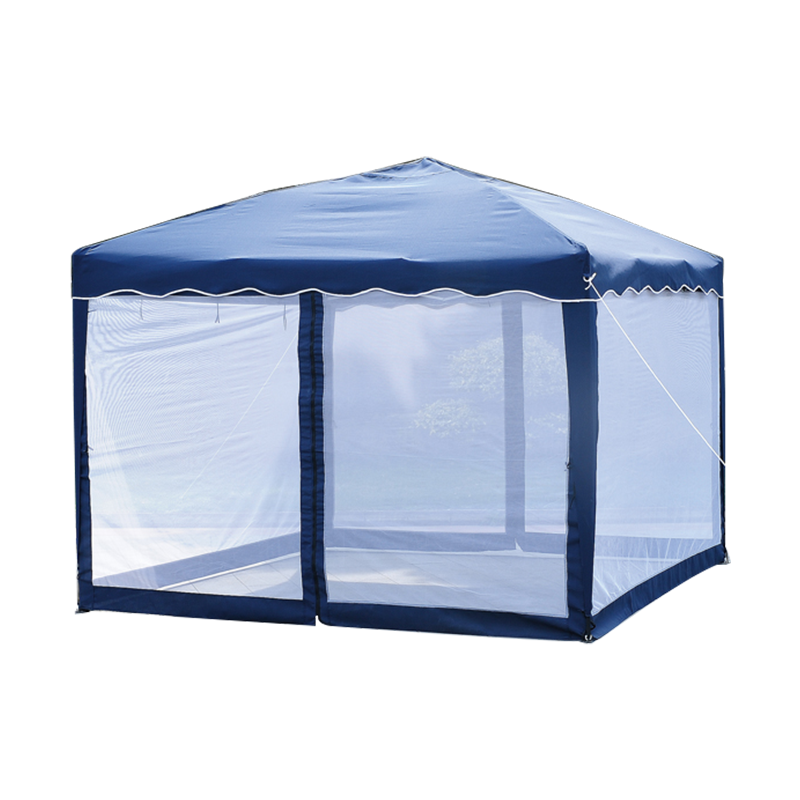
Attaching sidewalls to a pop up canopy actually increases wind load on the frame — a fully enclosed canopy catches more wind than an open one. In windy conditions, remove at least the windward sidewall to reduce pressure on the frame. Many canopy sidewalls attach via hook-and-loop strips or a zip system; practice attaching and removing them before your event day.
Vented Canopy Roofs
A vented canopy top includes a double-layer peak with a gap between layers that allows wind to pass through rather than lift the canopy. Vented canopy designs reduce uplift force by an estimated 30–40% in field conditions, and they improve air circulation under the canopy on hot days. If you regularly set up in open fields or parking lots, a vented canopy is worth the slight additional cost.
Top Use Cases for a Small Pop Up Canopy
Understanding where and how most people use a small canopy helps clarify which features to prioritize.
Farmers Markets and Craft Fairs
This is the dominant use case for small pop up canopies. Vendors need a shelter that sets up in under 5 minutes, looks professional with printed branding, and handles all-day sun or occasional rain. For this use, prioritize a straight-leg canopy with a 500D+ polyester top, aluminum frame, and the option to add custom-printed canopy sidewalls and valances. Canopy top printing is available through specialty suppliers and costs $50–$150 for basic full-color printing on a replacement top.
Youth Sports Sidelines
Parents and coaches use small canopy tents to create team shade zones at soccer fields, baseball diamonds, and track meets. A lightweight aluminum canopy that one adult can carry and set up in 3–5 minutes is ideal. For sports sideline use, UPF 50+ is a critical feature given that games run through peak UV hours. A canopy bag with wheels makes hauling across parking lots far more practical than a shoulder-carry bag alone.
Backyard Parties and BBQs
For occasional home use, a lower-cost steel-frame canopy in the 10×10 or 10×15 size provides a shaded dining or cooking zone without permanent installation. The pop up mechanism means setup before guests arrive takes minutes, and breakdown after the event is equally fast. Many homeowners who buy a canopy for one party find themselves using it for every outdoor gathering thereafter. For this use case, budget-friendly models in the $80–$150 range often deliver sufficient durability.
Tailgating and Camping
Tailgaters use small canopy shelters to claim territory, shade seating areas, and create a base for food and drink. Campers use canopy tents as a covered cooking and dining area separate from sleeping tents, which reduces moisture and condensation inside sleeping quarters. For these mobile applications, the lightest possible canopy for the coverage area is the priority — some compact canopy models weigh under 18 lbs for a 10×10 footprint, though they sacrifice some frame thickness in trade.
Car Washes, Fundraisers, and Roadside Sales
Organizations running one-day fundraising events — high school groups, nonprofits, sports leagues — rely on pop up canopies to create organized, weather-protected work zones. These canopies get heavy use but infrequent storage, meaning moderate-duty models in the $120–$200 range balance cost and durability appropriately.
How to Set Up a Pop Up Canopy Correctly
The term "pop up" is aspirational — most canopy shelters in the 10×10 range require two people for safe, efficient setup, even if one person can technically manage it. Here is a standard setup sequence that applies to most accordion-style canopy frames:
- Lay the canopy bag flat on the ground and unzip to remove the folded frame and canopy top separately.
- Stand the folded canopy frame upright on all four legs — do not try to open it while it is lying flat, as this stresses the hinge joints.
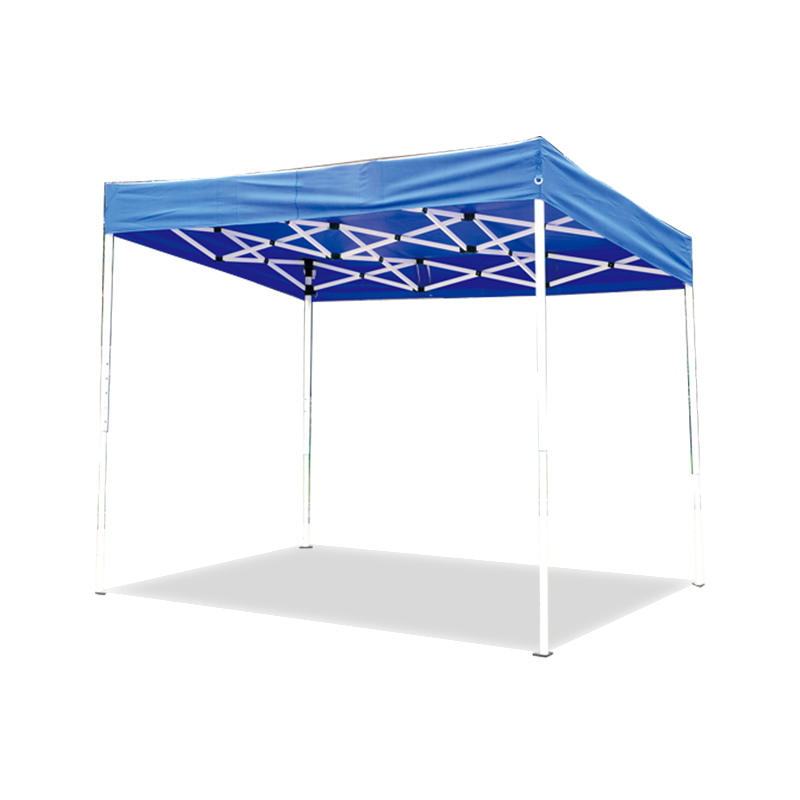
- With one person on each side, begin expanding the canopy accordion frame by pushing outward at mid-height truss sections simultaneously. Expand evenly to avoid jamming joints.
- Expand the frame to approximately 50% open, then drape the canopy top over the frame peak, aligning corner pockets with the corner brackets before expanding further.
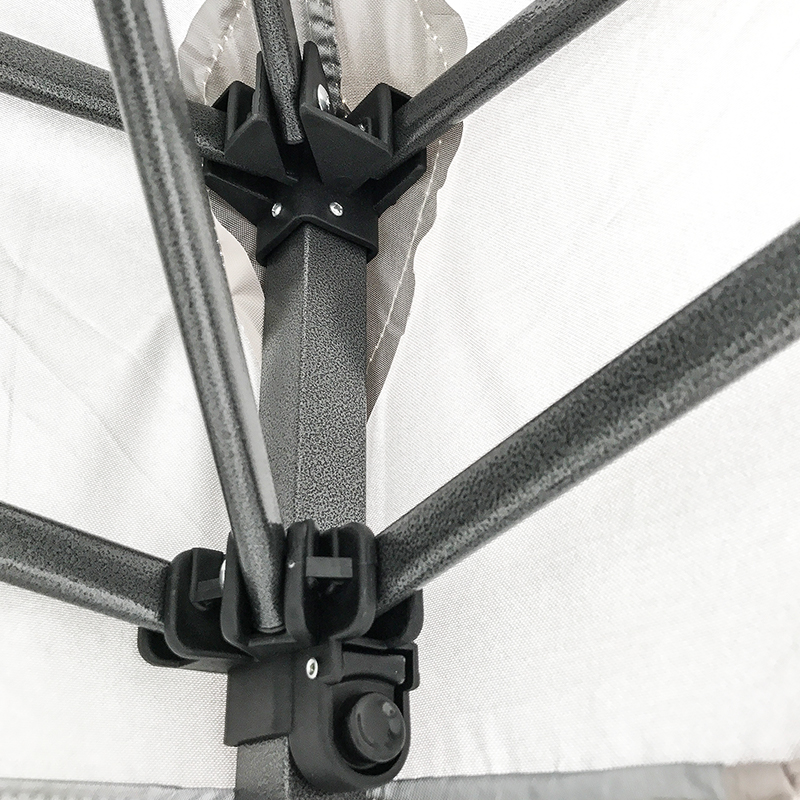
- Fully expand the canopy frame until all truss sections lock or reach the desired height setting. Most canopy frames offer 3–5 height positions via push-button or pin locking mechanisms on the leg sections.
- Attach the canopy top corner velcro or clips to the canopy frame corner brackets.
- Stake down all four canopy legs and/or attach weight bags before stepping away.
Never fully expand a canopy frame before placing the top — putting a canopy cover onto a fully extended frame stresses the fabric seams at the corners. Always set the top at partial extension and then complete the expansion.
Canopy Accessories That Actually Add Value
The base canopy tent covers the fundamentals, but several accessories extend what the canopy can do.
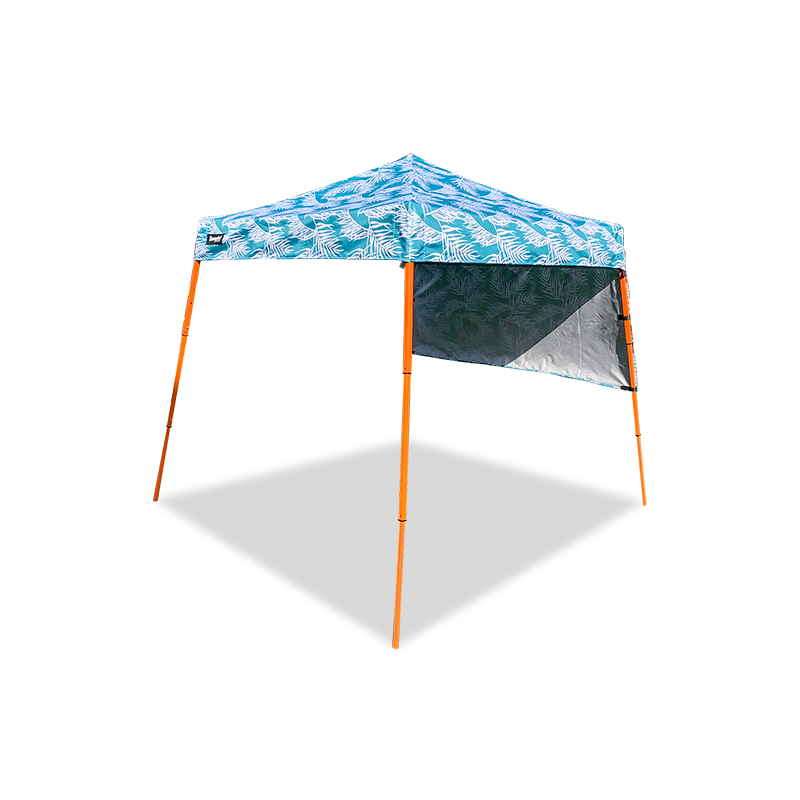
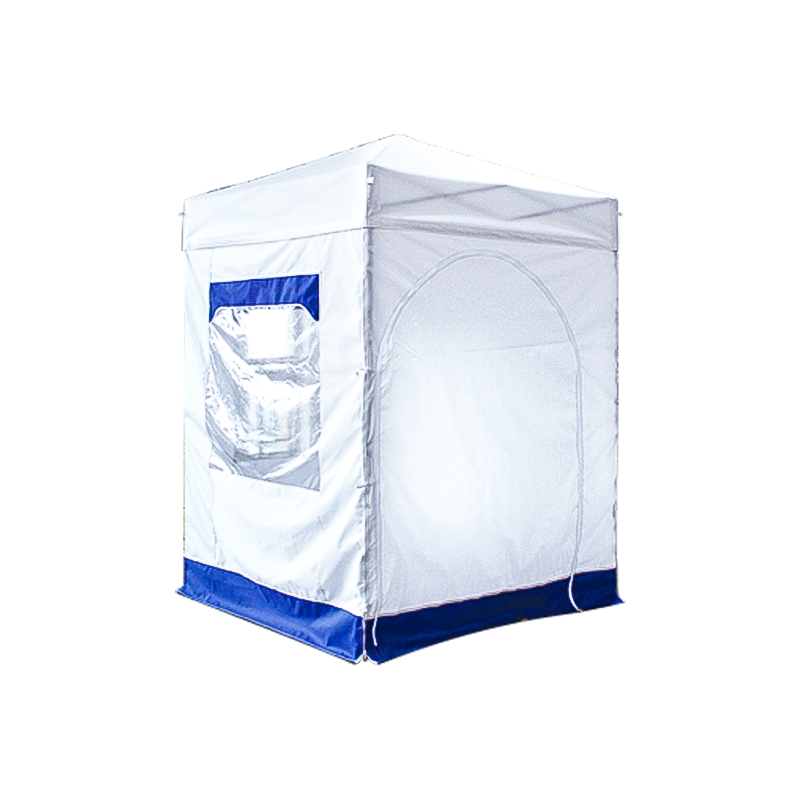
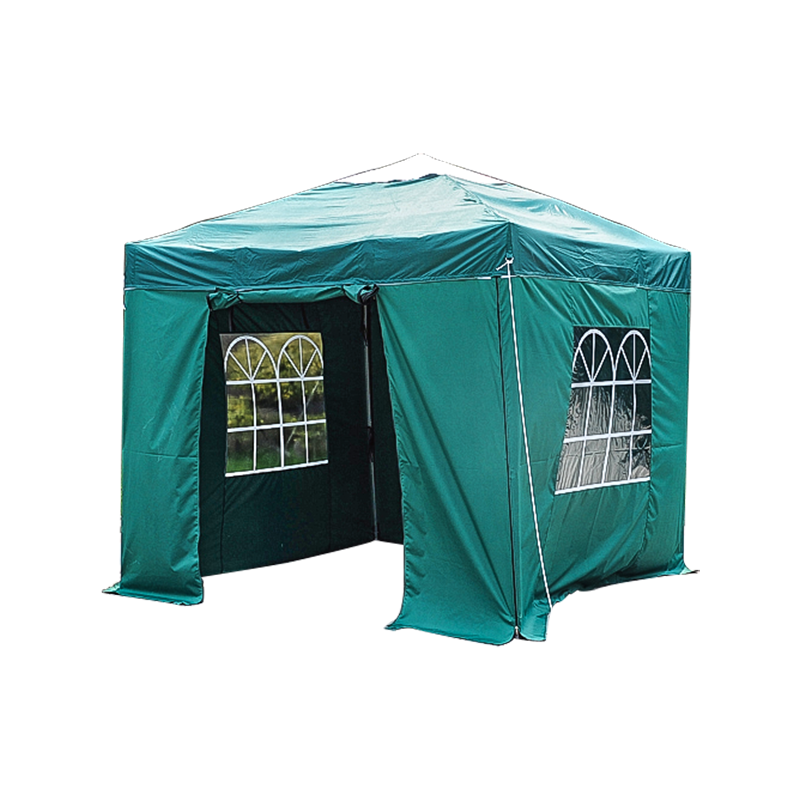
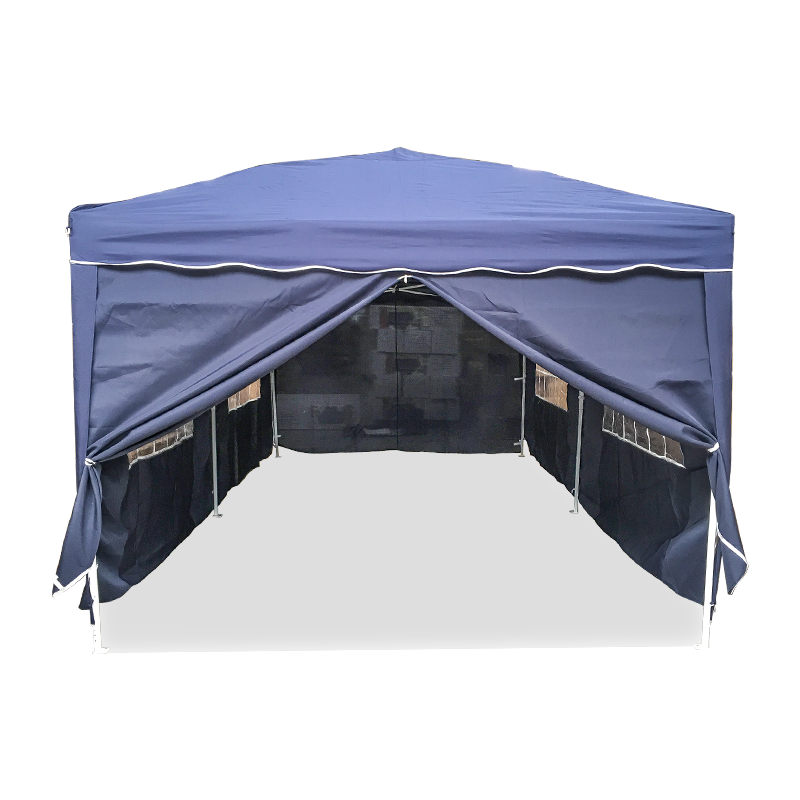
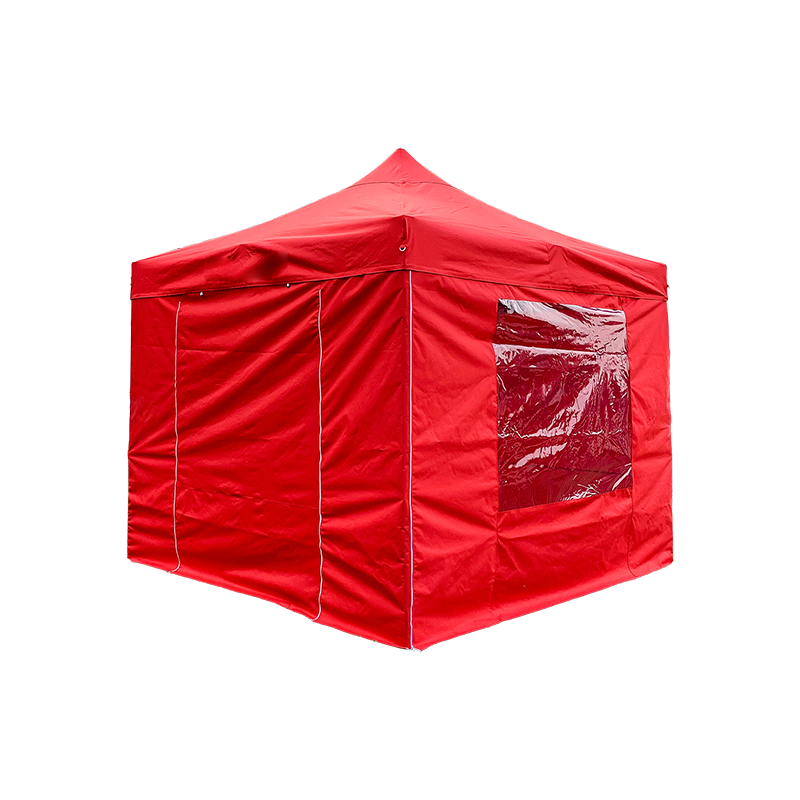
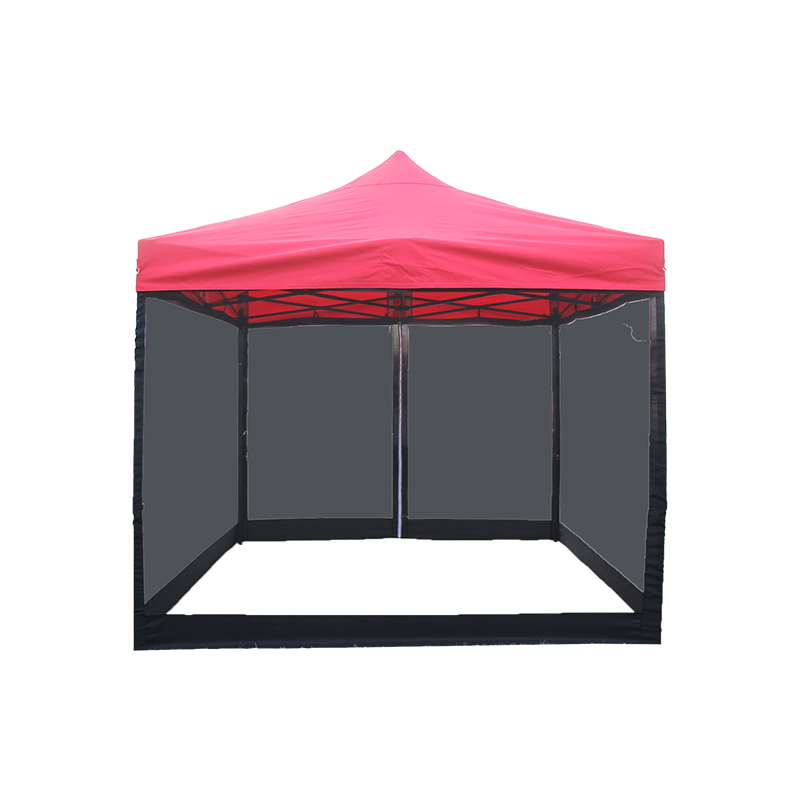
- Canopy sidewalls: Full-panel or half-panel sidewalls block wind, rain, and sun from specific directions. Most attach via hook-and-loop to the canopy frame. A set of three sidewalls (leaving one side open) creates a three-wall canopy shelter that dramatically increases weather protection.
- Canopy weight bags: Sand-filled bags (sold empty, you fill them on-site) that attach to each canopy leg. Essential for any outdoor event. Look for models with sturdy handles and reinforced straps — cheap weight bags split at the seams after a season.
- Canopy stakes and tie-down kits: Ground stakes appropriate for grass or soft soil. For concrete or asphalt, use canopy weight bags or base plate adapters instead — standard stakes are useless on hard surfaces.
- Canopy roller bags: The standard carrying bag that ships with most canopy tents is a basic zippered pouch. Aftermarket roller bags add inline skate wheels and a telescoping handle, making transport across long parking lots significantly easier.
- Canopy lighting: LED string lights or battery-powered strip lights designed to clip onto canopy frame rails extend the canopy's usable hours into the evening at night markets or late events.
- Replacement canopy tops: Canopy frames outlast the canopy top fabric in most cases. Replacement canopy tops cost $30–$80 and can extend the life of a good frame by years. Keep the frame model number so you can order a compatible replacement top when the original fades or tears.
Price Ranges and What You Get at Each Level
Pop up canopy pricing spans a wide range, and the performance gap between a $60 canopy and a $350 canopy is substantial. Here is a realistic breakdown of what each price tier delivers.
| Price Range | Frame Material | Canopy Top Denier | Expected Lifespan | Best For |
|---|---|---|---|---|
| $50–$100 | Steel (thin wall) | 150D–180D polyester | 10–20 uses | Occasional home use, one-off events |
| $100–$200 | Steel or light aluminum | 300D–420D polyester | 30–60 uses | Monthly vendors, recreational use |
| $200–$400 | Commercial aluminum | 500D–600D polyester | 100–200 uses | Weekly vendors, semi-pro events |
| $400+ | Heavy commercial aluminum | 600D+ or PVC-coated | 200+ uses (multi-year) | Daily use, commercial vendors, event companies |
The most common mistake buyers make is purchasing in the $50–$100 range for weekly vendor use, then replacing the canopy every season. A single $300 canopy often costs less over three years than three $100 canopies that each last one season under heavy use.
Maintaining and Storing Your Canopy to Maximize Lifespan
Canopy lifespan drops sharply with poor storage habits. The two main killers are moisture and UV exposure over time. Follow these maintenance steps to extend your canopy's useful life:
- Always dry the canopy top completely before packing it away. Folding a damp or wet canopy top into its bag traps moisture and causes mildew to form on the fabric within days. After a rainy event, leave the canopy top extended and open to air dry completely — even if it takes a day — before storage.
- Wipe canopy frame joints and leg sections with a dry cloth after use. Dirt and debris trapped in the accordion joints accelerate wear on the joint hardware.
- Lubricate canopy frame pivot points and locking buttons with a dry silicone spray (not WD-40, which attracts dust) once or twice a year to maintain smooth operation.
- Store the canopy bag in a dry location away from direct sunlight. Long-term UV exposure degrades polyester fabric even through the bag.
- Check canopy top seams and corner reinforcements regularly. A minor seam separation repaired with seam sealer costs cents; ignored, it becomes a tear that invalidates the canopy top.
- Retreat the canopy top with a fabric waterproofing spray (such as Nikwax or Kiwi Camp Dry) once per season if the canopy sees heavy rain. Original water-resistant coatings wash out over time with repeated exposure.
Custom Printed Canopy Tops: Branding Your Space
For businesses and repeat vendors, a custom-printed canopy top is one of the most cost-effective branding investments available. A full-color printed canopy top with a business name and logo is visible from across a market and communicates professionalism immediately. Compared to a pop-up banner stand ($100–$300) that occupies floor space, a printed canopy top brands from above while providing functional shelter.
Custom canopy top printing typically uses dye-sublimation on polyester, which produces fade-resistant, permanent color — unlike screen printing, which can crack and peel. Full-color canopy top printing for a 10×10 size generally costs $150–$350 depending on complexity and quantity. Most canopy printing suppliers require vector artwork (AI or EPS files) or high-resolution files at print size to avoid pixelation.
When ordering a custom canopy top, confirm compatibility with your existing frame. Most replacement canopy tops are designed to fit specific frame brands and sizes — a top cut for a slant-leg frame will not sit correctly on a straight-leg frame. Some canopy manufacturers sell replacement tops exclusively for their own frames; others sell universal tops with adjustable corner elastic.
Frequently Asked Questions About Small Pop Up Canopies
Can one person set up a 10×10 pop up canopy alone?
Yes, but it is difficult and risks damaging the frame. Most 10×10 canopy frames weigh 25–50 lbs when folded, and the accordion frame must expand evenly on all sides simultaneously to avoid jamming joints. Solo setup is more practical on 6×6 and 8×8 canopy sizes. If you regularly set up alone, look for canopy models specifically marketed as "one-person setup" — these typically use a scissor-truss design that guides even expansion without requiring simultaneous pressure on both sides.
How much wind can a pop up canopy handle?
Most consumer-grade canopy tents are rated for 15–20 mph winds when properly anchored with weight bags and/or stakes. Commercial-grade canopy structures may handle up to 25–30 mph. These ratings assume full anchoring — an unanchored canopy can become airborne in winds as low as 10 mph. In sustained winds above 25 mph or thunderstorms, the correct action is to take the canopy down entirely.
What is the difference between a canopy and a gazebo?
A pop up canopy uses a collapsible accordion frame that folds flat for portability. A gazebo typically refers to either a permanent or semi-permanent structure with a more complex frame, often including decorative elements, that does not fold into a compact bag. Soft-top gazebos use steel or aluminum frames that must be fully assembled and disassembled piece by piece. Pop up canopy shelters are faster to deploy and far more portable than gazebo-style structures.
Is a canopy the same as a tent?
The terms overlap in casual use, but in the outdoor products industry, a canopy refers specifically to a roof-only or partially walled overhead shelter not designed for sleeping. A tent is a fully enclosed sleeping shelter with a floor. A canopy tent is a hybrid term that usually means a pop up canopy with optional sidewalls — still not a sleeping tent, but offering more enclosure than an open canopy alone.
How long does a pop up canopy last?
Lifespan depends heavily on use frequency, storage habits, and quality tier. Budget canopies used occasionally can last 2–4 years with proper storage. Mid-range canopies used weekly may last 2–5 years. Commercial-grade canopy structures used daily by professional vendors can last 5–10 years with frame maintenance and periodic canopy top replacement. The frame almost always outlasts the canopy top — replacing just the top rather than the entire canopy assembly is the more economical approach when fabric wears out.
What size canopy do I need for a farmers market?
The overwhelming standard at North American farmers markets and craft fairs is a 10×10 ft canopy booth space. Most event organizers design their layouts around this footprint. Confirm the allocated space with your specific market before purchasing — some markets offer 10×20 double-booth spaces, and some smaller community markets allocate 8×8 or 8×10. Buying a canopy that fits your standard booth space before your first event saves significant frustration.

