
 English
 Español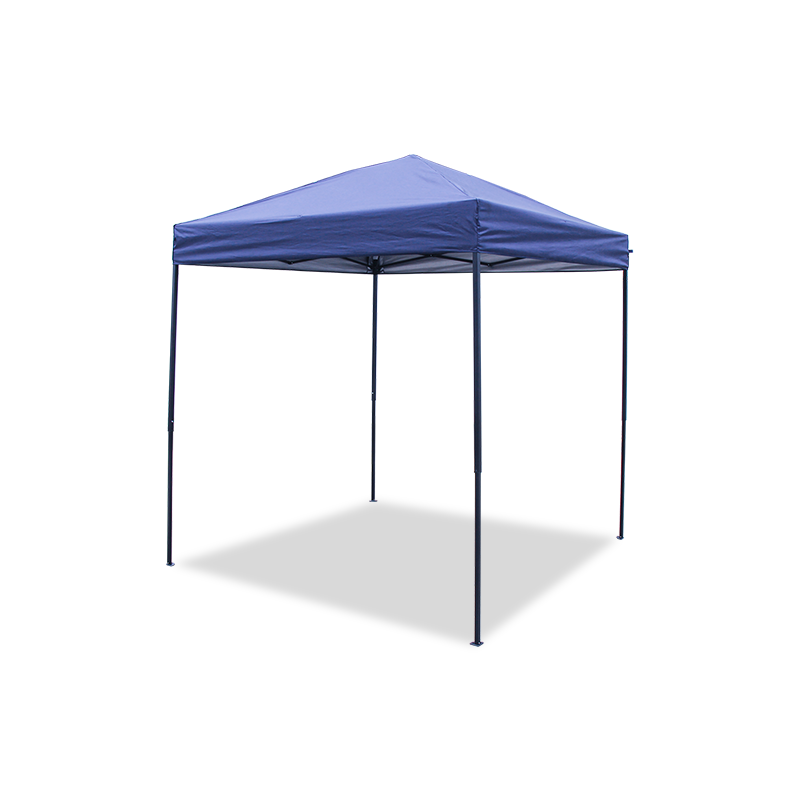
Customer expresses intent; Communicate between the two parties; Provide analysis reports to customers; Reach a cooperation intention.
Content
- 1 The Straightforward Answer: Yes, You Need a Spare Gazebo Canopy
- 2 Why Gazebo Canopies Wear Out Faster Than the Frame
- 3 Material Differences in Replacement Canopies: What the Labels Actually Mean
- 4 How to Find the Right Size Spare Canopy for Your Gazebo
- 5 Key Features to Look for When Buying a Replacement Canopy
- 6 Canopy Replacement vs. Canopy Repair: When Each Makes Sense
- 7 Step-by-Step: How to Install a Replacement Gazebo Canopy
- 8 How to Store a Spare Canopy So It Is Ready When You Need It
- 9 Canopy Maintenance Practices That Extend Lifespan Significantly
- 10 Where to Source Spare Gazebo Canopies and What to Expect to Pay
The Straightforward Answer: Yes, You Need a Spare Gazebo Canopy
If you own a gazebo, keeping a spare canopy on hand is not optional — it is practical maintenance. Canopies are the most exposed component of any gazebo structure, bearing the full weight of UV radiation, rain, wind, snow, and debris year after year. Most fabric canopies last between 2 to 5 years under normal outdoor conditions, and when they fail, they rarely do so at a convenient time. A torn or sun-bleached canopy leaves your gazebo frame exposed to rust and your outdoor space unusable. Having a replacement ready eliminates downtime and extends the overall lifespan of the structure you have already invested in.
This article covers everything you need to know about spare gazebo canopies — from material differences and sizing to installation, storage, and what to look for when buying a replacement that actually fits.
Why Gazebo Canopies Wear Out Faster Than the Frame
Steel and aluminum frames are built to last decades. The canopy fabric, however, operates in an entirely different environment. It faces constant mechanical stress — stretching and relaxing with temperature changes, billowing in wind, sagging under accumulated rain water — while simultaneously absorbing damaging UV radiation that breaks down polymer chains in the fabric over time.
Here is what specifically degrades gazebo canopies over time:
- UV exposure: Even UV-treated polyester starts losing color and tensile strength after 12 to 18 months of continuous sun exposure. Fading is the first visible sign; brittleness and tearing follow.
- Water pooling: Canopies without adequate pitch allow water to pool, which stresses seams and stitching. A single rainstorm can deposit over 15 liters of water on a 3×3 meter canopy — that is significant weight on a flat or low-pitch surface.
- Wind damage: High wind events create repeated snapping and jerking motions at the attachment points. Corner ties and perimeter grommets are the first areas to fail.
- Mildew and mold: Trapped moisture between the canopy and the frame creates ideal conditions for mold growth, which weakens fibers and causes permanent staining.
- Winter compression: Snow loads of just 20 to 30 kg per square meter are common in colder climates. Canopies left up through winter often come down in spring with stretched panels, broken grommets, or torn attachment points.
Understanding these failure modes helps you choose a spare canopy with features that address your specific climate conditions.
Material Differences in Replacement Canopies: What the Labels Actually Mean
The replacement canopy market is crowded with competing materials and overlapping terminology. Here is a clear breakdown of what you will encounter and how each material performs in real-world use.
Polyester with PVC Coating
This is the most common material in budget to mid-range spare canopies. The polyester base provides tensile strength and shape retention, while the PVC coating adds waterproofing and UV resistance. Look for a gsm (grams per square meter) rating of at least 180 gsm for anything expected to last more than one season. Below that threshold, the fabric is typically too thin to resist tearing in wind or from branch contact. Higher-quality versions reach 250 to 300 gsm and include double-stitched seams with heat-sealed tape at the seam lines.
Ripstop Polyester
Ripstop fabric incorporates a reinforcing grid of thicker threads woven at regular intervals — typically every 5 to 8 mm. When a tear starts, the grid stops it from propagating across the panel. This is particularly valuable for gazebo canopies because small punctures from branch tips or sharp debris do not automatically become large tears. Ripstop canopies cost roughly 20 to 40% more than standard polyester equivalents but often last significantly longer in wooded or exposed environments.
Solution-Dyed Acrylic
This is the premium option for outdoor canopies. Brands like Sunbrella use a manufacturing process where color pigments are infused into the fiber before it is spun, rather than applied as a surface coating. The result is fade resistance that can last 10 years or more in direct sun, compared to 2 to 3 years for coated polyester. Acrylic also breathes better than PVC-coated fabrics, reducing mildew formation underneath. The trade-off is price — solution-dyed acrylic replacement canopies typically cost two to three times more than polyester equivalents of the same size.
Polycarbonate and Corrugated Plastic Panels
For permanent or semi-permanent gazebo structures, some owners replace fabric canopies entirely with polycarbonate panels. These offer superior impact resistance, do not fade, and allow diffused light through. However, they require a compatible frame with sufficient load-bearing capacity and are not suitable for pop-up or portable gazebo frames designed for fabric canopies.
| Material | Typical Lifespan | UV Resistance | Waterproof | Price Range |
|---|---|---|---|---|
| Standard Polyester (PVC-coated) | 2–3 years | Moderate | Yes | $ |
| Ripstop Polyester | 3–5 years | Moderate–Good | Yes | $$ |
| Solution-Dyed Acrylic | 7–10+ years | Excellent | Water-resistant | $$$ |
| Polycarbonate Panels | 10–15 years | Excellent | Yes | $$$$ |
How to Find the Right Size Spare Canopy for Your Gazebo
Sizing is where most replacement canopy purchases go wrong. A canopy that is 5 cm too small will not attach properly or will pull tight enough to stress the grommets. One that is too large will flap, sag in the middle, and collect water in unintended places. Getting this right requires more than just measuring the frame footprint.
Step 1 — Identify Your Gazebo's Exact Model
The fastest path to a correct-fitting spare canopy is finding your gazebo's original model number. This is usually stamped on a label attached to the frame — often on the inside of a leg, under the cap at the top of an upright, or on a crossbar. With the model number, you can search for OEM (original equipment manufacturer) replacement canopies designed specifically for that frame. OEM replacements cost more but eliminate fitting guesswork entirely.
Step 2 — Measure the Canopy, Not the Frame
If OEM canopies are unavailable or cost-prohibitive, measure the existing canopy while it is still attached to the frame. Measure from the outermost edge of one side to the outermost edge of the opposite side — this gives you the actual canopy dimension, not the frame footprint. For a standard square gazebo, you need two measurements (length and width) that may differ slightly. For hexagonal or octagonal gazebo canopies, measure from corner to corner across the widest point and from the flat edge of one side to the flat edge of the opposite side.
Step 3 — Count and Map the Attachment Points
The number of grommets, Velcro tabs, tie loops, and zipper sections on the replacement canopy must match the attachment points on your frame. A canopy with 8 corner ties fitted to a frame with 12 attachment points will never sit correctly. Photograph your existing canopy's edges and attachment points before removal — this makes comparison shopping much easier.
Step 4 — Check the Roof Profile
Gazebo canopies come in several profile shapes that affect both the appearance and the fit. The main types are:
- Flat with central peak: A single central pole lifts the center while edges drape to the frame.
- Hip roof: All sides slope evenly down from a central ridge, like a traditional house roof. Common in wooden gazebo frames.
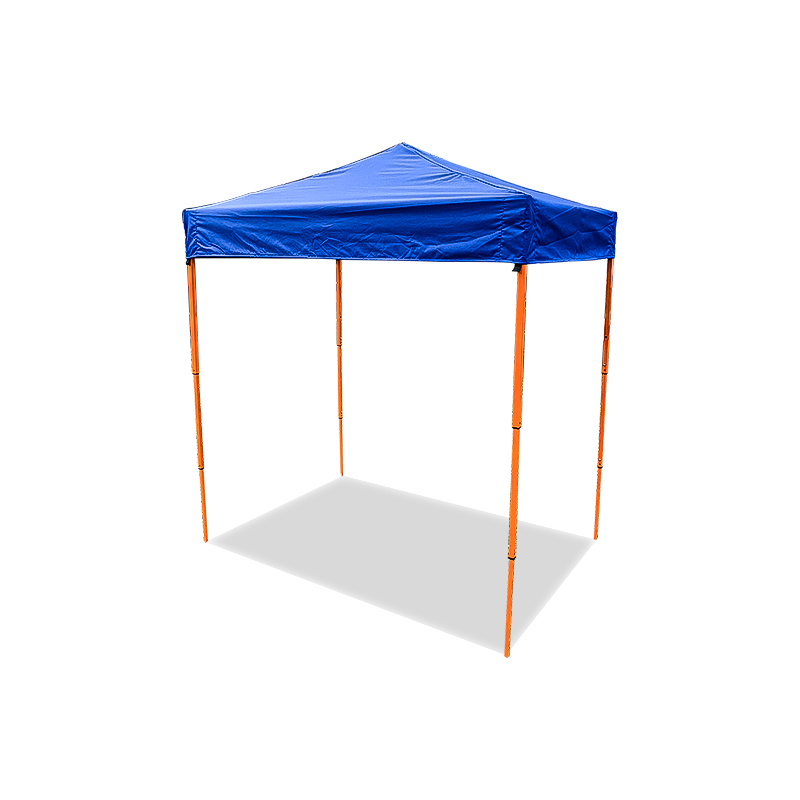
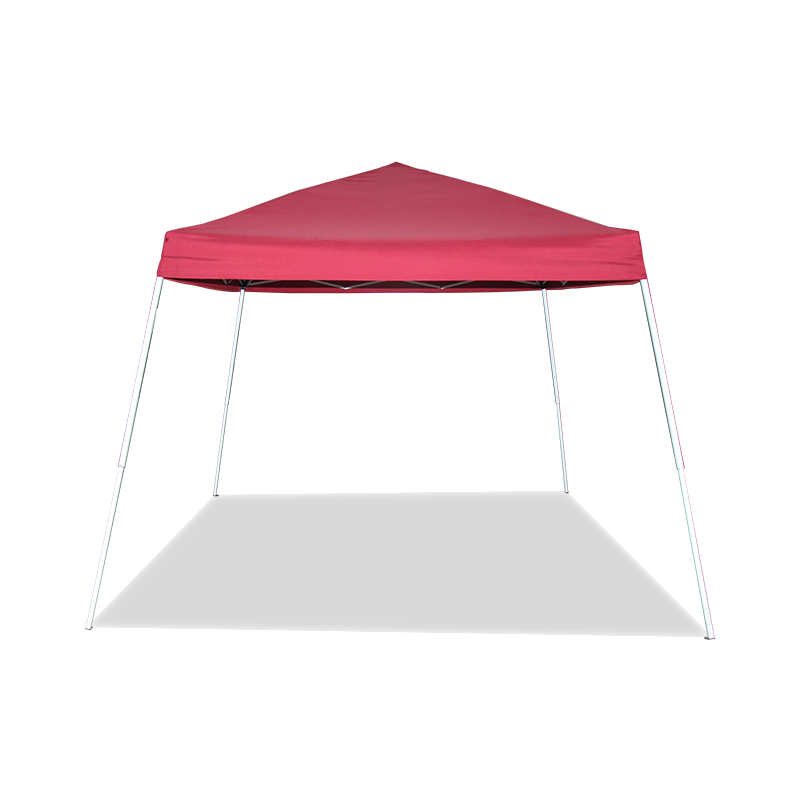
- Pyramid: All panels converge at a single central point, creating a tent-like profile. Common in pop-up and portable gazebo canopies.
- Pagoda / tiered: Two or more layered canopies with the upper layer smaller than the lower, allowing air circulation between them. Requires matching both layers when replacing.
Installing a pyramid-profile canopy on a hip-roof frame — even if the dimensions match — will result in poor fit, improper drainage, and stress on the wrong attachment points.
Key Features to Look for When Buying a Replacement Canopy
Not all replacement canopies sold at the same price point are equal. These are the specific features that separate canopies that last from canopies that disappoint.
Seam Construction
Budget canopies use single-stitched seams that allow water infiltration through the needle holes. Quality replacement canopies use double-stitched seams with a heat-sealed or taped seam tape applied over the stitch line. This eliminates needle holes as water entry points entirely. If the product listing does not specify seam construction, examine close-up photographs of the seam area — taped seams are visibly distinct from bare stitching.
Grommet Quality and Placement
Grommets should be made of rust-resistant metals — either stainless steel or brass — not plain steel or plastic. They should be set into a reinforced patch of additional fabric layers, not directly into the canopy panel. A grommet that is simply punched through a single layer of fabric will pull out under moderate wind load. Check that grommet placement on the replacement matches your frame's attachment points exactly.
Valance Design
The valance is the decorative (and functional) skirt that hangs from the outer perimeter of the main canopy. A proper valance directs rainwater away from the edge of the frame and provides additional wind resistance. Some replacement canopies skip the valance entirely to reduce cost — this is a visible downgrade in both function and appearance. Replacement canopies with scalloped or straight valances all perform similarly; what matters is that the valance is hemmed on its lower edge to prevent fraying and that it is attached with reinforced stitching, not glue.
Venting
Vented canopies have a small secondary canopy at the apex that allows hot air and wind pressure to escape upward. This reduces the lifting force that wind exerts on the canopy — a double-vented design can reduce wind uplift by 30 to 40% compared to a solid canopy of the same size. If your original canopy was vented, select a replacement with the same venting configuration. Installing a non-vented canopy on a frame designed for venting will cause the canopy to act like a sail in strong winds.
UV Protection Rating
Look for canopies with a stated UPF (Ultraviolet Protection Factor) rating. UPF 50+ blocks 98% of UV radiation, which matters both for protecting people sitting beneath the canopy and for slowing the fabric's own degradation. Canopies without a stated UPF rating typically offer minimal UV protection regardless of their color or thickness claims.
Canopy Replacement vs. Canopy Repair: When Each Makes Sense
Not every damaged canopy needs to be replaced entirely. There are situations where repair is the smarter choice, and situations where it only delays the inevitable.
Repair Is Worth Attempting When:
- The damage is a single clean tear or puncture smaller than 8 to 10 cm, away from seams or grommets.
- The canopy is made of a repairable material like polyester or canvas (not coated fabrics where adhesive patches struggle to bond).
- The fabric is otherwise in good condition — no widespread fading, brittleness, or delamination of the coating.
- A compatible OEM replacement canopy is unavailable and the frame is otherwise still in excellent condition.
Iron-on repair patches designed for outdoor canopy fabric cost roughly $10 to $20 for a kit that handles multiple repairs. Self-adhesive waterproof tape (such as Tenacious Tape or equivalent products) works well for emergency field repairs and can hold for one to two seasons if applied correctly to clean, dry fabric.
Replacement Is the Better Choice When:
- The canopy has widespread UV degradation — fading, chalking, or brittleness across multiple panels. Fabric in this condition will continue to fail regardless of localized repairs.
- Multiple seams have failed or are pulling away from the fabric.
- Mold or mildew has penetrated deeply into the fabric fibers. Surface-level cleaning removes staining but not the embedded biological material, which will re-grow.
- The canopy coating (PVC or similar) is peeling or flaking. Once the coating delaminates, the fabric underneath rapidly loses waterproofing and structural integrity.
- The damage is at or near a grommet or attachment point. Patching in these high-stress areas rarely holds under real load.
Step-by-Step: How to Install a Replacement Gazebo Canopy
Installing a replacement canopy is straightforward with the right preparation. Most standard gazebo canopies can be fitted by two people in 30 to 60 minutes. Attempting to do it alone significantly increases the risk of the canopy tearing on sharp frame edges during installation.
- Clear the frame: Remove the old canopy completely and inspect the frame for rust, bent connectors, or missing fasteners. Address any frame issues before fitting the new canopy — rust in particular will stain new fabric within weeks if left untreated.
- Lay out the new canopy flat: Open the replacement canopy fully on a clean surface before lifting it to the frame. Identify the center point and each corner, and note how the attachment points are configured.
- Start from the center or the highest point: For canopies with a central hub, attach the center first and then work outward. For hip-roof or pyramid canopies, start at the apex and work down to the perimeter.
- Attach opposite corners first: Secure one corner, then the diagonally opposite corner, then the remaining two. This keeps the canopy centered on the frame and prevents uneven tension as you work around the perimeter.
- Work in from corners to midpoints: Once all corners are secured, attach midpoint connections between corners. This distributes tension evenly and prevents the fabric from bunching or pulling to one side.
- Secure valance ties last: If the canopy has a valance with individual ties or hooks, secure these after the main canopy is fully attached. Do not overtighten valance ties — the valance should hang straight, not pull the canopy perimeter downward.
- Test tension and drainage: Pour a small amount of water onto the center of the fitted canopy to confirm it drains toward the edges rather than pooling at the center or sides. Adjust any attachment points that appear to be creating low spots.
How to Store a Spare Canopy So It Is Ready When You Need It
A spare canopy stored incorrectly will arrive at its moment of need creased, mildewed, or damaged. Proper storage is simple but specific.
Clean Before Storage
Even new canopies benefit from a light clean before storage to remove any manufacturing residues or dust that can trap moisture. For canopies being taken off the frame for seasonal storage, wash with mild soap and water, rinse thoroughly, and allow to dry completely before folding. Storing a damp canopy even briefly will initiate mold growth that can spread throughout the folded fabric within a week.
Fold for Even Pressure
Fold the canopy accordion-style rather than rolling it, unless the manufacturer specifies rolling. Accordion folds distribute pressure evenly and are less likely to create permanent crease marks in coated fabrics. Place a sheet of acid-free tissue paper between fold layers if the canopy will be stored for more than three months — this prevents the coated surfaces from sticking to each other over time.
Storage Location
Store in a dry, dark, temperature-stable location. Attic storage is acceptable in moderate climates but problematic in regions where attic temperatures exceed 50°C (120°F) in summer — extreme heat accelerates degradation of PVC coatings. A climate-controlled garage shelf or basement storage area is ideal. Keep the canopy in a breathable storage bag rather than sealed plastic — sealed storage traps any residual moisture and promotes mildew.
Inspect Annually
Take the spare canopy out of storage once a year, unfold it fully, inspect for any signs of deterioration, and refold before returning to storage. This annual check catches problems early and confirms the spare is actually in usable condition when it is needed.
Canopy Maintenance Practices That Extend Lifespan Significantly
Proper maintenance does not just keep canopies looking better — it extends functional service life by years. These practices apply to both the installed canopy and any spare you are keeping for future use.
UV Protectant Treatment
Applying a UV protectant spray to polyester canopies once per season restores some of the UV-blocking capacity that degrades from sun exposure. Products designed for marine canvas work well on gazebo canopies and typically provide three to six months of supplemental UV protection per application. Apply to a clean, dry canopy in moderate temperatures — not in direct sun or extreme heat, which causes uneven absorption.
Waterproofing Retreatment
The DWR (Durable Water Repellent) finish on most canopy fabrics depletes over time through UV exposure, abrasion, and repeated wetting. You can test whether retreatment is needed by sprinkling water on the canopy surface — water should bead and roll off rather than spreading across the fabric. When water wets out, apply a canopy-specific DWR spray or wash-in treatment. This is a simple maintenance step that most canopy owners skip, leading to accelerated degradation and leaking through seams.
Remove Debris Promptly
Leaves and debris accumulating on the canopy hold moisture and create localized mold conditions. Branches and twigs can puncture the fabric when wind causes the canopy to flex. A soft-bristled broom used gently after storms removes debris without abrading the canopy surface.
Seasonal Removal
In regions with significant snowfall or extended winter storms, removing the canopy for winter storage is the single most effective maintenance measure available. A canopy stored for five winter months and used for seven summer months will typically outlast a canopy left on the frame year-round by a factor of two to three times. This also gives you an opportunity to install a spare canopy if the primary shows significant wear before the next outdoor season begins.
Where to Source Spare Gazebo Canopies and What to Expect to Pay
The sourcing options for replacement and spare canopies have expanded considerably, and prices vary widely depending on the source, material, and whether the canopy is OEM or aftermarket.
OEM Replacement Canopies From the Manufacturer
Major gazebo brands — including Sojag, Yardistry, Palram, and Kozyard — sell replacement canopies directly through their websites or through authorized retailers. OEM canopies for a standard 10×10 ft (3×3 m) gazebo typically range from $80 to $200, depending on the brand and material tier. For larger structures (12×16 ft or similar), OEM canopies can reach $300 to $500. The advantage is a guaranteed fit; the disadvantage is that manufacturers often discontinue parts for models more than five to seven years old.
Universal-Fit Aftermarket Canopies
Multiple manufacturers produce universal replacement canopies in standard sizes — 10×10, 10×12, 10×20, and so on. These are sold on Amazon, Walmart, and dedicated outdoor product retailers. Prices range from $30 to $150 depending on material quality and size. The risk is that "universal" sizing assumes standard attachment configurations that your specific frame may not match exactly.
Custom-Made Canopies
For unusual frame sizes, discontinued models, or premium material preferences, custom canopies are made to your exact measurements by canvas and awning manufacturers. Prices start at approximately $150 to $200 for small canopies and scale with size and material. Turn-around times are typically two to four weeks. This is the most reliable path to a perfect-fitting canopy when OEM parts are unavailable.
Timing Your Purchase
Canopy prices peak in spring as consumers prepare their outdoor spaces for the season. Purchasing a spare canopy in late summer or autumn — when demand drops and retailers discount remaining inventory — can reduce costs by 20 to 40%. Buying a spare at the same time as a new gazebo is also smart: the model is current, the sizing information is fresh, and spare canopies are frequently offered as accessory bundles at reduced prices.

