
 English
 Español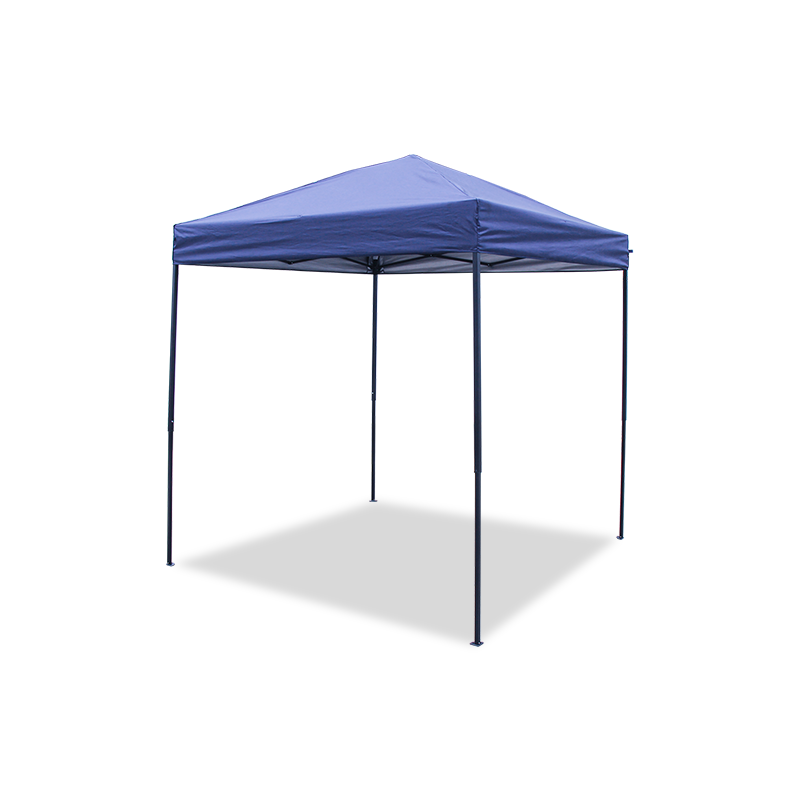
Customer expresses intent; Communicate between the two parties; Provide analysis reports to customers; Reach a cooperation intention.
Content
- 1 What a Steel Canopy Actually Does — and What It Does Not
- 2 Steel vs. Aluminum Frames: The Comparison That Decides Your Purchase
- 3 Frame Construction: What to Check Before You Trust the Tubing
- 4 Roof Fabric: Matching the Cover to the Weather
- 5 Sizes That Work for Real Sites
- 6 Where a Steel Canopy Earns Its Keep
- 7 Wind: The Most Underestimated Load
- 8 Buying Checklist: What a Factory Spec Sheet Must Tell You
- 9 Maintenance That Keeps a Steel Canopy Alive for Years
- 10 Frequently Asked Questions About Steel Canopies
- 11 The Bottom Line on Steel Canopies
What a Steel Canopy Actually Does — and What It Does Not
A typical 3×3 m portable steel canopy has a bare frame weight of 18–25 kg, covers about 9 m² and uses welded steel legs and roof trusses finished with a baked powder coat. That metal-and-coating combination is why a steel canopy can serve for a decade of seasonal outdoor use while a lightweight party tent folds away after one rough summer. Two families exist: permanent steel structures bolted to a concrete slab, and portable folding canopies whose steel frame rests on free-standing legs with a polyester or PVC fabric roof. If you need shelter for a car, an event, a market stall or a garden seating area, the portable type is the practical starting point.
The decision rule is straightforward. A steel canopy is a good investment when three conditions are met: the frame specification is written down (tube size, wall thickness, coating type), the roof fabric matches the weather you actually get, and anchoring is treated as part of the purchase, not an afterthought. If any one of those three is missing, the same canopy becomes an expensive source of flapping fabric, bent legs and unhappy guests.
Steel vs. Aluminum Frames: The Comparison That Decides Your Purchase
If you are choosing between steel and aluminum, ignore the roof first. The frame controls durability, weight, cost and service life. Fixed installations usually favor steel. Mobile canopies that travel weekly favor aluminum — but the advantage is smaller than retailers suggest. An aluminum tube strong enough to match a steel tube needs thicker walls, so the weight saving shrinks to roughly 25–35 percent once stiffness is equal.
| Factor | Steel frame | Aluminum frame |
|---|---|---|
| Material cost | Lower | Higher |
| Stiffness at same wall thickness | Higher | Lower — needs thicker walls |
| Typical leg/tube size | 25×25 to 40×40 mm, 0.8–1.5 mm wall | 35×50 mm and up, 1.2–2.0 mm wall |
| Frame weight at equal strength | Heavier | Lighter by about 25–35% |
| Corrosion behavior | Needs powder coating or galvanizing | Naturally rust-resistant |
| Best use | Carports, events, markets, long-season garden | Frequent transport, caravan, light duty |
The practical conclusion: a 30×30 mm steel tube with 1.0 mm wall and a 40×40 mm aluminum tube with 1.5 mm wall offer similar bending resistance, yet the steel frame stays cheaper and only moderately heavier. That is why operators who buy in volume choose steel for anything that remains in place for more than a season. For a deeper look at how frame materials alter real-world performance, see this breakdown of frame materials for foldable gazebos.
Frame Construction: What to Check Before You Trust the Tubing
Tube diameter and wall thickness
The load-bearing parts of a portable steel canopy are the corner legs, the roof trusses and the cross braces. For a 3×3 m unit, look for legs of at least 25×25 mm; for 3×4.5 m and larger, 30×30 mm or 40×40 mm. Wall thickness matters more than outer diameter. A 40×40 mm tube with a 0.6 mm wall can flex and buckle faster than a 30×30 mm tube with a 1.2 mm wall. A reliable specification sheet always lists both dimensions. If the seller gives only the outer size, the wall thickness is probably too thin to advertise.
Powder coating and rust protection
Bare steel starts to surface-rust after one or two exposures to rain. The standard protection on quality canopies is a baked-on powder coat, typically 60–120 microns thick. Black powder coating is the most common finish because it hides scuffs and fits any environment. Before buying, run a fingernail across the welded joints: the coating should be continuous, including the inner edges where trusses meet the legs. Chipped edges at the factory are a sign of a rushed finish line.
Connectors and locking points
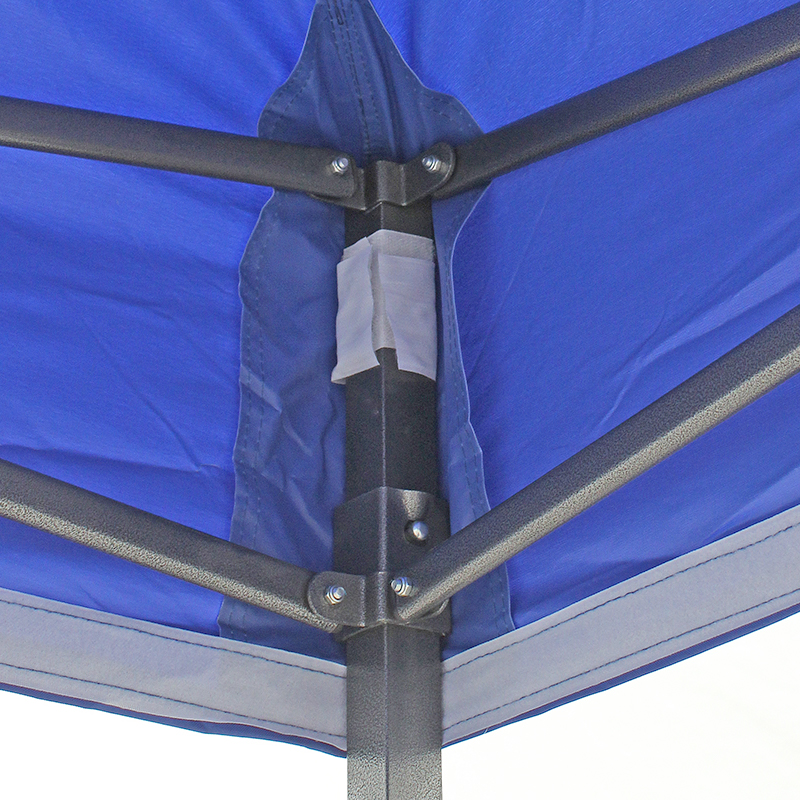
Two small components cause more field failures than the main tubes: the connector block that holds the roof trusses together and the leg locking mechanism. Better steel canopies use die-cast aluminum connectors rather than plastic, and push-button or pull-ring locks instead of bent spring pins. Aluminum connectors stay rigid in heat and cold; plastic ages, becomes brittle and snaps after a few seasons of UV exposure. A model that demonstrates these construction points is the steel frame black powder coating folding canopy, which uses welded trusses, aluminum connectors and a baked finish as standard production practice.
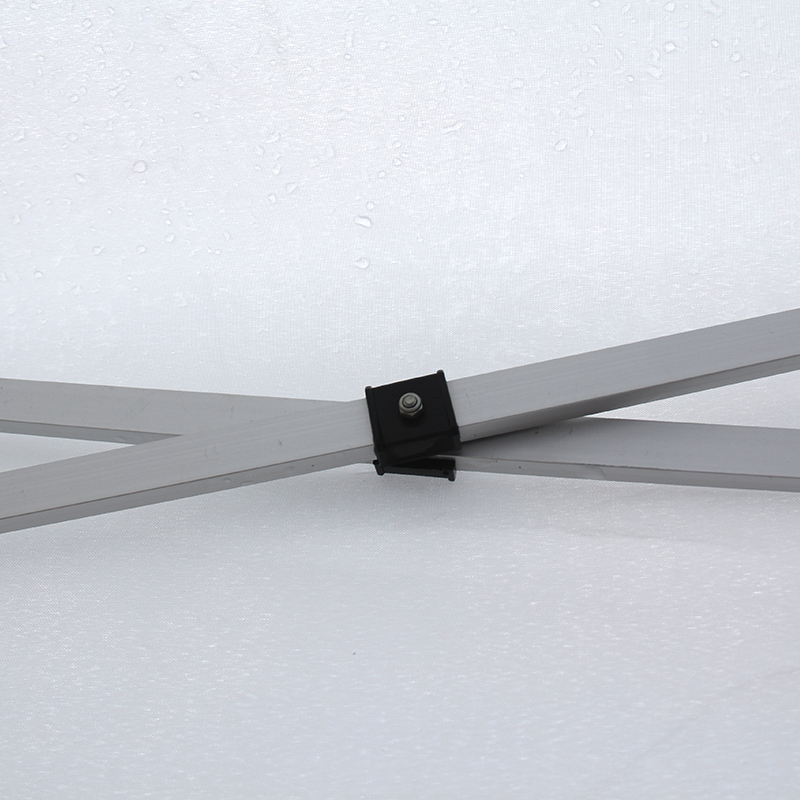 WholesaleA05-Steel Frame Black Powder Coating 140g Polyester Outdoor Folding CanYuyao Seasons Touring Products Co., Ltd is China Wholesale A05-Steel Frame Black Powder Coating 140g Polyester Outdoor Folding Canopy Gaz...View Product →
Roof Fabric: Matching the Cover to the Weather
The steel frame carries the load, but the roof fabric decides whether people and goods stay dry. Portable canopy fabrics are polyester with a PVC or PU coating. The single most useful number is the fabric weight in grams per square meter (g/m²).
140 g polyester
Light, economical and fine for shade at a sunny market. It is water-repellent rather than waterproof: a one-hour downpour will push water through seams and thin spots.
200–250 g PVC-coated polyester
The entry point for serious rain protection. Heat-sealed seams make 250 g fabric genuinely waterproof in normal storm conditions, and the heavier material stays taut in wind.
300 g PVC-coated polyester
The workhorse of premium folding gazebos. It is heavy, stiff and holds a clean profile through a full season. This is the specification to request for canopies that stay outdoors for months.
520 g PVC-coated tarp
Rarely found on folding canopies; this is party-tent and marquee material for 3×6 m event structures that must survive standing water and strong wind.
| Fabric grade | Typical weight | Water behavior | Best scenario |
|---|---|---|---|
| 140 g polyester | 140 g/m² | Water-repellent | Market stalls, dry-season garden shade |
| 250 g PVC coated | 250 g/m² | Waterproof in normal rain | Weekend events, wedding canopies, car cover |
| 300 g PVC coated | 300 g/m² | Waterproof, taut, good wind behavior | Long-term garden, commercial repeat use |
| PU silver coating | 180–250 g/m² base | Repellent; strong sun reflection | Hot climates, high UV exposure |
For hot regions, a PU silver coating on the inner face reflects heat, keeping the space under the roof noticeably cooler than an identical uncoated canopy. Combined with a 250 g or heavier base fabric, this is the specification to request when the unit will sit in summer sun for weeks. A practical example is the 250g PVC coated polyester steel canopy, which balances rain protection and heat performance for seasonal outdoor events.
 WholesaleA06-250g PVC Coated polyester Outdoor Folding Canopy Gazebo Suppliers, Yuyao Seasons Touring Products Co., Ltd is China Wholesale A06-250g PVC Coated polyester Outdoor Folding Canopy Gazebo suppliers and fact...View Product →
Sizes That Work for Real Sites
Sizing errors are the most expensive mistake in a canopy purchase. Too small leaves equipment or guests exposed; too large creates shadow, windage and transport problems. The standard modular sizes in the steel canopy market are 2×3 m, 3×3 m, 3×4.5 m and 3×6 m.
- 2×3 m — one market stall, two people plus equipment, or a compact garden corner.
- 3×3 m — standard gazebo; fits a seating set for four to six or a small tradeshow booth.
- 3×4.5 m — the most versatile size; a stall with side walls, a buffet table plus guests, or one compact car nose-in.
- 3×6 m — carport-level cover; fits one car with doors open or a full wedding table row.
Eave height and peak height matter just as much. Eave height determines whether a tall person walks in comfortably; peak height allows banners, side walls and hanging lights. A typical folding steel canopy stands 2.2–2.5 m at the eave and 2.8–3.2 m at the peak. If you plan to install LED lighting, fabric walls or display panels, choose a model with extra side clearance and metal cross bracing at the top. For vehicle cover, a 3x6m steel frame outdoor folding canopy is the size most often ordered; measure the car length plus 60 cm of clearance in front and back before confirming the ground plan.
 Wholesale3X6M Outdoor Folding Canopy Gazebo Suppliers, Factory - Yuyao Seasons TYuyao Seasons Touring Products Co., Ltd is China Wholesale 3X6M Outdoor Folding Canopy Gazebo suppliers and factory. Size 3*6/3.1 ...View Product →
Where a Steel Canopy Earns Its Keep
Steel-frame canopies keep appearing in the same locations because the same demand repeats: temporary shelter that handles rain, wind and crowds while still dismantling in under an hour.
- Car and vehicle cover — a 3×6 m steel canopy shields a car, ATV or work trailer from sun and hail; add side walls and it becomes a basic carport.
- Tradeshow and retail — exhibitors need a structure that looks solid under artificial light and survives repeated set-ups in different halls.
- Weddings and events — steel frames tolerate long fabric walls and heavier decorations; the 3×4.5 m footprint fits a buffet run with space to serve.
- Garden and patio — powder-coated steel in black or white matches stone and timber better than raw aluminum.
- Storage — a back-row canopy protects bags of cement, lumber or camping gear from morning dew and light rain.
A steel canopy is not a substitute for a permanent building. It is a semi-permanent answer: set up for a season or a weekend, then folded when the site must return to its original state.
Wind: The Most Underestimated Load
A steel canopy behaves like a sail the moment wind gets under the roof. At a wind speed of about 50 km/h, the upward force on a 3×3 m roof can exceed several hundred kilograms. No folding canopy stays in place without help — and unanchored legs are the number one cause of bent frames and torn fabric.
- Anchor every leg before opening the roof fully.
- On hard surfaces, use ballast weights — 20–40 kg per leg depending on canopy size.
- On grass, use steel tent pegs of at least 200 mm length, hammered at a 45° angle through the leg brackets.
- Fix wind ropes from the upper frame corners to pegs driven at least two-thirds of the canopy width away.
- Never leave a canopy up overnight if a storm is forecast.
Market traders use a simple operational rule. Forecast under 35 km/h: normal anchoring is enough. Forecast 35–60 km/h: add extra ballast and ropes on all corners. Forecast above 60 km/h: take the roof off the frame and store the fabric. Exact thresholds vary with surface and fabric, so review the detailed advice on how to reinforce a canopy in windy weather before your first big outdoor event.
Buying Checklist: What a Factory Spec Sheet Must Tell You
The price difference between a cheap steel canopy and a genuinely durable one comes from four numbers: tube dimensions, wall thickness, fabric weight and coating quality. A responsible factory lists all of them on the specification sheet.
- Frame specification — leg and roof tube dimensions, steel grade, wall thickness, powder-coated or galvanized finish.
- Fabric specification — polyester weight in g/m², coating type (PVC or PU), seam construction.
- Hardware — connector material (aluminum versus plastic), pin type (push-button or pull-ring), number of height positions.
- Replacement parts — availability of a separate top cloth, side walls and connectors; a steel canopy is only worth buying if it can be repaired, not just replaced.
- Anchoring kit — whether stakes, ropes and ballast hooks are included or sold separately.
A useful consistency check: the heavier the fabric, the more cross-bracing the frame should carry. A 300 g roof on four slim legs will flutter and crack the top connectors; a 140 g roof on a heavy 40 mm frame is wasted steel. A balanced specification is 140–250 g fabric with a 25×30 to 30×30 mm frame, or 300 g fabric with a 30×40 to 40×40 mm frame.
Maintenance That Keeps a Steel Canopy Alive for Years
A steel canopy bought for one festival weekend can last ten years if it is cleaned, dried and checked. The common failure points are not the fabric — they are the coating, the pins and the joints.
- Clean with warm water and mild soap, then rinse thoroughly. Detergent residue on powder coating attracts dust and slowly breaks down the surface.
- Dry the frame in open air before folding. Storing a damp frame turns contact points into rust spots within a few weeks.
- Inspect the powder coating twice a year. Any chip down to bare metal should be touched up with anti-rust spray immediately.
- Re-tighten bolts and check push buttons; a sticky button usually means debris, not a broken frame.
- Keep the roof free of standing water. A pool of 30–50 mm of rainwater on a 3×4.5 m roof adds tens of kilograms of load.
Cleaning and storage routines differ if the canopy is used for camping versus event rental; the full set of procedures is described in this general tent maintenance guide, which covers fabric washing, frame inspection and seasonal storage.
Frequently Asked Questions About Steel Canopies
Which is better, a steel or an aluminum canopy?
For fixed or semi-permanent shelter, steel. For daily transport by one person, aluminum. If the canopy will stand for a whole season and rarely move, steel gives the best stiffness per dollar. If you will pack it into a car every week, aluminum is more convenient despite the higher price.
What is the most waterproof fabric on a steel canopy?
For folding steel canopies, 300 g PVC-coated polyester with heat-sealed seams offers the highest confidence in heavy rain. 250 g fabric is acceptable for weekend events. Anything lighter than 200 g is only water-repellent.
How do I stop a steel canopy from blowing away?
Anchor every leg, fit wind ropes to the upper frame corners and add ballast on hard surfaces. Under 35 km/h wind, standard stakes work; at 35–60 km/h, add extra weights or ropes; above 60 km/h, remove the roof.
What size steel canopy fits a car?
A 3×6 m canopy is the standard fit for one car, leaving room to open the doors. A 3×4.5 m unit can fit a compact car nose-in but provides no side clearance. Measure the car length plus 60 cm in front and back before ordering.
How long does a steel canopy last?
With a quality powder-coated frame and 250 g or heavier fabric, expect 5–10 years of seasonal weekend use. Frames usually outlast the fabric; most owners replace the top cloth once or twice during the frame's life.
Can a steel canopy be used in winter?
Yes, if the frame has adequate cross-bracing and snow is removed promptly. Steel becomes more brittle at very low temperatures, so do not load the roof like a permanent shed. Brush off wet snow after it reaches 10–15 cm, and use deadweight anchors instead of stakes when the ground is frozen.
The Bottom Line on Steel Canopies
The steel canopy decision comes down to three numbers you should never ignore: the steel tube wall thickness, the fabric weight in g/m² and the expected wind at your site. If the frame specification is written down, the fabric is 250 g or heavier, and the anchoring kit is included, a portable steel canopy will outperform the cheapest aluminum unit at the same money. Buy from a manufacturer that states the tube dimensions openly and sells replacement parts; that is the only way to guarantee the canopy can be repaired, not just replaced, after its first hard season.

