English
 Español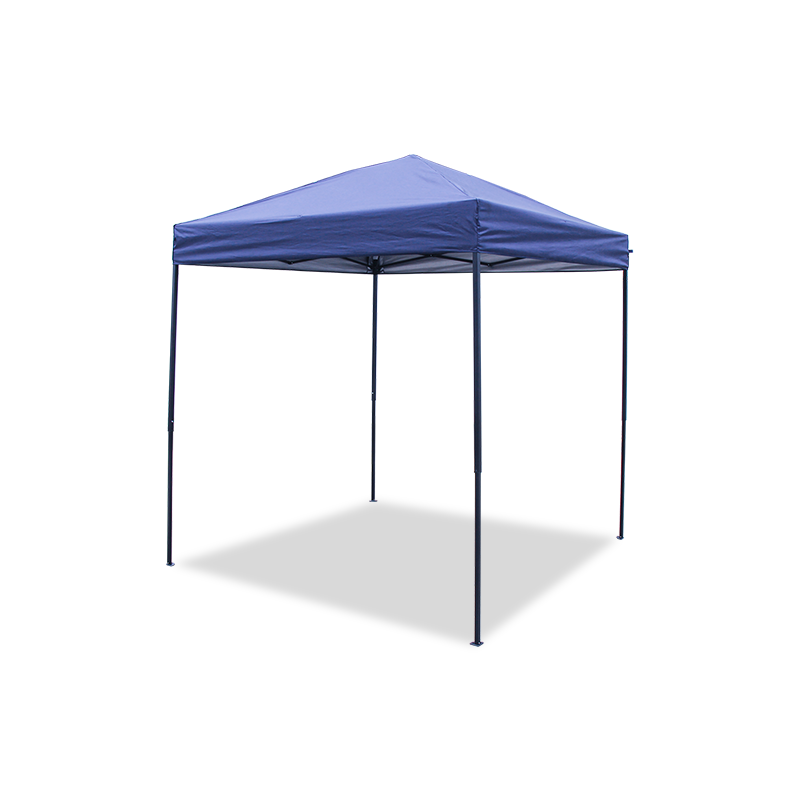
Customer expresses intent; Communicate between the two parties; Provide analysis reports to customers; Reach a cooperation intention.
Content
- 1 What Is a Canopy? A Direct Answer
- 2 The Many Types of Canopy and Where You Find Them
- 3 Canopy Materials: What They Are Made From and Why It Matters
- 4 The Forest Canopy Layer: Structure, Function, and Ecological Importance
- 5 Choosing the Right Canopy for Your Needs
- 6 Canopy Installation: Key Considerations Before You Build or Buy
- 7 Canopy Maintenance: How to Make Any Canopy Last Longer
- 8 Canopy vs. Awning vs. Pergola: Understanding the Differences
- 9 The Role of Canopy in Urban Planning and Sustainability
- 10 Common Questions About Canopies Answered
What Is a Canopy? A Direct Answer
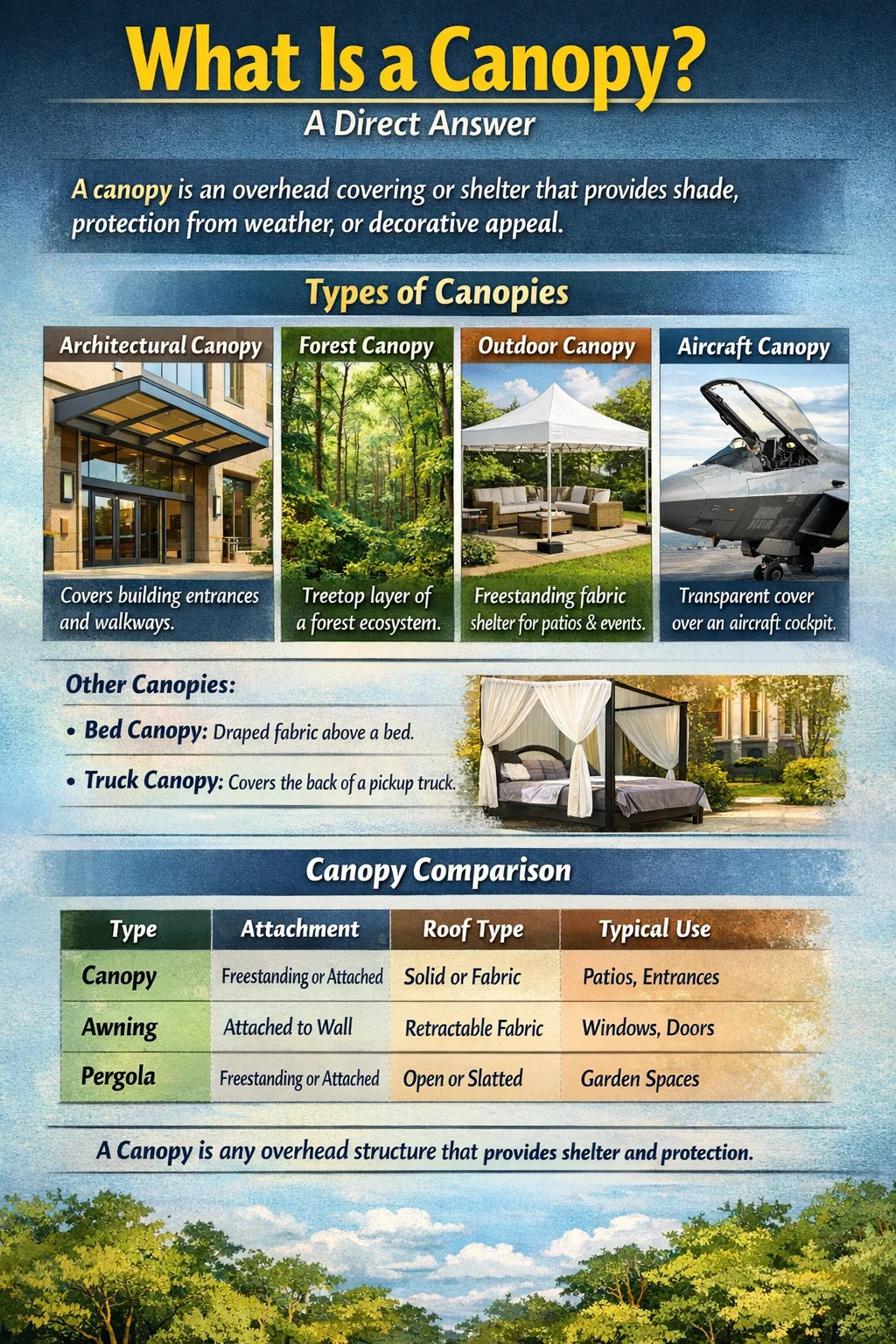
A canopy is an overhead covering or shelter that provides shade, protection from weather, or decorative appeal. In the broadest sense, the word describes anything positioned above a space like a roof or ceiling — whether it is a natural forest canopy formed by the interlocking treetops of tall trees, an architectural canopy above a building entrance, a fabric canopy stretched over a patio or market stall, or the transparent enclosure over an aircraft cockpit. The term comes from the Latin conopeum and the Greek konopion, originally referring to a mosquito net draped over a bed, and its meaning has expanded significantly over centuries.
Today, canopies appear in architecture, ecology, aviation, furniture design, outdoor recreation, and retail. Despite the variety of contexts, the core idea remains consistent: a canopy is a layer or structure that covers and shelters something beneath it. Whether you are asking about a rainforest, a four-poster bed, a warehouse loading dock, or a fighter jet, the definition holds.
The Many Types of Canopy and Where You Find Them
The word canopy is used across a remarkable range of fields. Understanding the type you are dealing with shapes everything from how it is built to how it is maintained. Below are the primary categories:
Architectural and Building Canopies
In construction and architecture, a canopy is a projecting roof-like structure attached to or freestanding near a building. You see them over entranceways, loading docks, gas stations, storefronts, bus stops, and walkways. Their primary function is to protect people and goods from rain, sun, wind, and snow while they move between indoors and outdoors.
Architectural canopies are typically made from steel, aluminum, polycarbonate, tempered glass, tensioned fabric, or timber. A standard commercial entrance canopy projects between 1.2 meters and 3 meters from the building face, though larger structures over loading bays can extend 6 meters or more. They can be fixed, retractable, or motorized depending on the application.
Forest and Ecological Canopy
In ecology, the forest canopy refers to the uppermost layer of a forest, formed by the crowns of the tallest trees. This layer intercepts sunlight, rainfall, and wind before they reach the forest floor. Tropical rainforest canopies can reach heights of 30 to 45 meters, with emergent trees occasionally exceeding 60 meters. The canopy layer is considered one of the most biodiverse habitats on Earth, housing roughly 50% of all plant species and an enormous proportion of insect, bird, and mammal species.
Ecologists further distinguish between the closed canopy (where tree crowns overlap and little direct sunlight penetrates) and the open canopy (where gaps allow sunlight to reach lower layers). Canopy cover percentage is a critical metric in forestry, conservation biology, and climate science. A forest with over 70% canopy cover is generally classified as dense forest, with significant implications for carbon storage, water regulation, and biodiversity.
Outdoor and Garden Canopies
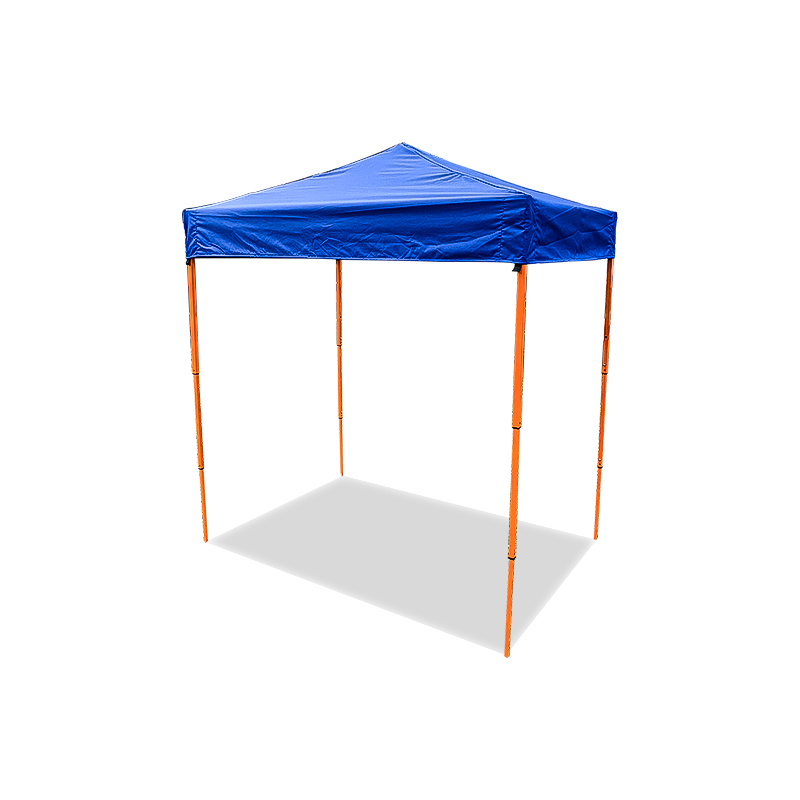
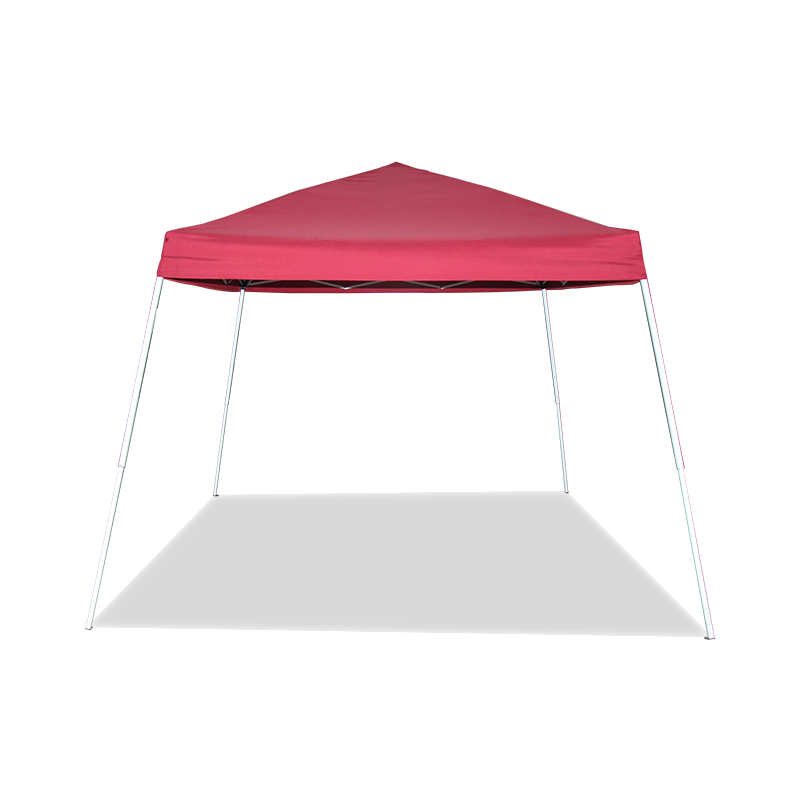
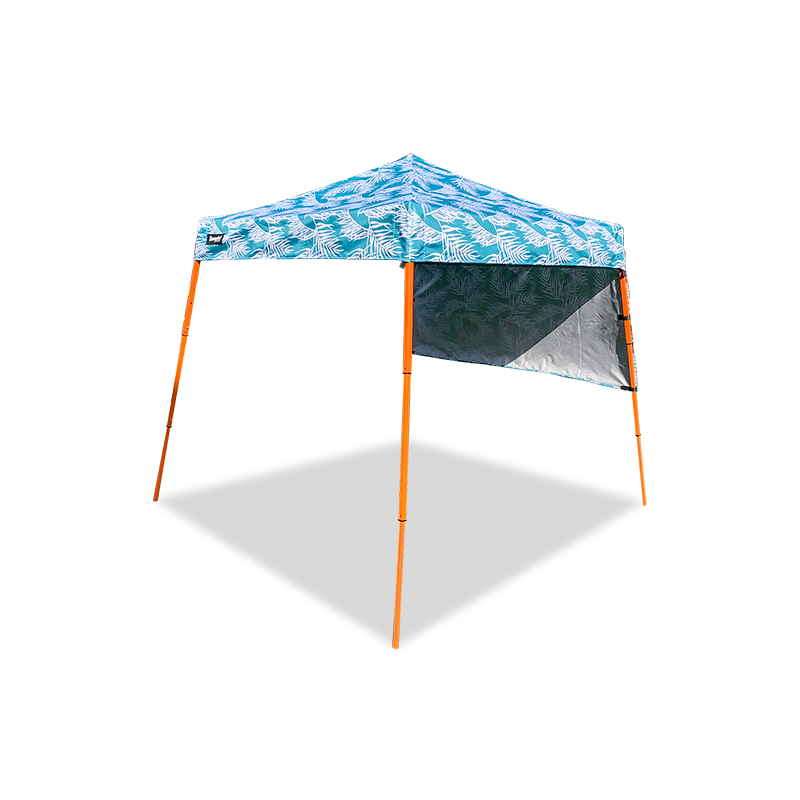
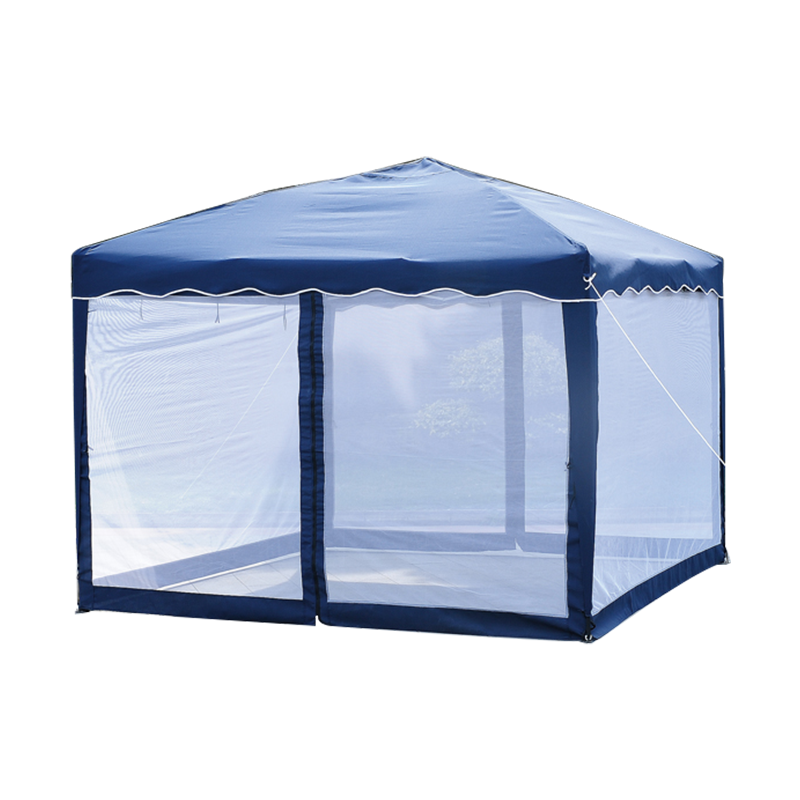
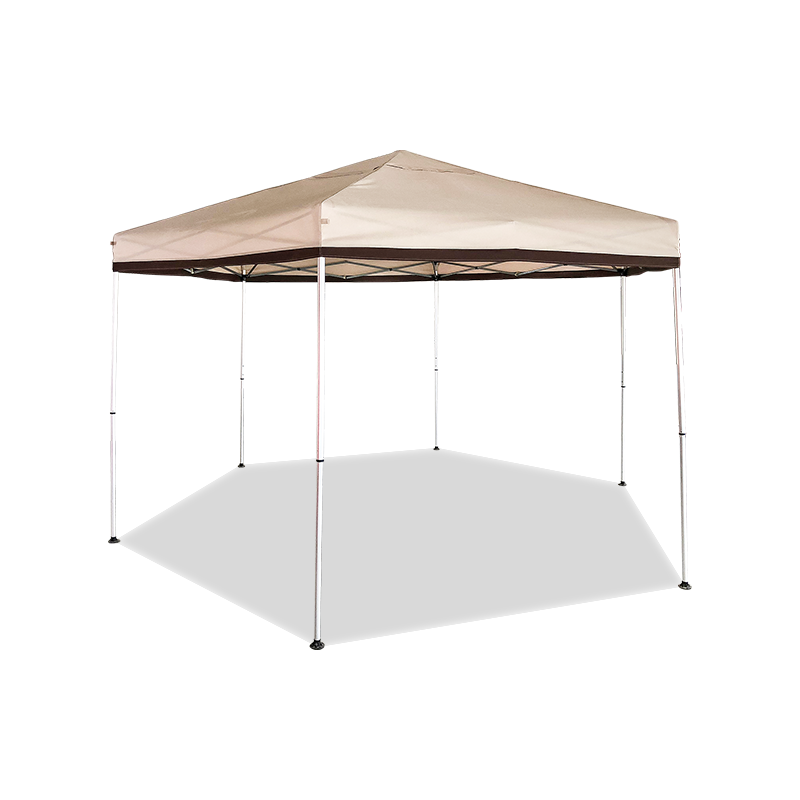
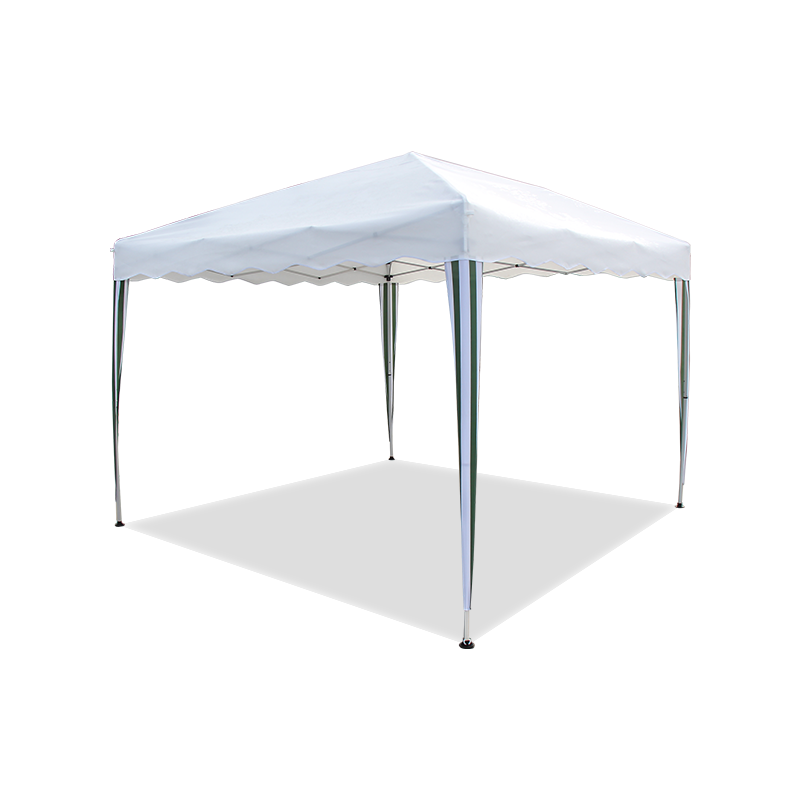
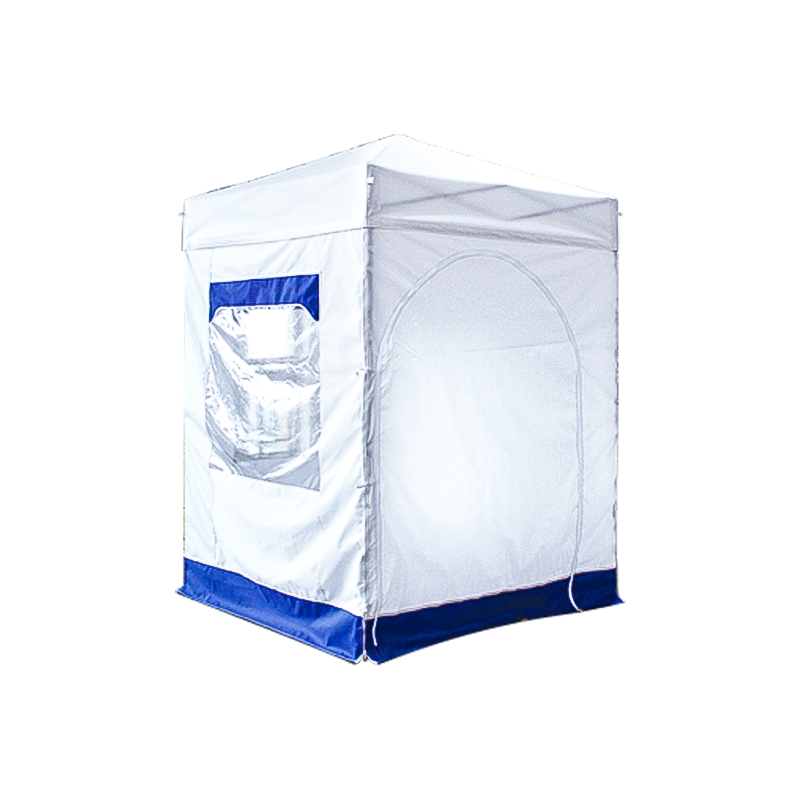
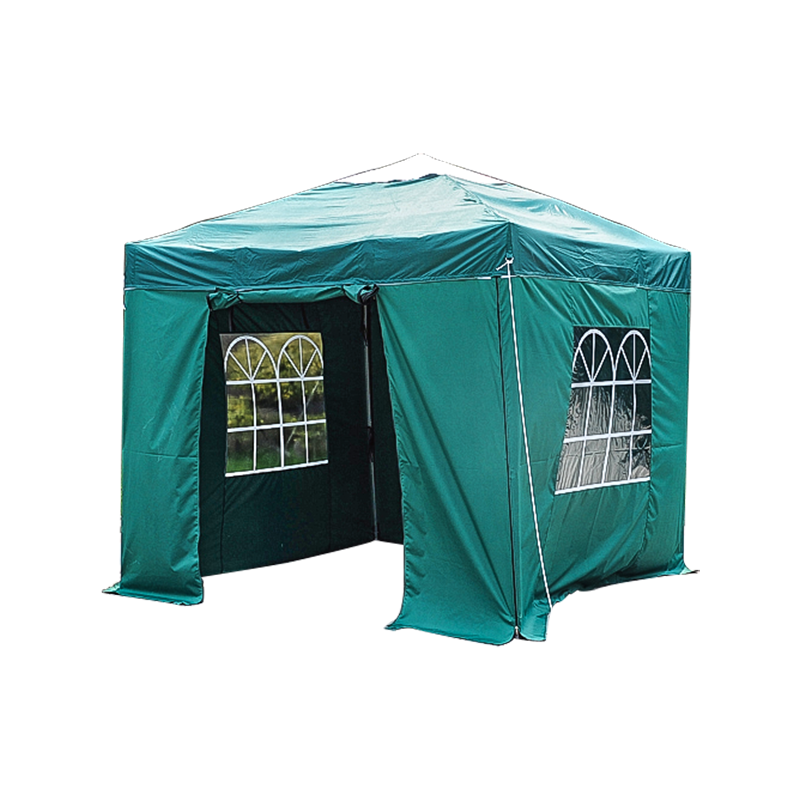
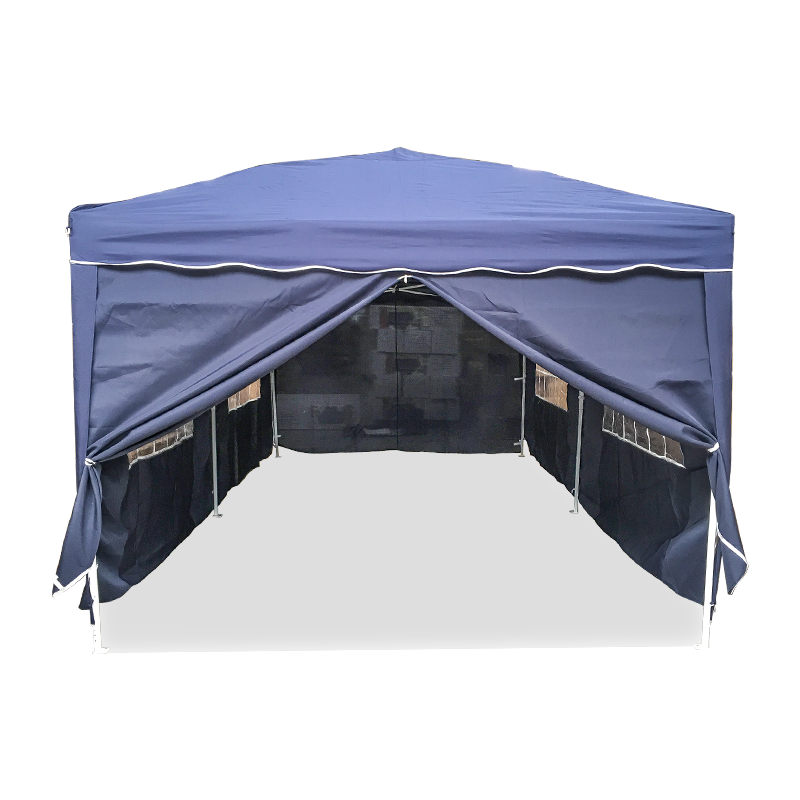
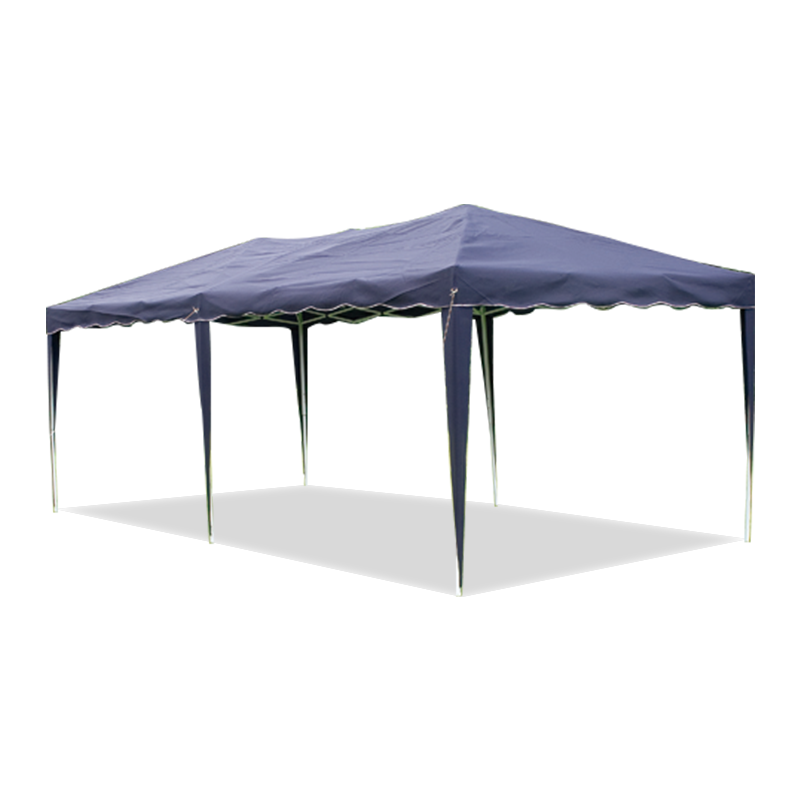
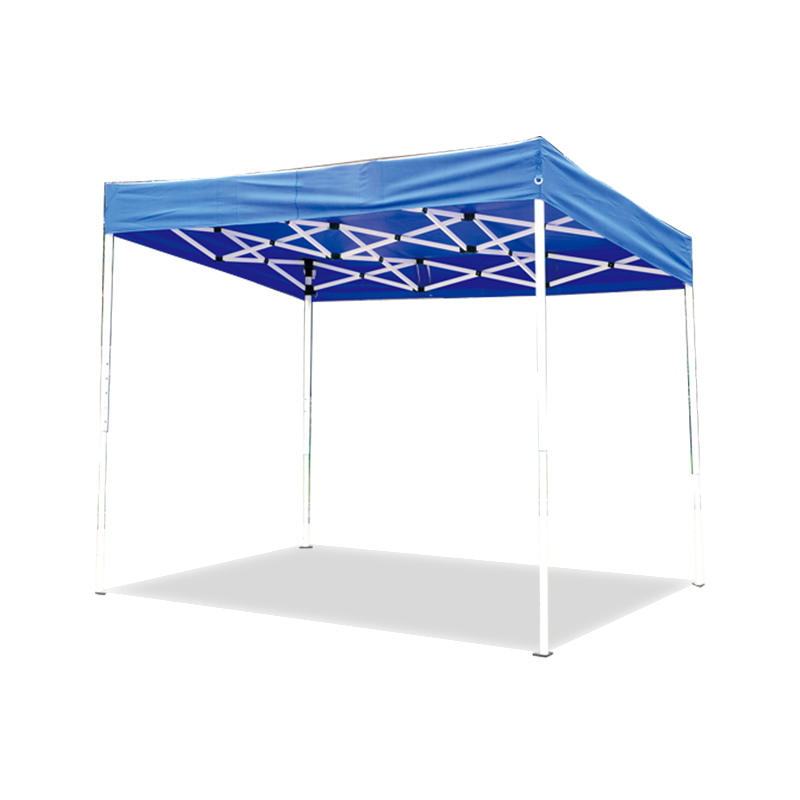
For homeowners and event organizers, canopy most commonly means a freestanding fabric shelter used in gardens, patios, campsites, markets, and outdoor events. These range from simple pop-up gazebo canopies to large tensile canopy structures used at concerts and festivals. A typical 3×3 meter pop-up canopy weighs between 7 and 15 kilograms and can be set up by two people in under ten minutes. Larger event canopies can span hundreds of square meters and require professional installation.
Materials matter enormously in this category. Polyester with a PU (polyurethane) coating is the most common fabric used in budget canopies, while premium options use solution-dyed acrylic or polyester with higher UV resistance and water repellency ratings. A good outdoor canopy fabric should carry at least a UPF 50+ rating and a waterproof rating of 1000mm hydrostatic head or more.
Aircraft Canopy
In aviation, particularly in military and aerobatic aircraft, the canopy is the transparent enclosure that covers the cockpit. It protects the pilot from wind, rain, debris, and pressure changes while allowing clear visibility. Aircraft canopies are typically made from stretched acrylic or polycarbonate and are engineered to withstand bird strikes, extreme temperature variation, and in some cases, ejection sequences. The canopy of a modern fighter jet like the F-22 Raptor is coated with radar-absorbent materials to reduce the aircraft's radar cross-section.
Bed Canopy
A bed canopy is a fabric covering suspended above a bed, most famously associated with four-poster beds and canopy beds. Historically, bed canopies served a practical purpose — keeping insects away, retaining body heat in drafty stone buildings, and providing privacy in shared sleeping quarters. Today, they are largely decorative, adding a sense of enclosure, romance, or grandeur to a bedroom. Lightweight canopy frames designed to mount to the ceiling or attach to a bed frame are widely available, with sheer fabrics being the most popular choice for modern interiors.
Vehicle and Truck Canopy
A canopy fitted to the back of a pickup truck or utility vehicle is called a ute canopy (in Australia and New Zealand) or a truck cap in North America. These hard-shell covers protect cargo in the truck bed from weather and theft. They are typically made from fiberglass, aluminum, or ABS plastic, and they sit flush with the cab roof for an aerodynamically clean profile. In trades and fleet vehicles, canopies often include internal shelving systems, roof racks, and locking drawers, transforming a truck bed into a fully functional mobile workshop.
Canopy Materials: What They Are Made From and Why It Matters
The material a canopy is made from determines its durability, weight, appearance, weather resistance, and cost. The following table compares the most common canopy materials across key performance criteria:
| Material | Weather Resistance | Durability | Weight | Typical Use |
|---|---|---|---|---|
| Polyester (PU coated) | Moderate | 2–5 years | Light | Portable outdoor canopies |
| Solution-dyed acrylic | High | 8–12 years | Medium | Awnings, patio covers |
| Polycarbonate sheet | Very High | 10–20 years | Medium | Architectural, carport canopies |
| Tempered glass | Excellent | 20+ years | Heavy | Premium entrance canopies |
| Aluminum frame + fabric | High | 10–15 years | Medium-Light | Commercial and event canopies |
| Steel | High (if galvanized) | 20–30 years | Heavy | Industrial, permanent structures |
For most homeowners choosing a garden or patio canopy, aluminum-framed canopies with solution-dyed acrylic fabric offer the best balance of longevity and practicality, though they cost considerably more than polyester alternatives. For permanent architectural installations, polycarbonate and glass canopies are the professional standard because they require minimal maintenance and maintain structural integrity under snow loads and strong winds.
The Forest Canopy Layer: Structure, Function, and Ecological Importance
In ecology, understanding what a canopy is requires looking at the layered structure of a forest. Forests are not uniform from top to bottom — they are organized into distinct vertical layers, each with its own microclimate, species composition, and ecological role.
Vertical Layers of a Forest
- Emergent layer: The tallest trees that rise above the main canopy, sometimes reaching 60–70 meters in tropical forests. These trees are exposed to the most direct sunlight, highest wind speeds, and greatest temperature fluctuation.
- Canopy layer: The primary layer formed by the crowns of mature trees, typically between 20 and 45 meters. This is where the vast majority of photosynthesis occurs in the forest.
- Understory layer: Smaller trees and large shrubs that grow beneath the canopy, adapted to lower light levels.
- Shrub layer: Woody plants, young trees, and dense vegetation between roughly 1 and 5 meters.
- Ground layer: Mosses, ferns, seedlings, and leaf litter on the forest floor, receiving as little as 1–2% of total incoming solar radiation in a dense closed canopy forest.
What the Canopy Does for a Forest Ecosystem
The forest canopy performs multiple ecological functions that sustain the entire ecosystem beneath it. These include:
- Solar energy capture: Canopy leaves intercept roughly 95–99% of incoming solar radiation, converting it into chemical energy through photosynthesis. This makes the canopy the primary engine of the forest's energy budget.
- Rainfall interception: A closed canopy intercepts between 15% and 40% of annual rainfall, reducing the intensity of precipitation reaching the forest floor and mitigating soil erosion.
- Temperature regulation: By shading the ground and releasing moisture through transpiration, forest canopies can keep the interior temperature 5–10°C cooler than open areas during the day.
- Habitat provision: The canopy layer provides nesting sites, food sources, and movement corridors for thousands of species. In the Amazon, scientists estimate that over 70% of all animal species spend significant time in the canopy.
- Carbon storage: The aboveground biomass of forest canopy trees represents one of the largest terrestrial carbon stores on Earth. Tropical forests alone store an estimated 250 billion tonnes of carbon.
Canopy Access and Research Methods
Because the forest canopy is physically difficult to access, scientists have developed a variety of methods to study it. These include canopy cranes (permanent tower crane installations that give researchers access over large areas), single rope techniques used by trained canopy climbers, canopy walkways and platforms built into the treetops, and remote sensing technologies including LiDAR and multispectral satellite imagery. LiDAR (Light Detection and Ranging) has been particularly transformative, allowing researchers to map the three-dimensional structure of a canopy across thousands of hectares without setting foot in the forest.
Choosing the Right Canopy for Your Needs
Whether you are buying a canopy for a backyard party, a market stall, a building entrance, or a long-term outdoor space, several factors determine which type is right for your situation.
Intended Use and Frequency
Occasional-use canopies — for a few weekends a year — can be lightweight, low-cost pop-up designs in the 3×3 or 3×4.5 meter range. These typically cost between $80 and $300 and are stored flat when not in use. For market vendors or anyone setting up and breaking down weekly, a heavier commercial-grade pop-up canopy with a reinforced aluminum frame and 600D polyester canopy fabric is a more cost-effective long-term choice. Commercial canopies rated for frequent use typically cost $300–$900 and are designed to withstand several hundred setups before showing significant wear.
For permanent outdoor structures over a patio or deck, a fixed canopy or pergola-style canopy with a tensioned fabric roof or polycarbonate panels is the appropriate solution. These require more upfront investment — typically $1,500 to $10,000 for a professionally installed structure — but eliminate the need to set up and take down repeatedly and provide year-round weather protection.
Wind and Weather Conditions
This is the factor most commonly underestimated by canopy buyers. A light canopy set up without proper anchoring in windy conditions is a safety hazard. Most consumer pop-up canopies are rated for winds up to 20–30 km/h (approximately 12–18 mph), while professional structures may be rated for winds up to 60–80 km/h depending on anchorage. Never leave a fabric canopy unattended in winds above 40 km/h without heavy-duty stake anchoring or ballast weights on each leg.
In regions with heavy snow, canopy frame strength under snow load becomes a critical consideration. A canopy with a shallow, flat profile can accumulate significant snow weight quickly. A snow load of just 10 cm over a 3×3 meter canopy represents approximately 90 kilograms of added weight, easily exceeding the structural rating of a standard consumer-grade frame.
Size and Coverage Area
Standard canopy sizes for residential use are 3×3 meters (approximately 10×10 feet), 3×4.5 meters, and 3×6 meters. Market and event canopies often come in these same sizes for easy layout planning. For reference, a 3×3 meter canopy comfortably covers a table for 6–8 people. For events requiring coverage for 50 guests seated at round tables, you would need at least 75–90 square meters of canopy area, typically achieved with multiple units or one large frame tent structure.
Aesthetics and Branding
For commercial and retail applications, canopy appearance is a marketing asset. Custom-printed canopy tops with brand colors, logos, and contact information are a standard tool for market vendors, exhibitors at trade shows and outdoor fairs, and hospitality businesses. Full-color dye-sublimation printing on canopy fabric delivers vibrant, fade-resistant results and typically adds $100–$250 to the cost of a commercial canopy frame package. For architectural canopies on buildings, material choices like brushed aluminum, corten steel, or frosted glass can reinforce a brand identity or complement building aesthetics significantly.
Canopy Installation: Key Considerations Before You Build or Buy
Installing a canopy — whether temporary or permanent — involves more planning than most people anticipate. Getting this right from the start saves considerable time, money, and frustration.
Permits and Building Codes
Permanent canopy structures attached to a building or fixed to the ground with footings are classified as structures in most jurisdictions and require a building permit. In many Australian states, for example, attached patio covers and carport canopies over 10 square meters require a development application or building approval. In the United States, most municipalities require permits for any permanent shade structure exceeding 10–12 square feet, with local codes varying significantly. Skipping the permit process can result in fines and mandatory removal of the structure, so checking with the local planning authority before committing to a design is essential.
Fixing and Anchoring
How a canopy is fixed to the ground or the building is the single most important factor in its structural safety. Temporary fabric canopies should always be staked into soft ground using the provided stakes and supplemented with leg weights — sandbag-style ballast bags filled with sand or water, typically 10–25 kg per leg, are widely used. On hard surfaces like concrete or pavers, purpose-built ballast weights or water-fillable base weights are the only option in the absence of anchor bolts.
Permanent structures are anchored via concrete footings, wall brackets, or structural bolts depending on the design. A cantilever canopy fixed to a building wall transfers its load into the building's structural frame and must be assessed by a structural engineer if the span exceeds approximately 2–3 meters.
Drainage and Water Management
A canopy collects rainwater, and that water needs somewhere to go. Flat-topped canopies are particularly vulnerable to water pooling, which adds structural load and eventually causes fabric failure or frame damage. Most good canopy designs incorporate a slight pitch — even 5–10 degrees — to shed water toward the edges or a central drainage point. For architectural canopies over building entrances, gutters and downpipes are standard inclusions that channel collected water away from the entrance and into the building's stormwater system.
Canopy Maintenance: How to Make Any Canopy Last Longer
Maintenance requirements vary widely by canopy type, but a few universal practices apply across most categories.
Fabric Canopy Care
Fabric canopy tops are the most maintenance-intensive component of any canopy system. Key maintenance steps include:
- Clean the fabric regularly with a mild soap solution and a soft brush. Avoid bleach-based cleaners, which degrade UV-protective coatings.
- Always allow the fabric to dry completely before folding and storing it. Storing a damp canopy top promotes mold and mildew growth, which permanently stains fabric and degrades its waterproofing within one to two seasons.
- Reapply waterproofing spray treatment annually if you notice water soaking into the fabric rather than beading on the surface. Products containing fluoropolymer (such as Nikwax or Scotchgard) restore the durable water-repellent (DWR) finish.
- Inspect seams and stress points at the start of each season. Small tears or seam failures caught early can be repaired with fabric repair tape or seam sealer at minimal cost.
Frame Maintenance
Aluminum frames require minimal maintenance beyond rinsing off dirt and salt (particularly in coastal environments) and lubricating folding joints periodically with a light machine oil or silicone spray. Steel frames require more attention: inspect for rust annually and treat with rust-inhibiting primer and paint at the first sign of corrosion. Galvanized or powder-coated steel frames will outlast uncoated steel by a factor of five to ten in outdoor conditions.
Polycarbonate and Glass Canopy Maintenance
Hard-panel canopies in polycarbonate or glass are low-maintenance but not no-maintenance. Clean polycarbonate panels with a mild soap solution and a soft cloth — abrasive cleaners scratch the surface and degrade the UV-protective coating. Inspect silicone sealant joints annually and reapply where cracking or separation is evident to prevent water ingress. Glass canopies may require professional cleaning to maintain transparency, particularly in urban environments where atmospheric deposits accumulate quickly.
Canopy vs. Awning vs. Pergola: Understanding the Differences
These three terms are often used interchangeably, but they describe different structures with different characteristics and use cases.
| Feature | Canopy | Awning | Pergola |
|---|---|---|---|
| Attachment | Freestanding or wall-attached | Wall-attached only | Freestanding or wall-attached |
| Roof type | Solid or fabric, fully enclosed overhead | Fabric, extends from wall | Open or semi-open rafters |
| Rain protection | Full (when fabric is solid) | Full | Partial (open rafters) to full (with fabric) |
| Portability | Often portable | Permanent or retractable | Permanent |
| Typical cost range | $80–$5,000+ | $500–$4,000 | $2,000–$15,000+ |
An awning is technically a type of canopy — it is an overhead covering attached to and extending from a building wall — but the term typically implies a retractable design over a door or window rather than a freestanding structure. A pergola, by contrast, is a structural frame with an open or semi-open roof that provides partial shade and aesthetic appeal but not necessarily full rain protection unless a canopy fabric or retractable screen is added to it.
When people ask "what is a canopy?" in the context of home improvement, they are most often comparing these three options for a patio or outdoor living space. The answer usually comes down to how much weather protection they need, whether they want a portable or permanent solution, and what their budget allows.
The Role of Canopy in Urban Planning and Sustainability
In cities, both built canopies and natural tree canopy cover are increasingly recognized as essential components of sustainable urban design. The urban heat island effect — where built-up areas become significantly warmer than surrounding rural areas due to heat absorption by asphalt, concrete, and buildings — is partially mitigated by both tree canopy and architectural shade structures.
Studies have found that surface temperatures under tree canopy can be 15–25°C cooler than exposed asphalt surfaces on a hot day. Cities like Melbourne, Singapore, Sydney, and Portland have set urban tree canopy targets as part of their climate adaptation strategies. Melbourne's Urban Forest Strategy, for instance, targets increasing canopy cover in inner Melbourne from under 25% to 40% by 2040.
Architectural canopies contribute to this sustainability agenda too. Canopies over walkways, transit stops, and public plazas extend the usability of outdoor space in extreme weather, reducing the energy load on adjacent buildings by providing passive shading. Canopies fitted with integrated photovoltaic (solar) panels take this further by generating renewable electricity while simultaneously providing shade — an approach increasingly used in carpark canopy structures and public transport facilities.
Green canopies — living canopy structures that incorporate plants into the overhead covering — represent a growing niche at the intersection of landscape architecture and building design. These structures use climbing plants, green roofs, or modular planting systems to create a living canopy layer that provides insulation, absorbs rainwater, and contributes to urban biodiversity while still fulfilling the structural shelter function of a traditional canopy.
Common Questions About Canopies Answered
How long does a canopy last?
Lifespan depends almost entirely on material quality and how well the canopy is maintained and stored. A budget polyester pop-up canopy used and stored carefully might last 3–5 years. A commercial aluminum-frame canopy with acrylic fabric used by a weekly market vendor can last 8–15 years. A permanent polycarbonate or glass architectural canopy with proper installation and annual maintenance can last 20–30 years or more.
Is a canopy the same as a gazebo?
Not quite. A gazebo is a permanent or semi-permanent open-sided structure with a solid roof, typically octagonal or hexagonal in shape and designed as a garden feature. A canopy is a more general term that can describe anything from a simple fabric overhead cover to a large architectural structure. Many products marketed as "pop-up gazebos" are technically canopies — they have fabric roofs and open sides and are not the same as a traditional gazebo in terms of construction or permanence.
Can a canopy withstand rain?
Yes, provided the fabric has adequate waterproofing. Most commercial canopies with polyester or acrylic fabric are waterproof under normal rainfall. A canopy fabric rated at 1000mm hydrostatic head or above will withstand continuous moderate rainfall without leaking. High-quality acrylic fabrics rated at 2,000–3,000mm provide reliable protection in heavy downpours. The weak points in any fabric canopy are the seams, which should be sealed or taped during manufacturing for maximum water resistance.
What size canopy do I need for a market stall?
The standard market stall canopy size is 3×3 meters, which is the format that most market operators base their stall grid layout on. A single 3×3 canopy covers approximately 9 square meters — sufficient for a display table of 1.8 meters with room to stand behind it and for customers to approach from the front. For larger product ranges or display-heavy stalls, two 3×3 canopies placed side by side to create an 18 square meter covered area is a practical and common setup.
How do you anchor a canopy on concrete?
On concrete or paved surfaces where ground stakes cannot be used, the most reliable anchoring method is purpose-built canopy weight bags placed over each leg. Filled with sand, these typically weigh 15–25 kg each. Water-filled ballast bags are an alternative that can be drained and transported empty. Some canopy manufacturers offer weighted leg plates that sit under the frame feet. For permanent installations on concrete, anchor bolts drilled into the slab provide the most secure attachment possible.